Have you ever added a designer handbag to your cart, stared at the checkout button, and felt that peculiar mix of excitement and dread? You’re not alone. In 2026, the act of shopping fancy has become a cultural phenomenon that’s equal parts aspiration, entertainment, and financial strategy.
Something fascinating is happening in luxury retail. Gen Z is spending 20% more on nonessentials than a year ago, prioritizing luxury and image-building purchases to curate their personal brands on social media. Yet at the same time, 88% of high-income consumers now define status by knowledge rather than material possessions. These two signals seem contradictory, but they reveal something profound: shopping fancy is no longer just about what you own—it’s about how you shop, why you shop, and what that shopping says about who you are.
Whether you’re a seasoned luxury shopper or someone dipping your toes into premium fashion for the first time, this guide will walk you through everything you need to know about shopping fancy in 2026: the trends, the traps, the strategies, and the future.
What Does “Shop Fancy” Actually Mean in 2026?
Beyond the Traditional Definition
“Shop fancy” used to mean one thing: buying expensive things. You walked into a high-end boutique, the sales associate sized you up, and you either belonged or you didn’t. It was exclusionary, intimidating, and frankly, outdated.
In 2026, the definition has expanded dramatically. Shopping fancy now encompasses a spectrum of behaviors, from buying a $30 limited-edition smoothie at a luxury grocery store to participating in a members-only livestream for collectible watches. The global luxury e-commerce market reached **$57.97 billion in 2025 and is projected to hit $63.09 billion in 2026**, growing at 8.83% CAGR through 2035.
But here’s the insight most articles miss: the “fancy” in shopping fancy has shifted from the product to the experience. A new wave of luxury grocery stores—from Meadow Lane in New York to Seoul’s Monday Market—is redefining retail by prioritizing small, curated selections over “everything for everyone”. Consumers are paying premium prices not just for what they buy, but for the feeling of participating in something refined.
The Two Engines Driving Fancy Shopping
Two distinct forces are powering this evolution:
-
Digital commerce as infrastructure: Mainstream e-commerce and direct-to-consumer channels are identified by 25.7% of luxury executives as the most promising growth area.
-
Social and shoppable commerce: Prioritized by 20% of executives, this represents the convergence of storytelling, community, and transaction.
Understanding these two engines is essential. The first is about convenience and personalization. The second is about identity and belonging. Shopping fancy in 2026 means navigating both simultaneously.
The New Luxury Landscape: What Changed and Why It Matters
The Market Correction Nobody Saw Coming
Dr. Achim Berg, founder of FashionSIGHTS and former McKinsey senior partner, put it bluntly: “Wardrobes are full. Savings rates are very high. The whole consumer sentiment needs to change. And the industry needs to course-correct on overexpansion and overpricing.”
This is the context that most shopping guides ignore. The luxury industry is in a normalization phase. Luxury and premium growth slowed to just 1.8% in 2025, marking the end of the “surge years”. Brands that previously relied on raising prices to increase revenue are now being forced to justify their premiums through actual value: craftsmanship, heritage, and experience.
What this means for you as a shopper: You have more leverage than you think. Brands are competing for your attention in ways they haven’t had to for years.
The Rise of Identity-Led Curation
Here’s a trend that’s reshaping everything: luxury consumption is shifting away from brand purity toward identity creation. Consumers are “mix-and-match” across categories, making curated ecosystems the new primary currency of luxury e-commerce.
In practical terms, this means the person who wears a vintage Rolex with a Uniqlo cashmere sweater and a bespoke leather bag from an independent artisan is now considered more stylish than someone head-to-toe in a single luxury brand. Shopping fancy is no longer about loyalty to a house—it’s about loyalty to your own aesthetic.
How Technology Is Transforming Fancy Shopping
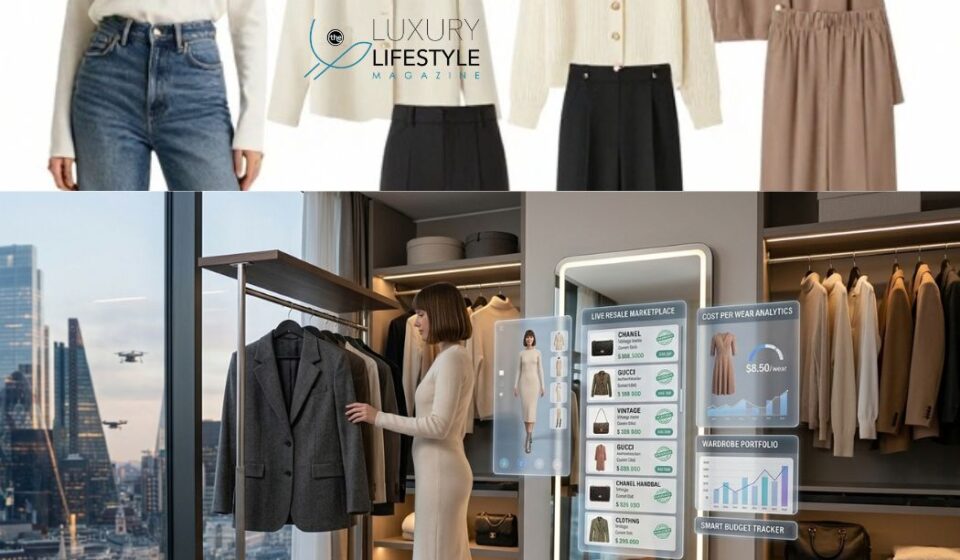
AI as Your Personal Stylist
The Asia Pacific AI luxury personal shopping platform market is expected to grow at 20.4% annually, reaching $8.26 billion by 2034. But what does this actually mean for your shopping experience?
AI stylist platforms now dominate 69.3% of this market, with fashion and accessories representing 63.1% of applications. These aren’t simple recommendation engines. They use machine learning, generative AI, computer vision, and predictive analytics to create individualized shopping experiences.
Consider this: 54% of U.S. luxury buyers and 64% of Chinese luxury buyers used AI during their most recent luxury purchase as of April 2026. The AI revolution in shopping isn’t coming—it’s already here.
Practical application: Platforms like Farfetch, Mytheresa, and LYST now offer AI-powered styling that learns your preferences, body type, and budget. Use these tools to discover pieces you might never have found on your own, but always apply your own judgment before purchasing.
Live Shopping: The QVC Revival
When TikTok Shop first arrived in the West, it was associated with low-priced exports. That’s no longer the case. 94% of TikTok Shop’s luxury resale revenue in the U.S. now comes from live broadcasts. Luxury resale gross merchandise value on the platform reportedly increased 400% year over year.
Farfetch has launched Farfetch Live, a members-only livestream format designed for its “Private Clients.” These sessions aren’t about impulse buying—they’re “educational, almost advisory experience, where the focus is on brand heritage, the craftsmanship behind the products and even their investment value”.
Why this matters: Live shopping solves the trust problem in high-value purchases. When you can see a seller demonstrate a pre-owned Hermès scarf or a vintage watch in real-time, the risk feels manageable. As one expert noted, “You now have an individual, a subject matter expert, describing the condition and showing you the condition and how you can wear these items”.
Practical Strategies for Shopping Fancy Without the Regret
The “Frugal Chic” Framework
A viral TikTok trend called “frugal chic” has captured the zeitgeist in 2026, and it’s worth understanding. The core idea isn’t about being cheap—it’s about knowing what to save on and what to splurge on.
Here’s how to apply it:
-
Play favorites. It’s perfectly fine to splurge on a signature scent or a favorite mascara if you’ll genuinely use it daily. The key is knowing what you actually use versus what you imagine you’ll use.
-
Choose one or two splurge categories. Don’t try to upgrade everything at once. Pick one or two luxury items—a designer bag, a pair of beautifully crafted shoes—and pair them with affordable basics.
-
Pay attention to materials. Natural fibers not only feel better but wear better. A $50 pair of quality jeans is more cost-effective than buying a $15 pair every other year.
The Cost-Per-Wear Revolution
One of the most practical frameworks for fancy shopping is cost per wear. Instead of looking at the price tag, calculate how much each wearing will cost you.
-
A $400 pair of boots worn 200 times: $2 per wear
-
A $60 trendy top worn 5 times: $12 per wear
The boots are the better investment—not because of the brand, but because of the math.
The 48-Hour Rule
Before any purchase over a modest threshold (say, $100–$200), wait 48 hours. This cooling-off period does something remarkable: it separates genuine desire from impulse. As one financial expert explains, “Pause before you buy. Let desire cool. That makes the real reasons clearer”.
Pro tip: During the cooling-off period, ask yourself two questions: “Will this grow my net worth?” and “Will this improve my life in a way I value enough to reduce other goals?” If the answer to the first is no, treat it as discretionary spending—budget for it accordingly.
Common Mistakes That Make Fancy Shopping Backfire
Mistake #1: Calling Everything an Investment
This is the most common trap. “Calling a costly item an ‘investment’ is usually a mental shortcut, not a financial fact,” warns financial advisor Nischa. “Most luxury goods depreciate and do not generate income”.
The solution: Create a “comfort” or “quality of life” line in your budget. Fund it like a normal expense. This keeps your financial goals intact while letting you enjoy nice things without the self-deception.
Mistake #2: Shopping Sales Without a Plan
A financial coach once reviewed a client’s spending history after she complained she had “nothing to wear”—despite spending over $15,000 on clothing in three years. What they found was telling: 80% of her purchases were sale items, impulse buys, or emotionally-driven purchases. These items rarely integrated with her core wardrobe.
The solution: Your wardrobe should be a curated asset, not a collection of mismatches. Before any sale purchase, ask: “Does this fill a genuine gap in my wardrobe, or am I buying it because it’s discounted?”
Mistake #3: Ignoring Resale Value
Not all luxury purchases are equal when it comes to holding value. Classics in neutral colors (black, brown, beige) hold their value best. Signature styles from established houses—think a Chanel flap bag or a Hermès Birkin—tend to appreciate rather than depreciate.
The solution: If resale value matters to you, stick to iconic pieces in classic colors. If it doesn’t, buy what you love and wear it proudly.
The Balanced View: Pros and Cons of Fancy Shopping in 2026
The Case For
-
Access is unprecedented. Cross-border luxury shopping is preferred by 48% of luxury buyers, and 68% of affluent consumers browse luxury products online before purchasing.
-
Personalization has improved dramatically. 57% of luxury consumers now prefer personalized digital shopping experiences including AI-based recommendations.
-
Resale ecosystems have matured. Platforms like Vestiaire Collective, The RealReal, and even TikTok Shop’s luxury resale have made pre-owned luxury more accessible and trustworthy.
-
Experience matters more than logos. With 73% of clients willing to pay for luxury experiences such as personalized offers or exclusive events, the emphasis has shifted from ownership to participation.
The Case Against
-
Prices have outpaced quality. The industry is being forced to “correct historical price exaggerations and return to heritage craftsmanship and authenticity”.
-
The market is normalizing. Growth has slowed to 1.8%, and luxury fashion and footwear revenue is expected to decline by 10–20% in 2026.
-
Status signaling is shifting. With 88% of high-income consumers defining status by knowledge rather than possessions, the old rules of “more logos equals more status” no longer apply.
-
Impulse purchases still dominate. Even with better tools, the psychological triggers (countdown timers, “almost sold out” alerts, limited-time discounts) remain powerful.
The Future of Fancy Shopping: What to Expect
Agentic Commerce
McKinsey research suggests that AI agents could mediate $3 trillion to $5 trillion of global consumer commerce by 2030. Imagine telling your AI assistant, “I need a wedding guest outfit under $800 that matches my existing accessories,” and having it shortlist, compare, and even negotiate on your behalf. That future is closer than you think.
The Rise of Digital Product Passports
Luxury brands are increasingly adopting Digital Product Passports—verifiable data infrastructures that allow AI systems to interpret craftsmanship, scarcity, and long-term value. This means when you buy a pre-owned luxury item, you’ll have blockchain-verified proof of its authenticity and history.
Omnichannel as Standard
The luxury consumer of 2026 expects a frictionless experience across channels. One brand, Orlebar Brown, saw a 50% reduction in total commerce cost and a 150% increase in customer spend after implementing unified commerce. The distinction between “online” and “in-store” is disappearing.
Key Takeaways: Your Fancy Shopping Action Plan
-
Define your “fancy.” It doesn’t have to mean $5,000 handbags. It can mean one beautiful piece per season, a curated wardrobe of fewer, better items, or experiences that bring you genuine joy.
-
Use AI as a tool, not an oracle. Let AI stylists introduce you to new brands and styles, but always apply your own judgment.
-
Apply the 48-hour rule to any purchase over $100. Your future self will thank you.
-
Never call it an investment unless it actually is. Most luxury goods depreciate. Budget for them as discretionary spending.
-
Explore resale and live shopping. These platforms offer access, authenticity verification, and community in ways traditional retail cannot.
-
Focus on cost per wear, not price tag. The math will guide you better than the marketing.
Frequently Asked Questions
Q: Is “shop fancy” just about luxury brands?
Not anymore. In 2026, “shopping fancy” encompasses a philosophy of intentional, elevated consumption. It can mean buying a $30 artisan smoothie, a pre-owned designer bag, or a single beautifully made cashmere sweater instead of five fast-fashion ones. The common thread is curation, quality, and intention.
Q: How can I shop fancy on a budget?
Focus on cost per wear, prioritize classic pieces over trends, explore resale platforms, and practice “frugal chic”—splurge on one or two signature items and save on basics. A stylist recommends upgrading jeans and shoes first, as these have the most impact on your overall look.
Q: Are AI shopping assistants reliable for luxury purchases?
They’re improving rapidly. 54% of U.S. luxury buyers already use AI during purchases. However, AI is best used as a discovery tool and for price comparison, not as a replacement for your own judgment about fit, style, and personal preference.
Q: Is it safe to buy luxury goods on TikTok Shop?
Live broadcasts provide a layer of trust that static listings cannot. With 94% of luxury resale revenue coming from live streams, TikTok has built an ecosystem where sellers demonstrate products in real-time. As always, check seller reviews and return policies.
Q: What’s the biggest mistake fancy shoppers make?
Calling purchases “investments” when they’re actually discretionary spending. This mental accounting leads to overspending and financial regret. Budget for luxury as a comfort category, and you’ll enjoy it more without compromising your long-term goals.
Sources
-
Deloitte Global Powers of Luxury 2026
-
Global Growth Insights, Luxury E-Commerce Market Report 2026
-
HTF Market Intelligence, AI Luxury Personal Shopping Platforms Market Report
-
TikTok Shop Luxury Resale Summit 2026 data
-
Bain & Company AI Luxury Shopping Report (2026)
-
EY Luxury Client Index 2026
-
Shopify Luxury Trends 2026
-
Business Insider, “A Stylist Shares 5 Pieces You Should Invest In” (2026)
-
Yahoo Finance, “10 ‘Frugal Chic’ Habits You Can Use To Save Money in 2026”
-
Wisdom AI, “When Fancy Purchases Pretend to Be Investments” (2026)
-
NSS Magazine, “Will Luxury Livestream Shopping Become the New TV Shopping?” (2026)
-
Vogue, “Inside the World of Resale for the Ultra-Rich” (2026)
FOR FURTHER INFORMATION, VISIT: THELUXURYLIFEMAGAZINE.COM