
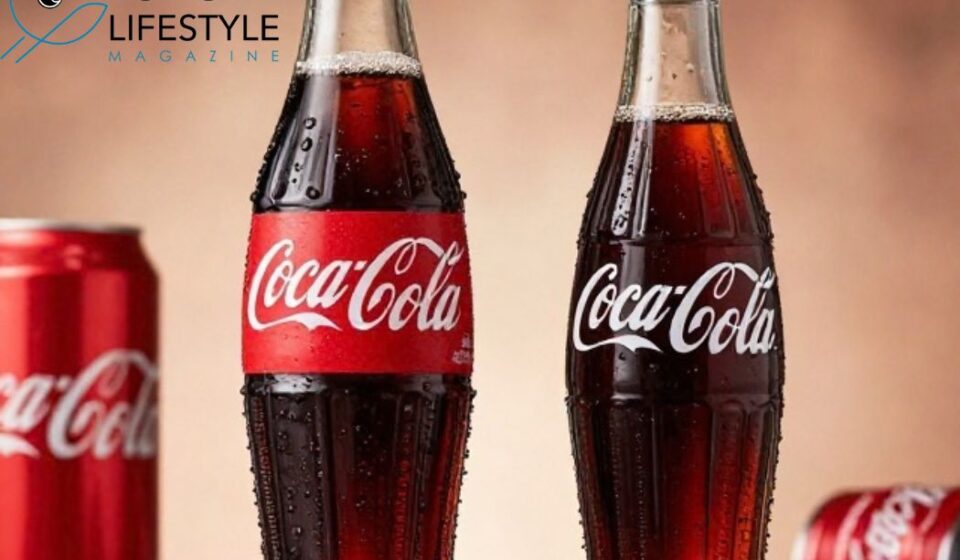
Mexicali Drops Coca-Cola Sponsorship: Picture the scene: a December evening in Mexicali, a desert city on the U.S.-Mexico border. Families line the streets for a beloved holiday tradition—illuminated Coca-Cola trucks rolling through downtown, Santa waving, Christmas music playing. It’s been a staple for over two decades.
Now imagine that same evening, but the iconic red trucks are nowhere to be found. The parade goes on—floats, music, families—but without a single corporate logo. That’s exactly what happened in December 2025.
The City of Mexicali officially dropped Coca-Cola from its traditional Christmas caravan, following a direct request from Mexican President Claudia Sheinbaum urging local governments to avoid promoting sugary beverages at large public events aimed primarily at children. The decision sent ripples through Mexico’s corporate sponsorship landscape and ignited a national conversation about the relationship between big soda and public health.
But this isn’t just a story about a Christmas parade. It’s a story about a country confronting one of its most powerful industries—and a corporation navigating a rapidly shifting regulatory and cultural landscape.
Background: How Mexico Became Ground Zero for the Sugar Wars
The Health Crisis That Changed Everything
Mexico has one of the world’s most severe obesity and diabetes crises. According to the World Obesity Federation’s 2025 Atlas, 39% of Mexican adults live with obesity. More than 20 million people—roughly 18% of the adult population—have diabetes, and the country records approximately 27,000 amputations annually due to diabetic complications.
Between 2016 and 2025, diabetes claimed 1,153,989 lives in Mexico, with a devastating peak during the 2020 pandemic.
These aren’t abstract statistics. They represent families, communities, and a healthcare system under immense strain.
The Role of Sugary Drinks
Mexico consumes more soda per capita than almost any other nation. The average Mexican drinks 166 liters of soft drinks annually. Coca-Cola alone commands 58.7% of the market preference, with eight out of ten Mexicans choosing cola drinks.
The link between sugar-sweetened beverages and chronic disease is well-established. A 2024 study in Nature Medicine confirmed that sugar-sweetened beverage consumption contributes directly to Type 2 diabetes and cardiovascular disease.
The Policy Response
President Sheinbaum’s administration has taken an aggressive stance on public health. In October 2025, Mexico’s Chamber of Deputies approved a dramatic increase in the IEPS (Special Tax on Production and Services) for sugary beverages—from 1.64 pesos to 3.08 pesos per liter, an 87% hike effective January 1, 2026.
This tax is expected to generate approximately 41 billion pesos (roughly £1.7 billion) for a dedicated health fund to treat diabetes and obesity-related illnesses.
But the government didn’t stop at taxation. In November 2025, consumer advocacy group El Poder del Consumidor filed formal complaints with Cofepris, Mexico’s federal health risk protection agency, arguing that Coca-Cola’s Christmas caravans violated health laws. Specifically, they cited Article 24 bis of the Regulations of the General Health Law on Advertising, which prohibits using child-targeted elements—Santa Claus, polar bears, animations—to advertise products bearing “stop sign” warning labels for high sugar content.
The Mexicali Decision: A Timeline of Events
November 2025: The Federal Signal
The writing appeared on the wall in late November when President Sheinbaum publicly called on local governments to stop spotlighting sugary drinks at events involving children. Consumer rights organizations amplified the message, filing formal complaints and publicly labeling the caravans as “predatory marketing” that captured cultural symbols to bypass parental gatekeeping.
Early December: Coca-Cola Withdraws
According to La Crónica, city officials in Mexicali stated that Coca-Cola itself withdrew from organizing the event after reviewing federal health recommendations and assessing the potential public health impact of marketing sugary drinks during mass gatherings.
Mexicali Mayor Norma Bustamante explained that the federal notification arrived with very little lead time: “Coca-Cola tried to move nationally, nothing was achieved, and well, we were left with just one day like that”. She noted that the recommendation was received and “interpreted perfectly,” though she would have preferred more advance notice to adjust event logistics.
December 18: A Parade Without Sponsorship
Despite the cancellation, Mexicali’s festive atmosphere continued. The municipal government organized its own Christmas parade, beginning at the Autonomous University of Baja California’s vice-rectory offices and traveling along major city streets before ending at the Christmas Village at the FEX fairgrounds.
The event featured floats, music, participation from municipal departments, and designated viewing areas—a community-centered celebration that aligned with national health guidelines but carried no commercial sponsorship.
“Our intention is to preserve the joy and tradition of the season while adhering to federal guidance,” municipal leaders stated.
Beyond Mexicali: A National Pattern Emerges
Mexicali wasn’t alone. During the 2025 holiday season, several Mexican cities either canceled Coca-Cola’s caravans or declined to authorize them:
-
Mexico City: Local councils denied permits or hosted “healthy” alternative parades
-
Villahermosa, Tabasco: The state canceled long-standing contracts, inviting families to a “Magic of Eden” expo promoting local artisans and healthy coexistence instead
-
Puebla and Chiapas: Both announced cancellations of Coca-Cola caravans
However, the picture wasn’t uniform. Cities including Acapulco, Monterrey, Morelia, Saltillo, Guanajuato, and Ciudad Juárez proceeded with Coca-Cola-sponsored events.
This inconsistency raises an important question: if the health concerns are legitimate—and the scientific evidence strongly suggests they are—why did some cities comply while others didn’t?
The Corporate Response: Coca-Cola’s Strategic Pivot
Sugar Reduction Commitments
Coca-Cola didn’t remain static amid this regulatory squeeze. In October 2025, the company announced a commitment to reduce sugar content across its Mexican portfolio by 30%. The reduction would be phased: 10% in 2025, another 10% in 2026, and the final 10% in 2027.
Deputy Health Minister Eduardo Clark confirmed that manufacturers committed to this gradual reduction to mitigate the impact of new tax rates.
The $6 Billion Bet
In February 2026, Coca-Cola announced a $6 billion investment in Mexico, signaling its continued commitment to the market despite regulatory pressures. The company remains one of seven official FIFA World Cup 2026 sponsors, and it brought the FIFA World Cup Trophy Tour to Mexico as part of its promotional activities.
The Contradiction
Here’s where things get complicated. While Coca-Cola reduced sugar and invested billions, it simultaneously maintained an aggressive marketing presence at the 2026 World Cup—an event with enormous reach among children and families.
In June 2026, a coalition of global health leaders publicly demanded that FIFA end its Coca-Cola partnership, arguing that the company’s prominent presence at the World Cup “follows the same playbook” as the Christmas caravans. Le Monde reported that Coca-Cola used the World Cup to run a massive advertising campaign that allegedly violated Mexican laws designed to combat the health impacts of sugary drinks.
El Poder del Consumidor filed additional complaints with Cofepris in September 2026, this time over a Coca-Cola campaign featuring Luis Miguel, arguing that using celebrities to promote products with warning labels violates health advertising regulations.
The pattern is clear: Coca-Cola is willing to make concessions when forced, but it continues to fight for every inch of marketing territory.
Why This Matters: The Bigger Picture
1. The Precedent Problem
The Mexicali decision sets a precedent that extends far beyond Christmas parades. If a city can cancel a beloved tradition because the sponsor’s product contributes to public health harms, what else could be subject to similar scrutiny?
Consider the implications for:
-
Sports sponsorships (stadiums, youth leagues, professional teams)
-
Educational programs (school fundraisers, scholarships)
-
Cultural events (festivals, concerts, museums)
-
Public infrastructure (parks, community centers)
The question isn’t whether Coca-Cola is uniquely evil—it’s whether any corporation whose products cause documented harm should be permitted to leverage public events for brand-building.
2. The “Symbolic Seal of Approval”
Public health advocates have argued that the caravans represented a “symbolic seal of approval” from local governments. When a city authorizes a Coca-Cola Christmas parade, it implicitly endorses the brand. For parents trying to limit their children’s sugar consumption, this creates a difficult dynamic: the same government warning about health risks is simultaneously partnering with the company producing those risks.
3. The Economic Tension
Mexicali’s decision wasn’t economically costless. Coca-Cola sponsorships bring resources: funding for floats, entertainment, security, and promotion. Without corporate backing, the city bore the full cost of the parade. Mayor Bustamante’s comment about the short notice highlights a practical challenge: cities need time to adjust budgets and logistics when sponsorships disappear.
4. The Hypocrisy Question
The inconsistent application of health guidelines across Mexican cities raises legitimate questions about political will and economic pressure. If the health risks are severe enough to justify canceling a parade in Mexicali, why not in Monterrey? The answer likely involves a mix of local politics, economic considerations, and varying levels of federal pressure.
Practical Takeaways: What Cities and Organizations Should Consider
If you’re a municipal leader, event organizer, or corporate sponsor navigating similar territory, here are actionable considerations:
For Municipal Leaders
-
Establish clear sponsorship criteria. Define what types of products and industries are appropriate for public events, especially those targeting children. Health-harming products should be evaluated against documented public health impacts.
-
Plan for transition periods. When sponsorships end, cities need time to secure alternative funding or adjust event scope. Build flexibility into budgets and contracts.
-
Communicate the “why.” Mexicali’s leaders framed their decision as preserving joy while adhering to federal guidance. Messaging matters—focus on community well-being rather than political conflict.
-
Seek community partnerships. Local businesses, health organizations, and civic groups can fill gaps left by withdrawn corporate sponsors.
For Corporate Sponsors
-
Recognize the shifting landscape. The era of unquestioned corporate sponsorship of public health-adjacent events is ending. Proactive alignment with health goals is better than reactive compliance.
-
Go beyond reformulation. Reducing sugar is necessary but not sufficient. Companies must also address marketing practices, particularly those targeting children.
-
Consider the “halo effect.” Sponsoring family-friendly events creates positive brand associations. When those associations conflict with public health messaging, the reputational risk grows.
-
Engage with critics. El Poder del Consumidor and similar organizations aren’t going away. Constructive engagement—or at least transparent responses—can reduce escalation.
For Parents and Advocates
-
Know the warning labels. Mexico’s front-of-package labeling system provides clear information about sugar content. Use it.
-
Support alternative events. When cities host sponsored-free celebrations, show up. Attendance signals community support for health-conscious choices.
-
Document and report. If you see marketing practices that violate health laws, file complaints with Cofepris. El Poder del Consumidor provides templates and guidance.
Common Mistakes and Challenges
Mistake #1: Treating This as a One-Off Event
The Mexicali decision isn’t an isolated incident. It’s part of a broader pattern that includes tax increases, advertising restrictions, and changing social norms. Organizations that treat it as a temporary PR problem will be caught off guard by future developments.
Solution: Think in terms of multi-year strategy. Assume that restrictions will tighten, and plan accordingly.
Mistake #2: Assuming Consumers Will Reject Health Measures
There’s a common assumption that consumers will rebel against “nanny state” policies. But Mexico’s experience suggests otherwise. The sugary drink tax has generated significant revenue while achieving modest consumption reductions. Public opinion increasingly supports government action on obesity and diabetes.
Solution: Don’t underestimate public support for health measures. Polling data consistently shows that Mexicans prioritize health over corporate convenience.
Mistake #3: Ignoring the International Context
Mexico isn’t alone in confronting Big Soda. The World Health Organization has called for global action on sugar-sweetened beverages. Chile, Colombia, and other Latin American countries have implemented similar measures.
Solution: Position your organization within this global context. Best practices and lessons learned are available from multiple countries.
Mistake #4: Overlooking the World Cup
The 2026 World Cup—co-hosted by Mexico, the United States, and Canada—represents a massive stage for Coca-Cola’s marketing. Health advocates have already targeted this partnership, and the pressure will only increase.
Solution: Prepare for heightened scrutiny during major events. Have responses ready for criticism about marketing to children and healthwashing.
Pros, Cons, and Balanced Analysis
| Arguments For Dropping Sponsorship | Arguments Against Dropping Sponsorship |
|---|---|
| Reduces predatory marketing to children | Cities lose funding for community events |
| Aligns municipal policy with federal health guidance | Inconsistent application creates confusion |
| Sets precedent for broader public health action | Economic pressure may outweigh health concerns |
| Respects parents’ efforts to limit sugar intake | Coca-Cola may simply shift marketing elsewhere |
| Supports Mexico’s obesity and diabetes reduction goals | Corporate withdrawal may not change consumer behavior |
The balanced view: Dropping the sponsorship is symbolically powerful but practically limited. It’s a meaningful step in changing social norms around sugary drinks, but it’s not a solution to Mexico’s health crisis on its own. Real progress requires a comprehensive approach: taxation, regulation, education, and cultural change.
Future Trends and Predictions
1. More Cities Will Follow Mexicali
Expect additional municipalities to review and revise sponsorship policies in 2026 and beyond. The federal government’s clear signal provides political cover for local leaders.
2. Coca-Cola Will Adapt—But Not Retreat
The company’s $6 billion investment and World Cup sponsorship demonstrate that it’s not abandoning Mexico. Instead, it will likely shift toward “healthier” product lines, smaller packaging, and marketing that emphasizes moderation rather than celebration.
3. Litigation Will Increase
El Poder del Consumidor’s complaints against Coca-Cola show that legal avenues are being pursued. Expect more formal complaints, potential lawsuits, and regulatory battles.
4. The World Cup Will Be a Flashpoint
The 2026 World Cup will amplify debates about corporate sponsorship and public health. Health advocates are already organizing, and the event’s global visibility makes it a prime target.
5. Reformulation Will Accelerate
Under pressure from taxes and regulations, Coca-Cola and competitors will likely accelerate sugar reduction efforts. By 2027, the Mexican soft drink market may look substantially different than it did in 2024.
6. Other Industries Will Face Similar Scrutiny
If sugary drinks are subject to sponsorship restrictions, why not alcohol? Ultra-processed foods? Gambling? The Mexicali precedent opens doors to broader questions about corporate influence on public events.
Conclusion: What the Mexicali Decision Really Tells Us
The Mexicali decision to drop Coca-Cola sponsorship isn’t just about a Christmas parade. It’s a signal that Mexico is serious about confronting its health crisis—and that corporations are being forced to adapt.
For Coca-Cola, the message is clear: the era of unquestioned dominance in public life is ending. The company can still operate profitably in Mexico, but it must do so under increasing scrutiny and regulation.
For cities and communities, the message is equally clear: public events don’t need corporate sponsorship to succeed. Mexicali’s 2025 parade went on without Coca-Cola—and it was still a celebration.
For the rest of us, the Mexicali story offers a framework for thinking about corporate influence: What do we endorse when we accept corporate money? What values do our public events reflect? And what are we willing to give up to protect the health of our communities?
These aren’t easy questions. But Mexicali’s decision shows that they’re worth asking.
Key Takeaways
-
Mexicali dropped Coca-Cola’s Christmas caravan in December 2025 after federal guidance urged cities to avoid promoting sugary drinks at children’s events.
-
The decision is part of a broader pattern that includes an 87% increase in Mexico’s sugary drink tax and formal legal complaints against Coca-Cola.
-
Coca-Cola is adapting but not retreating, committing to 30% sugar reduction while continuing aggressive marketing through the World Cup.
-
The inconsistency across Mexican cities—some canceled, some proceeded—highlights the political and economic complexities involved.
-
The Mexicali precedent has implications far beyond Christmas parades, raising questions about corporate sponsorship of public events more broadly.
-
Real progress requires comprehensive action, not just symbolic decisions: taxation, regulation, education, and cultural change must work together.
Frequently Asked Questions About Mexicali Drops Coca-Cola Sponsorship
Q: Did Mexicali officially ban Coca-Cola?
No. Mexicali didn’t ban Coca-Cola or its products. The city simply declined to authorize Coca-Cola’s Christmas caravan and organized its own parade without corporate sponsorship. Coca-Cola products are still sold throughout Mexicali.
Q: Why did Coca-Cola withdraw from the Mexicali parade?
According to La Crónica, Coca-Cola withdrew after reviewing federal health recommendations and assessing the potential public health impact of marketing sugary drinks during mass gatherings. The decision followed President Sheinbaum’s call for local governments to avoid promoting sugary drinks at children’s events.
Q: Is this part of a broader trend in Mexico?
Yes. Mexico nearly doubled its tax on sugary drinks effective January 1, 2026, from 1.64 pesos to 3.08 pesos per liter. Several other cities—including Mexico City, Villahermosa, Puebla, and Chiapas—also canceled or declined Coca-Cola caravans.
Q: What has Coca-Cola done in response?
Coca-Cola committed to reducing sugar content across its Mexican portfolio by 30% by 2027. The company also announced a $6 billion investment in Mexico and remains a major FIFA World Cup 2026 sponsor.
Q: What’s next for Coca-Cola in Mexico?
Expect continued scrutiny, particularly around the 2026 World Cup. Health advocates have already filed complaints about Coca-Cola’s World Cup marketing, arguing it violates Mexican health laws. Coca-Cola will likely continue reformulating products while facing pressure to change its marketing practices.
Q: How can I learn more about Mexico’s sugary drink policies?
El Poder del Consumidor (elpoderdelconsumidor.org) publishes research and complaints related to sugary drink marketing. Mexico’s Cofepris (cofepris.gob.mx) handles health risk complaints. The Mexican government’s official gazette (dof.gob.mx) publishes tax and regulatory changes.
Sources
-
Imperial Valley Press. “Mexicali drops Coca-Cola Christmas caravan after federal call to limit sugary drink promotion.” December 2025.
-
La Crónica. “Coca-Cola dropped out after looking at federal health regulations.” December 2025.
-
News Express. “Coca-Cola dropped from annual holiday tradition after president’s request.” January 6, 2026.
-
International Business Times UK. “Coca-Cola’s Holiday Presence ‘Shrinks’ in Parts of Mexico Amid Health Push.” January 5, 2026.
-
Mexico Business News. “Mexico Raises Health Taxes on Sugary Drinks, Tobacco for 2026.” January 14, 2026.
-
El Poder del Consumidor. Formal complaints filed with Cofepris regarding Coca-Cola caravans and advertising campaigns. November 2025–September 2026.
-
World Obesity Federation. Global Obesity Atlas 2025. Cited in Mexican congressional documents.
-
El Universal. “México, con la esperanza de vida más baja de la OCDE; tiene los mayores índices de obesidad y diabetes.” November 13, 2025.
-
Líder Empresarial. “Bebidas de Coca-Cola reducirán azúcar en 2026.” October 20, 2025.
-
Milenio. “Coca-Cola invertirá 6 mil mdd en México, informa Sheinbaum.” February 26, 2026.
FOR FURTHER INFORMATION, VISIT: THELUXURYLIFEMAGAZINE.COM