
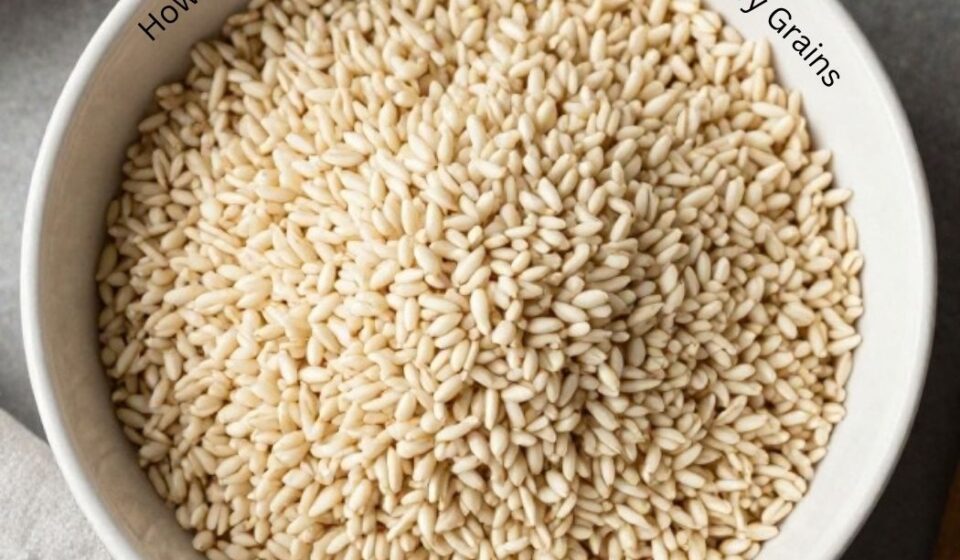
How to Cook Barley: I still remember the first time I tried to cook barley. I dumped a cup of pearl barley into boiling water, set a timer for 20 minutes, and walked away feeling confident. What I returned to was a pot of gluey, starchy sludge that resembled wallpaper paste more than a wholesome grain. My soup was ruined, and I couldn’t understand what went wrong.
If that story sounds familiar, you’re not alone. Barley is one of the most misunderstood grains in the modern kitchen. It’s ancient—cultivated for over 10,000 years—yet many home cooks treat it like a mystery ingredient. The problem isn’t barley itself. The problem is that most of us were never taught the right way to cook it.
Here’s the good news: once you understand a few key principles, cooking barley becomes almost foolproof. In this guide, I’ll walk you through everything—from choosing the right type of barley to mastering stovetop, oven, and slow cooker methods. By the end, you’ll be able to make perfectly fluffy, nutty barley for soups, salads, side dishes, and even breakfast bowls.
Let’s dive in.
Background: Why Barley Deserves a Spot in Your Pantry
Barley (Hordeum vulgare) is one of the world’s oldest cultivated grains. It was a staple in ancient Egyptian, Roman, and Viking diets, and today it remains a major crop globally. While much of the world’s barley goes toward malting for beer and animal feed, food barley is experiencing a quiet renaissance.
The global barley market was valued at approximately USD 22.1 billion in 2025 and is projected to reach USD 30.1 billion by 2035. The whole grain segment alone accounted for USD 9.9 billion in 2025, driven by consumers shifting toward healthier eating habits.
So what’s fueling this growth? Nutrition, mostly. Barley is rich in beta-glucan, a soluble fiber that has been linked to lower cholesterol, improved blood sugar control, and better gut health. It also contains magnesium, potassium, calcium, and a range of antioxidants that support heart and metabolic health.
But here’s what many articles miss: barley isn’t just a health food. It’s a culinary ingredient with a distinct nutty flavor and a satisfying, toothsome texture that can transform everything from winter stews to summer salads. The key is knowing how to cook it properly.
The Barley Family: Know What You’re Cooking Before You Start
Before you turn on the stove, you need to understand which type of barley you’re working with. This is the single most important factor in getting good results. Using the wrong type for a recipe is like using bread flour for a delicate cake—technically possible, but the outcome won’t be what you hoped for.
Pearl Barley: The Convenient Classic
Pearl barley is the most common variety found in grocery stores. It’s been “pearled”—a process that strips away the outer hull, bran, and germ layers, leaving a polished, uniform kernel. The result is a lighter-colored grain that cooks relatively quickly and releases starch, making it ideal for creamy soups, risottos, and dishes where a softer texture is desired.
Key characteristics:
-
Cooking time: 25–40 minutes
-
Texture: Softer, slightly chewy, creamy
-
Liquid ratio: 1 cup barley to 2.5–3 cups liquid
-
Nutrition: Lower in fiber and nutrients than whole-grain varieties, but still a healthy choice because barley fiber is distributed throughout the kernel
Pot Barley (Scotch Barley): The Whole-Grain Workhorse
Pot barley—sometimes called Scotch barley—is pearled for a shorter time. Only the inedible outer hull is removed, leaving the bran layer largely intact. This makes it a true whole grain with higher fiber, protein, vitamins, and minerals than pearl barley.
Key characteristics:
-
Cooking time: 50–60 minutes (or 40–45 minutes if soaked)
-
Texture: Chewy, firm, grains stay distinct
-
Liquid ratio: 1 cup barley to 3 cups liquid
-
Best for: Grain salads, pilafs, rustic stews, and any dish where you want a hearty, nutty bite
Hulled Barley: The Nutritional Powerhouse
Hulled barley is often used interchangeably with pot barley. Only the tough, inedible outer hull is removed; the bran and germ remain completely intact. It’s the “whole wheat” version of barley—chewier, more flavorful, and significantly more nutritious than pearled varieties.
Key characteristics:
-
Cooking time: 45–60 minutes after soaking (longer if unsoaked)
-
Texture: Very chewy, firm, “al dente” bite
-
Liquid ratio: 1 cup barley to 3–4 cups liquid
-
Best for: Grain bowls, salads, and dishes where texture is the star
Quick Barley: The Weeknight Shortcut
Quick barley has been steamed and dried, reducing its cooking time to just 10–15 minutes. It’s a convenient option for busy weeknights, though it lacks the robust texture of pot or hulled barley.
A Quick Comparison Table
| Feature | Pearl Barley | Pot Barley | Hulled Barley |
|---|---|---|---|
| Processing | Heavily pearled | Lightly pearled | Only hull removed |
| Whole Grain? | No | Closer to whole grain | Yes |
| Cooking Time | 25–40 min | 50–60 min | 45–60 min (soaked) |
| Texture | Soft, creamy | Chewy, firm | Very chewy, robust |
| Best For | Soups, risotto | Salads, pilafs | Grain bowls, hearty dishes |
Sources: GoBarley, EatHealthy365
How to Cook Barley: Every Method You’ll Ever Need
Now for the main event. Below are the four most reliable ways to cook barley, each with its own advantages. I’ll give you exact ratios and times so you can stop guessing and start cooking with confidence.
Stovetop Method: The Gold Standard
The stovetop is the most versatile and controllable method. It works for every type of barley—you just adjust the time and liquid.
What you’ll need:
-
1 cup barley (rinsed)
-
3 cups water or broth (use 2.5 cups for pearl barley)
-
½ teaspoon kosher salt
-
Optional: bay leaf, smashed garlic cloves, or fresh thyme
Step-by-step instructions:
-
Rinse the barley. Place it in a fine-mesh sieve and rinse under cold running water for about 30 seconds. This removes surface starch that can cause gumminess.
-
Toast the grains (optional but highly recommended). Heat a dry saucepan over medium heat. Add the drained barley and toast for 2–3 minutes, stirring frequently, until the grains smell nutty and fragrant. This step is a game-changer for flavor and texture.
-
Add liquid and salt. Pour in your water or broth and add salt. If using aromatics like a bay leaf or garlic, add them now.
-
Bring to a boil, then reduce to a simmer. Once boiling, reduce heat to low, cover, and simmer. Do not stir frequently—stirring releases starch and makes the barley gluey.
-
Check for doneness. Pearl barley will be tender in 25–30 minutes. Pot and hulled barley need 45–60 minutes. Start checking at the lower end of the range. The grains should be chewy but tender, with a slight “pop” when you bite into them.
-
Rest and fluff. Remove from heat and let the barley sit, covered, for 5–10 minutes. Fluff with a fork before serving.
Oven Method: The Hands-Off Option
The oven method is perfect when you’re already using the oven for something else—it’s energy-efficient and produces beautifully even results.
Instructions:
-
Combine 1 cup barley, 3 cups liquid, and ½ teaspoon salt in a covered casserole dish.
-
Bake at 350°F (175°C) for approximately 1 hour and 15 minutes.
-
Check at the 60-minute mark. If the barley is tender and the liquid is absorbed, it’s done.
Slow Cooker Method: Set It and Forget It
The slow cooker is ideal for busy days. It’s nearly impossible to overcook barley in a slow cooker, making it a forgiving option for beginners.
Instructions:
-
Place 1 cup rinsed barley, 4 cups water or broth, and 1 teaspoon salt in the slow cooker.
-
Cook on low for 2.5–4 hours or on high for 50–60 minutes.
-
For hulled barley, extend the cooking time to 5–6 hours on low.
-
Drain any excess liquid before serving.
Rice Cooker Method: The Set-and-Forget Alternative
If you have a rice cooker, you can use it for barley. Simply combine barley and liquid using the same ratios as the stovetop method and run a standard cycle. Barley cooks in approximately the same time as brown rice.
A Note on Soaking
Soaking is optional for pearl barley but recommended for hulled and pot barley. An overnight soak in salted water tenderizes the tough bran layer, cuts cooking time by about 20 minutes, and helps the grains cook more evenly. If you’re short on time, a 2-hour soak in hot water will still help.
The Science of Perfect Barley: Why These Methods Work
Cooking barley isn’t just about following instructions—it’s about understanding what’s happening inside the pot. Here’s the science in plain English.
Barley is primarily composed of starch granules encased in a protein matrix. When you add heat and water, the starch granules absorb liquid and swell—a process called gelatinization. The protein matrix softens, allowing the grains to become tender.
The toasting step matters because it triggers the Maillard reaction, creating hundreds of new flavor compounds that give barley its characteristic nutty depth. It also creates a slightly firmer outer layer on each grain, which helps prevent them from sticking together during cooking.
The simmer-don’t-boil rule is equally important. Boiling agitates the grains, causing them to rub against each other and release starch into the cooking liquid. This is what turns barley into a gummy mess. A gentle simmer keeps the grains intact and separate.
And the resting period after cooking allows residual heat and moisture to redistribute evenly through the grains, ensuring every bite is perfectly tender.
Common Mistakes (and How to Fix Them)
Even experienced cooks run into trouble with barley. Here are the most common pitfalls and their solutions.
Mistake #1: Using the Wrong Type of Barley
This is the number-one mistake. Using pearl barley in a salad that calls for hulled barley will give you mushy grains. Using hulled barley in a quick soup will leave you with tough, undercooked grains.
Solution: Read the recipe carefully and match the barley type to the dish. As a rule of thumb: pearl for creamy dishes, pot or hulled for dishes where texture matters.
Mistake #2: Not Rinsing the Barley
Skipping the rinse leaves surface starch on the grains, which causes gumminess.
Solution: Always rinse barley under cold water for 30 seconds before cooking.
Mistake #3: Stirring Too Much
Stirring agitates the grains and releases starch, turning your barley into porridge.
Solution: Stir only once when you add the liquid, then leave it alone.
Mistake #4: Using Too Little Liquid
Barley absorbs a lot of water. If you use too little, the grains will be dry and tough.
Solution: Follow the ratios: 2.5 cups liquid per cup of pearl barley, 3 cups per cup of pot barley, and 3–4 cups per cup of hulled barley.
Mistake #5: Undercooking or Overcooking
Undercooked barley is unpleasantly chewy. Overcooked barley is mushy.
Solution: Start checking at the lower end of the cooking time. The grains should be tender but still have a slight bite.
Mistake #6: Not Toasting the Grains
This isn’t strictly a “mistake,” but skipping the toast means missing out on a depth of flavor that transforms barley from bland to brilliant.
Solution: Toast the rinsed and drained grains in a dry pan for 2–3 minutes before adding liquid.
The Health Case for Barley: What the Science Says
Barley isn’t just delicious—it’s one of the most nutritionally impressive grains you can eat. Here’s what recent research tells us.
Beta-Glucan: The Star Nutrient
Barley’s most celebrated compound is beta-glucan, a soluble fiber found throughout the grain kernel. Beta-glucan forms a viscous gel in your digestive tract, which slows down the absorption of glucose and binds to cholesterol, helping to lower LDL (bad) cholesterol levels. A meta-analysis confirmed that beta-glucan from barley can significantly reduce total and LDL cholesterol.
Blood Sugar Control
Because of its high fiber content, barley has a low glycemic index. Studies have shown that barley consumption can improve glycemic control and reduce the risk of Type 2 diabetes. One 2026 study found that steamed barley increased beneficial gut bacteria (Bifidobacterium by 35%) and short-chain fatty acid production (butyrate by 28%), both of which are linked to better metabolic health.
Gut Health and Beyond
Barley acts as a prebiotic, feeding beneficial bacteria in your gut. This supports the gut-brain axis and the gut-lung axis, which are associated with brain and respiratory health. Barley also contains a range of antioxidants—phenolic acids, flavonoids, lignans, and vitamin E—that help reduce inflammation and oxidative stress.
A Balanced Nutritional Profile
A one-cup serving of cooked pearl barley provides approximately:
-
Calories: 193
-
Fiber: 6 grams
-
Protein: 3.5 grams
-
Fat: 0.7 grams
-
Key minerals: Magnesium, potassium, calcium, iron
Note: Hulled and pot barley have higher fiber and nutrient content than pearl barley due to the intact bran layer.
Pros and Cons of Cooking with Barley
Pros
-
Nutritionally dense: High in fiber, beta-glucan, vitamins, and minerals
-
Versatile: Works in soups, salads, stews, pilafs, risottos, and even baked goods
-
Affordable: One of the most budget-friendly whole grains available
-
Shelf-stable: Stores for months in an airtight container
-
Satiating: High fiber content keeps you full longer
-
Sustainable: Barley requires less water than many other grains and supports regenerative farming practices
Cons
-
Long cooking time: Pot and hulled barley take 45–60 minutes, which isn’t ideal for quick meals
-
Gluten-containing: Not suitable for those with celiac disease or gluten sensitivity
-
Can be mushy: Requires attention to technique to avoid gumminess
-
Less familiar: Many home cooks don’t know how to use it, so it can feel intimidating
Future Trends: Where Barley Is Headed
Barley is having a moment. Here’s what’s on the horizon for this ancient grain.
The Functional Food Boom
Food manufacturers are increasingly incorporating barley into functional foods—products designed to deliver specific health benefits beyond basic nutrition. Barley’s beta-glucan content makes it a natural fit for cholesterol-lowering snacks, blood-sugar-friendly cereals, and gut-health beverages.
Beta-Glucan Innovation
Companies are investing in fractionation technologies to isolate beta-glucan from barley and use it as a functional ingredient in everything from baked goods to plant-based dairy alternatives. This opens up new markets for barley that go beyond traditional grain consumption.
Sustainability and Regenerative Agriculture
Barley is gaining traction as a climate-smart crop. It requires less water than rice and can be grown in diverse climates, making it attractive to farmers adopting regenerative practices.
Whole-Grain Renaissance
As consumers continue to shift away from refined grains, whole-grain barley products—from hulled barley to barley flakes and barley flour—are becoming more widely available. The global whole-grain barley segment is projected to grow steadily through 2035.
Barley in Plant-Based Diets
Barley is emerging as a key ingredient in plant-based meat alternatives, where its fibrous texture and binding properties help mimic the mouthfeel of animal proteins.
Conclusion: Your Barley Journey Starts Now
Cooking barley doesn’t have to be intimidating. Once you understand the differences between pearl, pot, and hulled barley—and master a few simple techniques—you’ll wonder why you ever struggled with this incredible grain.
Here’s a quick recap of the key takeaways:
Key Takeaways:
-
Choose the right barley: Pearl for creamy dishes, pot or hulled for salads and pilafs where texture matters.
-
Rinse, then toast: Rinsing removes excess starch; toasting builds nutty flavor and prevents mushiness.
-
Use the right ratio: 2.5 cups liquid for pearl barley, 3 cups for pot, 3–4 cups for hulled.
-
Simmer, don’t boil: A gentle simmer keeps grains separate and prevents gumminess.
-
Let it rest: A 5–10 minute rest after cooking ensures perfectly tender grains.
-
Soak for whole grains: An overnight soak cuts cooking time and improves texture for hulled and pot barley.
-
Embrace the health benefits: Barley’s beta-glucan supports heart health, blood sugar control, and gut health.
The next time you’re in the grain aisle, don’t walk past that bag of barley. Pick it up, take it home, and cook it with confidence. Your soups, salads, and grain bowls will thank you.
Frequently Asked Questions
Q: Do I need to soak barley before cooking?
A: Soaking is optional for pearl barley but recommended for pot and hulled barley. An overnight soak tenderizes the bran layer and cuts cooking time by about 20 minutes. If you’re short on time, a 2-hour soak in hot water still helps.
Q: What’s the water-to-barley ratio?
A: For pearl barley, use 2.5–3 cups liquid per cup of barley. For pot barley, use 3 cups. For hulled barley, use 3–4 cups.
Q: How long does barley last?
A: Store barley in an airtight container in a cool, dark place. Pearl barley lasts up to a year; hulled and pot barley are more perishable due to their oil-rich bran and should be used within 6–8 months for best quality.
Q: Can I cook barley in a rice cooker?
A: Yes. Use the same ratios as the stovetop method and run a standard rice cooker cycle. Barley cooks in approximately the same time as brown rice.
Q: Is barley gluten-free?
A: No. Barley contains gluten and is not suitable for people with celiac disease or gluten sensitivity.
Q: Can I freeze cooked barley?
A: Yes. Cooked barley freezes beautifully. Spread it on a baking sheet to cool, then transfer to freezer-safe bags or containers. It will keep for up to 3 months. Reheat in the microwave or add directly to soups.
Q: What’s the difference between pearl barley and pot barley?
A: Pearl barley is heavily pearled, removing the bran and germ layers, resulting in a softer, faster-cooking grain. Pot barley is lightly pearled, retaining most of the bran, making it a whole grain with a chewier texture and higher nutrient content.
Q: Why did my barley turn out mushy?
A: Mushy barley usually means too much liquid, too much stirring, or using the wrong type of barley for the recipe. Use the correct liquid ratio, avoid stirring, and match the barley type to the dish.
Sources
-
GoBarley – “Cooking with Barley” – gobarley.com
-
EatHealthy365 – “Comparing Pearl Barley and Pot Barley” – eathealthy365.com
-
EatHealthy365 – “The Ultimate Guide to Cooking Perfect Hulled Barley” – eathealthy365.com
-
EatHealthy365 – “Avoiding Common Mistakes with Barley” – eathealthy365.com
-
Springer – Discover Food – “Innovative insights of barley genomics and biotechnology” (2026)
-
Global Market Insights – “Barley Market Opportunity, Growth Drivers, Industry Trend Analysis, and Forecast 2026–2035”
-
ScienceDirect – “Effects of different thermal processing methods on whole highland barley” (2026)
FOR FURTHER INFORMATION, VISIT: THELUXURYLIFEMAGAZINE.COM