
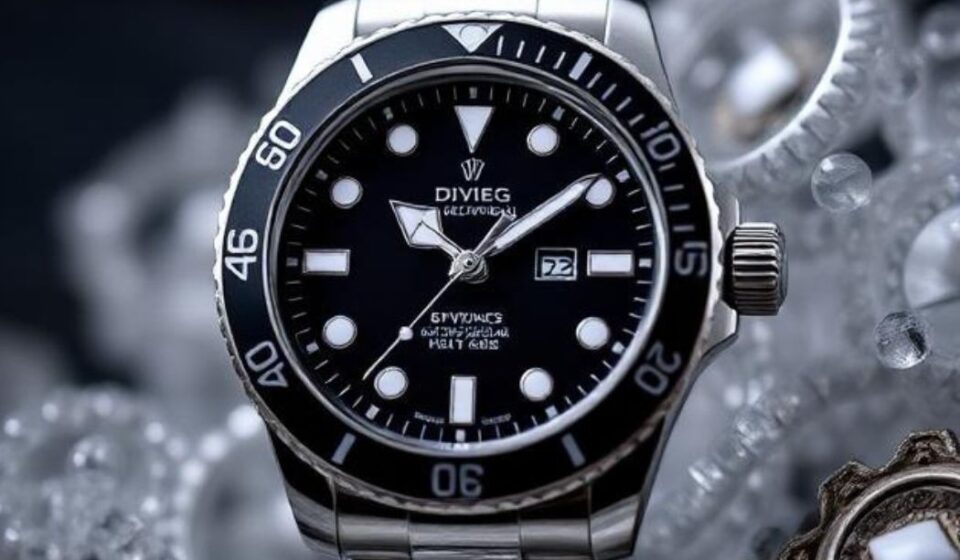
Diving Watch Luxury: You’ve seen them on the wrists of CEOs, movie stars, and your particularly well-dressed neighbor. They’re called “dive watches,” yet more often than not, they never get closer to salt water than a splash of hand soap. This paradox is the heart of their appeal. In 2026, the luxury dive watch is at a fascinating crossroads, representing the perfect synthesis of rugged capability and high-end status, a tool that has become a treasure. But what truly defines this category, and how do you navigate its deep waters to find the perfect piece for you?
This isn’t just another list of shiny objects. We’ll dive beneath the surface to explore the engineering, the heritage, and the surprising new trends that are reshaping this iconic category of high-end horology. We’ll look at why a watch originally designed for deep-sea saturation divers is now a cornerstone of any serious watch collection, and what you should actually consider before making a purchase.
Let’s get started.
Table of Contents
ToggleThe Deep Roots: From Military Tool to Modern Icon
To understand where the luxury dive watch is today, we need to go back to the 1950s. This was the decade that saw the birth of the two titans that defined the genre: the Blancpain Fifty Fathoms and the Rolex Submariner. Developed for the needs of combat swimmers and professional divers, these were not luxury items; they were essential, life-saving tools.
The characteristics they established are now the DNA of any proper diver. These features weren’t just for aesthetics; they were for survival. The unidirectional rotating bezel, for example, tracks elapsed dive time. Its design ensures that if accidentally knocked, it can only move to show a shorter, safer elapsed time, not a longer, dangerous one. The screw-down crown, like the “Triplock” system from Rolex, acts as a waterproof seal, and robust luminous markers were essential for reading the time in the dark depths.
The reputation for durability and reliability forged in this era laid the foundation for their eventual ascension into the luxury sphere. Over the decades, these tool watches became symbols of adventure and human achievement. As iconic watchmaker Georges Kern, CEO of Breitling, notes, the demand for divers’ watches has persisted because they carry a “sense of adventure and reliability” that transcends their original purpose.
Engineering Excellence: What Defines a True Luxury Diver
Today, a luxury dive watch is defined by more than just a water-resistance rating. It’s a package of refined engineering, cutting-edge materials, and historical prestige.
The Technical Trinity: Movement, Materials, and Precision
At the heart of any luxury watch is its movement. In the realm of luxury divers, mechanical movements reign supreme. Collectors value the “soul” and craftsmanship of an automatic or mechanical calibre. Here are a few key benchmarks you’ll encounter:
-
METAS Master Chronometer: This is Omega’s rigorous certification process. A watch with this designation has been tested for precision, magnetic resistance (up to 15,000 gauss), and water resistance. It’s the gold standard for mechanical reliability.
-
Spring Drive: This unique movement from Grand Seiko combines the beauty of a mechanical watch with the quartz-like accuracy of ±1 second per day. It’s a feat of engineering that sets their watches apart.
-
Extended Power Reserves: The days of a 40-hour power reserve are fading. Modern luxury watches from brands like Blancpain (120 hours) and Rolex (70 hours) are designed to sit on your nightstand all weekend and still be running perfectly come Monday morning.
The materials used are also a huge differentiator. While standard 316L steel was the norm, brands like Rolex use their proprietary 904L steel (Oystersteel) for superior corrosion resistance and a higher polish. For a more modern feel, brands like Panerai and Tudor are pioneering the use of materials like:
-
Grade 5 Titanium: As seen in watches like the Oceaneva Deep Marine Explorer VI, this material is 40% lighter than steel but 227% stronger. It’s also hypoallergenic, making it perfect for a “go-anywhere, do-anything” watch.
-
Advanced Ceramics: Ceramic bezels are now standard, prized for being virtually scratch-proof. But Panerai has innovated further with Ti-Ceramitech, a new material that is 10 times more fracture-resistant than traditional ceramic and 44% lighter than steel.
The 2026 Landscape: Standout Models and New Trends
The luxury dive watch market in 2026 is incredibly vibrant. While the established icons still reign supreme, exciting new contenders are shaking up the status quo.
The Titans Still Rule: The “Big Three” and More
-
Rolex Submariner: The benchmark. The Submariner, with its Oyster case and Cerachrom bezel, is the template for all others. Its historical value retention is legendary, often trading above retail on the secondary market. It’s the ultimate “one-watch collection.”
-
Blancpain Fifty Fathoms: The original. If you value history and a slightly more refined aesthetic, the Fifty Fathoms is the one. Modern versions feature incredible movements like the Calibre 1315 with a five-day power reserve.
-
Omega Seamaster Professional 300M: The technical powerhouse. With its METAS Master Chronometer certification and iconic design, it offers some of the best performance for the price. The new releases for 2026 are embracing bold colors, particularly a fiery orange, for a sportier look.
Newcomers & Game-Changers: Diving Watch Luxury
The most exciting trend of 2026 is the “democratization” of luxury. We are seeing new entrants offering high-end specs at more accessible price points.
-
Timex Atelier Marine M1a: This is perhaps the most significant story of the year. Timex has launched its luxury sub-brand, the Atelier, with the Marine M1a. Designed by Giorgio Galli, this is a 41mm Swiss-made automatic dive watch with a stunning black enamel dial, skeletonized midcase, and a proprietary tool-less bracelet adjustment system. Priced at around $1,050, it packs a level of finishing and detail typically found in watches costing five times as much.
-
Oceaneva Deep Marine Explorer VI: This American brand is pushing the boundaries of performance, creating a 6000m water-resistant GMT in a Grade 5 Titanium case. The sheer engineering required to achieve this is a testament to the brand’s commitment to “tool” watch roots.
-
Cuervo y Sobrinos Buceador Caribe: For collectors who want a splash of personality, this Swiss-made watch offers a Latin soul. Its vibrant Caribbean dial colors and strong cultural identity offer a unique alternative to the typical Swiss or Japanese designs.
The Buyer’s Compass: How to Choose Your Perfect Diver
Choosing a luxury diver is a personal journey. It’s an emotional purchase, but it also pays to be practical.
Step 1: Define Your “Why”
Are you buying it as a status symbol, an investment, a tool for actual diving, or a daily companion? This will heavily influence your choice. If you’re a serious collector looking for investment value, a classic Rolex or Patek Philippe is a strong choice. If you’re looking for a GADA (Go Anywhere, Do Anything) watch to wear every day, brands like Tudor, Omega, and now Timex Atelier offer incredible versatility and durability.
Step 2: Fit is the Ultimate Luxury
A common mistake is buying a watch that’s too big. Your wrist size should be the primary factor in choosing case diameter. A 39mm Tudor Black Bay Fifty-Eight might look perfect on a 6.5-inch wrist, while a 44mm Panerai is better suited for a larger frame. Remember, many “desk divers” are bought on a whim, but the one that fits perfectly will be worn the most.
Step 3: Look Beyond the Depth Rating
While a 300m rating sounds more impressive than a 200m rating, it’s not a practical difference for most people. A 200m water resistance is more than enough for recreational scuba diving and swimming. What matters more is the quality of the case construction and the use of a screw-down crown.
Step 4: Think About the Details
-
The Bracelet: Does it have a diver’s extension for wearing over a wetsuit? Does it have micro-adjustments? The Timex Atelier’s tool-less adjustment is a game-changer for daily comfort.
-
The Lume (Luminescence): Is it bright and long-lasting? Look for terms like Super-LumiNova or Chromalight. This is a safety feature for divers and a pure joy for anyone who loves the glow of their watch in a dark room.
-
The Bezel Feel: The bezel should be firm, with no play, and easy to grip. It should click decisively and feel satisfying to rotate.
Common Mistakes & Challenges + Solutions
Let’s be honest; the world of luxury watches can be intimidating. Here are some common pitfalls to avoid.
-
Mistake: Paying full retail for a hype watch. Some models, like the Rolex Submariner, are notoriously difficult to find at retail.
-
Solution: Be patient. Build a relationship with an authorized dealer. Alternatively, explore other fantastic models from brands like Omega, Tudor, or Grand Seiko, which are often more readily available and represent incredible value.
-
-
Mistake: Not trying the watch on. A watch that looks incredible in photos can feel completely different on your wrist.
-
Solution: Always try the watch on before you buy. Feel its weight, see how it sits on your wrist, and check the clasp for comfort.
-
-
Mistake: Neglecting service. A mechanical watch is a finely tuned machine that requires regular maintenance.
-
Solution: Plan for a service every five years or so. This ensures the longevity of your investment and is a necessary cost of ownership.
-
Future Trends & Predictions: Diving Watch Luxury
Looking ahead, the luxury dive watch will continue to evolve.
-
The Rise of “Affordable” Luxury: The success of the Timex Atelier and similar models indicates a hunger for high-end quality without the ultra-high price tag. This will push more established brands to justify their pricing with even more innovation.
-
Material Innovations: We’ll likely see more unique materials like carbon composites, bronze, and new ceramic alloys, offering unique aesthetics and improved performance.
-
“Smart” Luxury: While purely mechanical will remain dominant, some brands will likely explore the integration of subtle smart tech for fitness tracking or connectivity, while maintaining classic aesthetics.
-
A Focus on Heritage: As the modern world becomes more digital, the allure of a tactile, mechanical object with a rich history will only grow stronger. Brands will continue to leverage their historical archives to create nostalgic yet modern timepieces.
Pros, Cons, and Balanced Analysis
Let’s break it down.
| Pros | Cons |
|---|---|
| Incredible Versatility: A great dive watch can be worn with a t-shirt or a tuxedo. | Cost of Entry: Even “affordable” luxury is still a significant investment. |
| Unmatched Durability: Built to withstand the pressure of the ocean depths, they can handle almost any daily activity. | Maintenance: Mechanical watches require regular servicing, which is an added cost. |
| Preservation of Value: Many iconic models retain or even increase in value over time. | Precision: While incredibly accurate, mechanical watches will never be as precise as a quartz. |
| A Connection to History: You are wearing a piece of horological history, a testament to human engineering. | Potential for Overpayment: The hype around certain models can lead to inflated prices on the secondary market. |
Conclusion: Your Story, Your Depth
The luxury dive watch is far more than just a water-resistant watch. It is a fascinating blend of history, cutting-edge material science, and timeless design. It tells the world you appreciate engineering, heritage, and craftsmanship, but ultimately, the best luxury dive watch is the one that speaks to you, fits your wrist, and fits your lifestyle.
Whether you are drawn to the historical prestige of the Rolex Submariner, the technical mastery of the Omega Seamaster, or the surprising value of the Timex Atelier, you are participating in a tradition that spans over seven decades. It’s not just about telling time; it’s about the story you choose to tell.
Key Takeaways
-
A luxury dive watch is defined by a specific set of engineering standards, including a unidirectional bezel, high water resistance, and a screw-down crown.
-
2026 is seeing a “democratization” of luxury, with brands like Timex offering incredible craftsmanship at accessible price points.
-
The “Big Three” (Rolex, Omega, Blancpain) still lead the pack, but niche players and innovative materials are reshaping the landscape.
-
Fit is the ultimate luxury. A watch that doesn’t fit your wrist will never be comfortable, no matter how prestigious the name.
-
Think of your purchase as an investment, but not a financial one. You are investing in a piece of engineering and history that you will wear and enjoy for a lifetime.
Detailed FAQs About Diving Watch Luxury
Q: What is the difference between a luxury dive watch and a regular dive watch?
A: While both might meet technical standards like ISO 6425, a luxury dive watch elevates the experience through superior materials (e.g., 904L steel, high-tech ceramics), intricate in-house mechanical movements with high-end finishing, and a rich brand heritage. It’s about the details, craftsmanship, and the prestige of the brand. A regular dive watch is a practical tool; a luxury dive watch is a tool that’s also a work of art.
Q: Can I actually dive with a luxury dive watch?
A: Absolutely. Most luxury dive watches are built to rigorous standards and are perfectly capable of accompanying you on a dive. The key is ensuring it is properly serviced and the crown is fully screwed down. Brands like Panerai and Omega often design their watches in collaboration with professional divers.
Q: Which is a better investment: a new Rolex Submariner or a vintage one?
A: Both can be excellent investments, but they cater to different markets. A new Submariner is easier to authenticate, wear, and service, and it holds its value extremely well. A vintage Submariner, particularly rare references, can yield much higher returns, but they require more expertise to purchase and maintain. For the average buyer, a modern, pre-owned Submariner offers the best balance of value and peace of mind.
Q: What does ISO 6425 certification mean?
A: It’s the official international standard that defines the requirements for a watch to be considered a “diver’s watch for saturation diving.” It includes testing for water resistance, shock resistance, magnetic resistance, and legibility in total darkness. It’s the gold standard for serious dive watches.
Q: What are the latest trends in Diving Watch Luxury for 2026?
A: The most exciting trends for 2026 include the rise of “affordable” luxury (led by the Timex Atelier), the increased use of advanced materials like Panerai’s Ti-Ceramitech, and a playful return to bold, high-contrast colors like Omega’s new orange Seamaster models.
Sources & References
-
Time+Tide Watches. “Timex Atelier Marine M1a.” September 2025.
-
WatchPro. “Oceaneva Pushes Boundaries With World-first 6000m Grade 5 Titanium GMT Dive Watch.” September 2025.
-
VERTU. “Best Luxury Dive Watches 2026: Rolex, Patek & Tudor Investment Guide.” February 2026.
-
Gear Patrol. “Timex’s New Diver Is Its Most Impressive Watch Ever.” September 2025.
-
Yahoo Lifestyle. “Panerai’s New Navy SEAL Watch Is Its Toughest Dive Watch Yet.” June 2026.
-
VERTU. “The Ultimate Guide to the Best Luxury Dive Watches.” February 2026.
-
Esquire India. “Breitling CEO Georges Kern On Choosing The Right Luxury Watch.” June 2025.
-
V Magazine. “OMEGA’s Iconic Orange Returns to the Seamaster Diver 300M.” July 2025.
-
Prestige Online. “The Most Iconic Dive Watches.” April 2025.
-
VERTU. “Top 10 Luxury Dive Watches Every Discerning Collector Needs in 2026.” March 2026.
-
Cuervo y Sobrinos. “Buceador Caribe: Swiss Made Dive Watch for Summer.” May 2026.
Tags:
diving watch luxury
admin
M Umer Abbasi is a luxury lifestyle journalist and editorial curator specializing in haute horology, passion investments, and avant-garde design. With an eye for flawless craftsmanship and heritage storytelling, he deconstructs the world of high-ticket assets—from secondary watch market trends to the evolution of bespoke tailoring. His work focuses on shifting the luxury narrative away from fleeting trends and toward timeless design, raw materials, and true artisanship. When he isn’t dissecting mechanical complications or reviewing five-star sanctuaries, he tracks blue-chip alternative asset indices. Connect with him via cbdfame@gmail.com