
Quick Summary
-
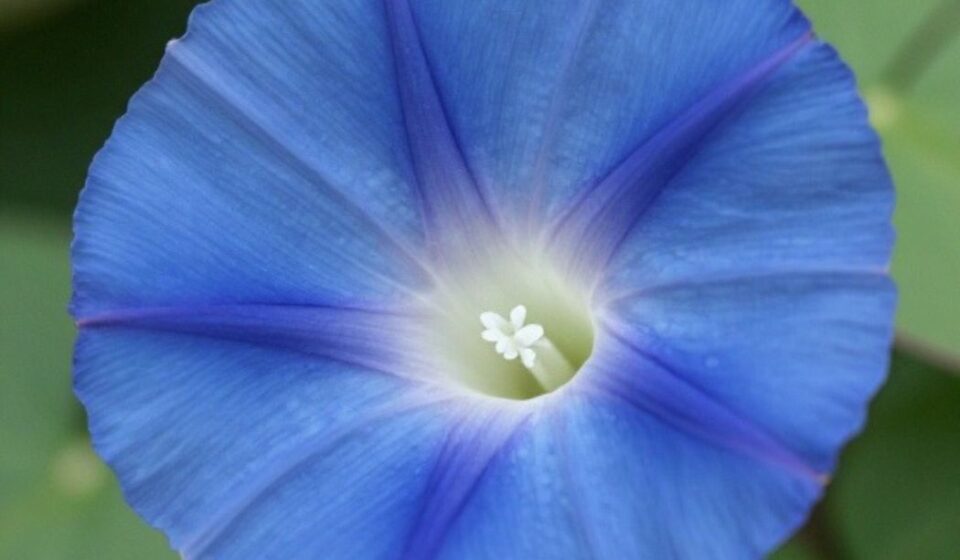
Morning glory (Ipomoea) is a fast-growing vine prized for trumpet-shaped flowers that often bloom at dawn and fade by afternoon.
-
Not all morning glories are invasive, but some species—especially Ipomoea purpurea—are high-risk in warm regions and should be checked against local regulations.
-
The seeds contain LSA, a compound similar to LSD; they can cause serious symptoms if eaten, so keep seed packets away from children and pets.
-
Best choices for cautious gardeners include ‘Heavenly Blue’ and ‘Flying Saucer,’ which set relatively few seeds.
-
Containment is everything: grow in pots, deadhead religiously, and learn to tell annual morning glory from perennial bindweed.
Introduction: The Vine That Seduces You in July and Haunts You in April
It starts innocently. A packet of seeds, a bare trellis, a fantasy of sky-blue trumpets unfurling outside the kitchen window. By midsummer, the vine has done exactly what the packet promised—and then some. It has scaled the fence, woven itself through the roses, and dropped a quiet rain of hard little seeds into every crack and crevice of the garden.
Then spring arrives, and you understand.
Morning glory is one of horticulture’s great paradoxes: a plant that can be both breathtakingly beautiful and quietly domineering, a cottage-garden darling that behaves like a weed in the wrong place. It is also one of the most misunderstood vines in cultivation—praised and condemned in equal measure, often by people who are not actually talking about the same plant.
This guide cuts through the noise. You will learn what morning glory really is, why its flowers vanish by lunchtime, which varieties are worth growing, how to keep it from taking over, and why the seeds demand serious respect. Whether you are a curious beginner or a seasoned gardener who has already done battle with a volunteer seedling or two, there is something here you have not read a hundred times before.
Background: What Exactly Is a Morning Glory?
The name “morning glory” is a common label, not a botanical one. It generally refers to twining vines in the genus Ipomoea, part of the morning glory family, Convolvulaceae. That family also includes sweet potatoes—a reminder that this is a group of plants with deep agricultural and cultural roots.
The genus is enormous and globally distributed. Some morning glories are beloved ornamentals, some are agricultural weeds, and some are important in traditional cultures. The vine’s Latin name is thought to derive from the prefix ip, meaning “worm-like,” a nod to the way the stems twine and curl.
A Plant With a Past
Morning glory is not a recent garden invention. Ancient Mesoamerican civilizations used Ipomoea alba—the moonflower—to process latex from rubber trees, exploiting the sulfur in the plant’s juice to vulcanize rubber centuries before Charles Goodyear. Aztec priests also used certain morning glory seeds in ritual contexts, a fact that still shapes how regulators and health professionals view the plant today.
In Victorian England, the morning glory acquired a more sentimental identity. Because each bloom lasts only a single day, the flower became a symbol of unrequited love, fleeting affection, and mortality. It appeared on gravestones and in flower-language dictionaries, carrying a melancholy that seems at odds with its cheerful, sunlit face.
That tension—between beauty and brevity, delight and danger—has followed the morning glory into the modern garden.
The Science of Fleeting Beauty: Why Morning Glories Open at Dawn
A morning glory flower is a masterclass in timing. Many species open at first light and close by afternoon, a behavior controlled by a combination of light, temperature, and the plant’s internal circadian clock. The trumpet shape is not just decorative; it forms a funnel that guides pollinators toward the nectar reward at the base.
This fleeting display is a reproductive strategy. By opening early, the vine catches bees and hummingbirds when they are most active and before competitors have fully woken up. The flower does not need to last for days because the plant produces new blooms continuously through the season.
For gardeners, this means morning glory is a daily event, not a static display. You do not plant it for a long-lasting bouquet. You plant it for the ritual of looking out the window each morning to see what has opened overnight.
The Pollinator Connection
Not all morning glories attract the same visitors. Flower color and shape influence which pollinators show up. Blue and purple varieties tend to draw bees, while red-flowered species such as Ipomoea quamoclit are more likely to attract hummingbirds and butterflies.
This is a useful design principle. If you want a pollinator-friendly vine, choose a variety whose flower color matches the visitors you hope to see. A red morning glory in a hummingbird garden is not just pretty—it is functional ecology.
Choosing the Right Morning Glory: Varieties That Reward Without Regret
The single most important decision a gardener makes with morning glory is which species or cultivar to grow. The difference between a manageable annual and a multi-year headache often comes down to seed production and regional climate.
Classic and Reliable Choices
-
‘Heavenly Blue’ (Ipomoea tricolor): The heirloom standard, grown since the 1800s. Sky-blue flowers with a white-and-yellow throat. It sets relatively few seeds compared to weedy types, making it a lower-risk choice in many gardens.
-
‘Flying Saucer’: Large white blooms with radiating blue stripes. Another comparatively modest seed-setter, which is why extension guides often recommend it for gardeners worried about spread.
-
‘Pearly Gates’: A white-flowered beauty that won an All-America Selections award in 1942. It remains a favorite for its clean color and steady performance.
-
‘Grandpa Ott’s’: A Bavarian heirloom from the 1870s with royal-purple flowers stamped with a ruby star. Richly nostalgic, but it can self-seed more freely.
Newer and Unusual Options
Breeders continue to release morning glories with novel forms. As of 2026, specialty catalogs are offering selections such as ‘Sunrise Serenade’, a ruffled deep-pink/red vine, and ‘Split Second’, a pink-flowered Ipomoea nil with silky, tousled petals that bloom from summer to frost. ‘Ismay’ is another standout, with sky-blue flowers marked by a deep-blue star and a yellow throat that pollinators find irresistible.
There are also species for specific niches. Cypress vine (Ipomoea quamoclit) has feathery foliage and starry scarlet flowers, and it is a hummingbird magnet. It is not the vine for someone who wants big, bold trumpets, but it is exquisite in a fine-textured planting scheme.
The One Question to Ask Before You Buy
Is this species locally listed as invasive? If the answer is yes, skip it. If the answer is no, ask a second question: how much self-seeding am I willing to manage? That second question matters more than any generic “invasive or not” label.
The Invasive Question: Morning Glory vs. Bindweed
Few topics in gardening generate more confusion than morning glory’s reputation. The confusion is understandable, because two very different plants often get lumped together under the same common name.
Annual Morning Glory: A Aggressive Self-Seeder
The garden morning glory most people plant is typically an annual in cooler climates. It grows fast, flowers hard, and dies at frost. Its “sin” is seed production. A single vine can scatter enough seed to produce a flush of volunteers the following spring. In a container on a balcony, this is a minor nuisance. In open soil near a shrub border, it can become a recurring chore.
Bindweed: The Perennial Nightmare
Field bindweed (Convolvulus arvensis) and hedge bindweed (Calystegia sepium) are perennial vines with deep, persistent root systems. They return from the same roots year after year, and their seeds can remain viable in the soil for decades. Pulling bindweed does not solve the problem; it often just annoys the plant.
The practical distinction is simple. If you pull a vine and it stays gone for the season, you are probably dealing with annual morning glory. If it returns from the same spot with renewed vigor, you are probably dealing with bindweed.
Regional Rules Matter
In Florida, Ipomoea purpurea is rated “High Invasion Risk” by the University of Florida’s IFAS assessment and is not recommended for planting in the state. Other states and regions have their own lists. A responsible gardener checks the local extension office or state invasive-species database before planting, not after the vine has already escaped.
The takeaway is not “never grow morning glory.” The takeaway is grow the right morning glory, in the right place, with a containment plan. A pot on a patio is a very different ecological proposition from a loose vine on a fence line beside a natural area.
Toxicity: What Every Gardener Needs to Know About Morning Glory Seeds
Morning glory seeds contain lysergic acid amide (LSA) , a naturally occurring compound chemically related to LSD. The concentration is low—roughly one-tenth the potency of LSD in Ipomoea violacea—but the seeds are still toxic, especially in large quantities.
Symptoms and Real-World Cases
Poison control centers report that ingestion of morning glory seeds can cause a range of symptoms, from nausea, vomiting, and diarrhea to hallucinations, muscle rigidity, and elevated heart rate. In one documented case, a 13-year-old who swallowed several packets of seeds experienced strange behavior, heavy limbs, and muscle rigidity and required emergency evaluation.
The flowers themselves are generally considered non-toxic if touched or accidentally tasted, but the seeds are the danger. This is an important distinction for families with young children: the risk is not in the bloom, but in the seed packet and the dried pods.
Safety Rules for Responsible Gardeners
-
Store seed packets out of reach of children and pets.
-
Do not encourage seed ingestion for any reason. LSA-containing seeds are not a safe recreational substance; adverse gastrointestinal and psychological effects are common.
-
Supervise children in the garden when seed pods are mature and dry.
-
Compost or dispose of spent vines rather than leaving pods accessible.
Morning glory is not a plant to fear, but it is a plant to respect. The same chemical that makes it culturally significant also makes it a genuine safety concern.
How to Grow Morning Glory: A Practical Guide
Morning glory is genuinely easy to grow, which is part of its charm—and part of its danger. The following guidelines will help you get strong plants without losing control of them.
Starting From Seed
Morning glory seeds have a hard coat. To improve germination, nick the seed coat with a knife or soak the seeds in warm water for 12–24 hours before sowing. Germination typically takes 5–14 days at 65–75°F (18–24°C).
You can start seeds indoors 4–6 weeks before transplanting, but morning glory resents root disturbance. Use a biodegradable pot that can go straight into the ground. In warmer climates, direct sowing after the last frost is often the better choice; plants started too early outdoors can be less vigorous than those sown into warm soil.
Soil, Sun, and Support
Morning glory wants full sun and well-drained soil. It tolerates average to poor fertility and even rocky ground, though it performs best in soil enriched with compost. Too much nitrogen produces lush leaves and fewer flowers.
The vine needs a sturdy support. A fence, trellis, obelisk, or tripod works well. Morning glory twines rather than clings, so it needs something it can wrap around. It will happily climb corn stalks and sunflower stems, a technique with deep roots in traditional companion planting.
Water and Maintenance
Keep the soil consistently moist during germination, but do not let it become soggy. Once established, morning glory is reasonably drought-tolerant. A midsummer liquid feed can prolong bloom, but do not overdo it.
Containment Strategy
The safest way to grow morning glory is in a large container on a visible support, where dropped seedlings are easy to spot and remove. In garden beds, choose a location where you can inspect the vine regularly and where volunteer seedlings will not disappear into dense shrubbery.
Deadhead religiously. Snip spent flowers and young seed pods before they ripen. This is the single most effective way to prevent a morning glory colony from establishing itself.
Common Mistakes and How to Avoid Them
Even experienced gardeners stumble with morning glory. Here are the pitfalls that cause the most regret—and the fixes.
Mistake 1: Planting Without Checking Local Rules
The fix: Spend five minutes on your state extension website or local invasive-species database. If the species is flagged, choose a different vine.
Mistake 2: Confusing Morning Glory With Bindweed
The fix: Learn the leaf difference. Annual morning glory has larger, heart-shaped leaves. Bindweed has smaller, narrower, arrow-like leaves and returns from perennial roots. If you are fighting bindweed, a one-time pull will not work; you need a repeated, long-term strategy.
Mistake 3: Letting Seed Pods Mature
The fix: Deadhead consistently. “No pods, no sequel” is the simplest rule in morning glory gardening.
Mistake 4: Planting in Open Soil Near Natural Areas
The fix: Use containers or dedicated, easily monitored beds. Avoid fence lines that border wild spaces if the species is a known self-seeder.
Mistake 5: Assuming All Morning Glories Are Equally Invasive
The fix: Choose lower-seed-set cultivars such as ‘Heavenly Blue’ or ‘Flying Saucer’ if you want the flowers without the volunteer army.
Pros, Cons, and a Balanced Verdict
Pros
-
Fast, dramatic vertical color in a single season.
-
Pollinator-friendly, especially for bees, butterflies, and hummingbirds.
-
Easy to grow from seed, making it accessible to beginners.
-
Rich cultural and historical resonance, from Aztec rubber-making to Victorian flower language.
-
Diverse forms and colors, from sky-blue trumpets to feathery scarlet stars.
Cons
-
Aggressive self-seeding can turn a single planting into a multi-year management project.
-
Some species are regionally invasive and should not be planted in certain areas.
-
Seeds are toxic and require careful handling around children and pets.
-
Flowers are fleeting, which disappoints gardeners expecting a long-lasting display.
-
Can smother neighboring plants if allowed to sprawl unchecked.
The Balanced Verdict
Morning glory is not a “good” plant or a “bad” plant. It is a high-energy plant with a strong will to reproduce. In a container, on a sturdy trellis, with a gardener who deadheads and checks local rules, it is one of the most rewarding vines you can grow. In open soil, in a warm climate, with no containment plan, it is a lesson in botanical regret.
The difference is not luck. It is species selection and management.
Future Trends: What Is Changing in the World of Morning Glory
As of 2026, three trends are shaping how gardeners and breeders approach morning glory.
1. The “Safe Seed-Set” Breeding Niche
Breeders are paying more attention to cultivars that produce fewer viable seeds. This is not a new idea—‘Heavenly Blue’ and ‘Flying Saucer’ have long been recommended for this reason—but the market is responding to gardeners who want the look without the volunteer seedlings. Expect to see more marketing around “manageable” or “low-reseed” morning glories in the coming years.
2. Native-Plant Preference and Invasive-Species Scrutiny
The broader horticultural conversation has shifted decisively toward native plants and regional appropriateness. In this climate, morning glory’s reputation is uneven. Some species are native to parts of North America; others are introduced and aggressive. Gardeners are increasingly asked to justify not just beauty, but ecological fit.
3. Climate Change and Range Shifts
Warming climates are likely to expand the range where morning glory can self-seed successfully. A species that behaved as a frost-sensitive annual in a cool garden may become a more persistent presence in a warmer one. This makes local monitoring and responsible containment even more important than it was a generation ago. (This is a logical projection rather than a specific data point; gardeners should rely on local extension guidance as conditions change.)
Conclusion: Grow It With Your Eyes Open
Morning glory is a plant that rewards attention and punishes neglect. Its flowers are among the most beautiful in the summer garden, its growth is exuberant, and its history is deeper than most gardeners realize. But it is not a “plant it and forget it” vine. It asks for a decision: which kind, where, and how much follow-up are you willing to do?
The gardeners who love morning glory most are the ones who respect its power. They choose manageable varieties, grow them in visible places, deadhead without sentimentality, and keep seed packets away from curious hands. In return, they get a daily sunrise display that no perennial border can match.
Key Takeaways
-
Morning glory (Ipomoea) is a fast-growing ornamental vine, not a single species; behavior varies dramatically by variety and region.
-
Check local invasive-species lists before planting; Ipomoea purpurea is high-risk in some warm regions.
-
Learn the difference between annual morning glory and perennial bindweed—it changes your entire control strategy.
-
Choose lower-seed-set cultivars such as ‘Heavenly Blue’ or ‘Flying Saucer’ if you want fewer volunteers.
-
Deadhead consistently and grow in containers when possible.
-
Treat seeds as toxic; they contain LSA and can cause serious symptoms if ingested.
-
Expect fleeting flowers—the vine’s beauty is daily, not permanent, and that is part of its charm.
Frequently Asked Questions
Is morning glory invasive?
It depends on the species and the region. Some morning glories are aggressive self-seeders but not formally invasive. Others, such as Ipomoea purpurea, are rated high-risk in certain states and should not be planted there. Always check local extension guidance.
Are morning glory flowers poisonous?
The flowers are generally not considered dangerous to touch or accidentally taste. The seeds are the concern; they contain LSA and can cause nausea, hallucinations, and other symptoms if eaten in quantity.
Why do morning glory flowers close in the afternoon?
The blooms are adapted to open early and attract morning-active pollinators. Many varieties close by midday or afternoon as light and temperature change. Each individual flower lasts only one day, but the vine produces new blooms continuously.
What is the difference between morning glory and bindweed?
Annual morning glory is usually a seeded annual with larger, heart-shaped leaves. Bindweed is a perennial with deep roots, smaller arrow-like leaves, and the ability to regrow from root fragments. Bindweed is far harder to eradicate.
Can I grow morning glory in a pot?
Yes. In fact, container growing is one of the safest ways to enjoy morning glory without risking uncontrolled self-seeding. Use a large pot, a sturdy support, and remove seed pods before they ripen.
How long does it take morning glory seeds to germinate?
Typically 5–14 days at soil temperatures of 65–75°F (18–24°C). Soaking or nicking the seed coat can improve and speed germination.
Will morning glory come back every year?
In warm climates (USDA zones 10 and warmer), some morning glories behave as perennials. In cooler climates, they are grown as annuals, but they often return from self-sown seed.
What should I plant with morning glory?
Sturdy, tall companions such as corn and sunflowers can serve as living trellises. Low-growing flowers like pansies or lobelia can fill the ground layer beneath the vine. Avoid planting morning glory near delicate plants it might smother.
Sources
-
The Garden Playbook, “Are Morning Glories Invasive? 3 Checks Before You Plant” (invasive-risk distinctions, bindweed comparison, containment strategies).
-
Poison Control, “Are morning glories poisonous?” (toxicity, case study, safety advice).
-
ScienceDirect / RIVM / Egyptian Journal of Forensic Sciences, LSA content and clinical effects (via search summaries).
-
Territorial Seed Company, “Morning Glory Grow Guide” (companions, bloom behavior, low-seed-set recommendations).
-
Johnny’s Selected Seeds and Missouri Botanical Garden, germination and soil requirements (via search summaries).
-
Pollinator studies summarized in International Journal of Plant Sciences and related sources (via search summaries).
-
Mesoamerican ethnobotanical references (Aztec rubber processing and ritual use) via Wikipedia and related encyclopedic sources.
-
Victorian flower symbolism sources via Nearly Natural, Bok Tower Gardens, and House Beautiful (via search summaries).
FOR FURTHER INFORMATION, VISIT: THELUXURYLIFEMAGAZINE.COM