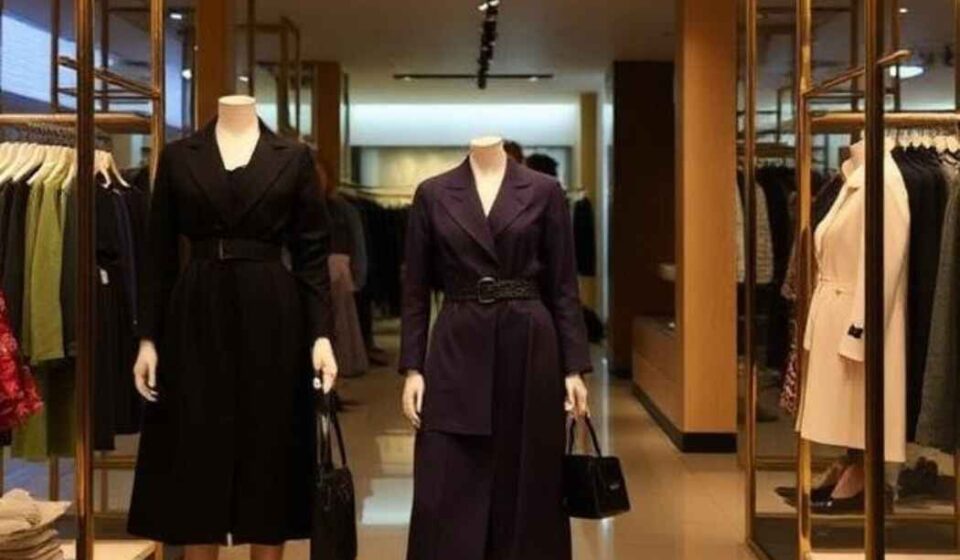
Let me paint you a picture. You’re at a chic dinner party in a sleek New York loft. Across the table sits a guest wearing an impeccably tailored, minimalist camel coat. The fabric is sumptuous, the cut is flawless. Underneath, a simple cashmere knit and perfectly worn-in jeans. At her feet rests a leather tote—no visible logo, no monogram, just exquisite, understated craftsmanship. You notice her partner, casually dressed in an equally minimalist jacket and trousers, yet the weight and drape of the fabric suggest these aren’t just “normal” clothes.
Later, curiosity gets the better of you. You discreetly search for the coat online. You’re stunned.
The brand is The Row. The jacket costs $4,000.
But the real surprise? The guest is a well-known venture capitalist who could easily afford ten times that. When complimented on her outfit, she laughs. “Thanks. The coat’s from The Row, the jeans are from Uniqlo, and the bag is this amazing vintage find. I hate feeling like a walking billboard for a brand. I just want clothes that feel good.”
This story captures a seismic shift in the world of fashion. The old rules of the game, the rigid hierarchy of status, are being rewritten. The pyramid of upmarket fashion brands is not just cracking—it’s transforming. In 2026, it’s less about the logo on the outside and more about the feeling on the inside, the story behind the product, and the values it represents.
Table of Contents
ToggleBackground: The Old Fashion Pyramid and Its Discontents
For decades, the fashion industry operated on a clear, predictable pyramid.
-
At the Peak: Ultra-luxury heritage houses like Louis Vuitton, Chanel, and Hermès. They sold exclusivity, craftsmanship, heritage, and a sense of unattainable status.
-
The Middle Tier: Upmarket “accessible luxury” and premium brands like Hugo Boss, Massimo Dutti, and COS. This was the aspirational space, offering better quality and a taste of luxury at a more achievable price.
-
The Base: High-street giants like Zara, H&M, and Primark. These brands democratized trend-driven fashion at a low cost, prioritizing speed to market over durability or prestige.
This model was built on a simple premise: more money equals more prestige. Consumers aspired to climb the pyramid; brands reinforced this desire through careful storytelling, scarcity, and, of course, price. The logo was the ultimate marker of success.
But this pyramid was always a fragile construct. As a recent industry analysis noted, “the pyramid helps reveal what many consumers are beginning to understand: price and quality are not always linear”. In 2026, that realization has become a full-blown consumer revolt.
The Great Reset: Why Upmarket Fashion is Changing
The year 2026 is being called the year of fashion’s “Great Reset”. The traditional hierarchy is being dismantled by a confluence of powerful forces. Consumers are no longer passive recipients of brand messaging; they are active, skeptical participants in a global conversation.
The Rise of the Discerning Consumer
Modern shoppers—especially Gen Z and millennials—are more informed and empowered than ever before. As Forbes India points out, “young consumers are questioning the script… they are interrogating value and values”. They research materials, scrutinize supply chains, and value authenticity over mere marketing hype. A logo is no longer enough.
This has led to a “redefinition of value and more immersive experiences” in the luxury space. Luxury is no longer just about owning a product; it’s about the experience, the meaning, and the connection to a brand’s ethos.
The “Quiet Luxury” Phenomenon
Nowhere is this shift more apparent than in the explosion of “quiet luxury.” Also known as “stealth wealth,” this aesthetic rejects logos and ostentatious branding in favor of impeccable quality, timeless design, and subtle sophistication. According to Madame Figaro, “quiet luxury in 2026 is no longer a trend, but the ‘underlying operating system’ of luxury itself”.
Brands at the forefront of this movement—like The Row, Loro Piana, and Brunello Cucinelli—don’t scream for attention. They whisper. They signal to those “in the know” through the purity of the materials and the precision of the cut, rather than a prominent monogram. This trend also explains the meteoric rise of figures like Phoebe Philo, whose eponymous brand has seen triple revenue growth in just two years by offering precisely this kind of authoritative, quiet wardrobe.
The Mid-Market Boom: The Sweet Spot
The crumbling of the pyramid has created a massive opportunity in the middle. With ultra-luxury brands pushing prices to astronomical levels and fast fashion facing a crisis of ethics and quality, a huge gap has opened up.
Industry analysts have noted that as high-end European brands “trade up and serve the rich,” they’ve created a “significant price umbrella” for brands that serve the aspirational consumer. As one analyst explained, “You don’t want to spend €100 on a jacket, but you don’t want to spend €3,000 either. And maybe you find a good one at Zara for €300 or €400. I think this mid-price segment is definitely one of the areas that could grow the most”.
This is where upmarket brands are thriving. Brands like COS, Arket, and Massimo Dutti are offering sophisticated design and quality fabrics at a fraction of the price of top-tier luxury. They are the new “sweet spot” for the discerning consumer who wants quality and style but refuses to pay for a legacy name alone. Even traditional retailers like Marks & Spencer are capitalizing on this shift with a renewed focus on “tailored linen shirts, chino pants, and knitwear” that provide exceptional value. This is the new frontier of upmarket fashion.
Practical Tips: Navigating the New World of Upmarket Fashion
So, how do you shop in a world where the old rules no longer apply? It requires a new mindset and a new strategy.
1. Think “Cost-Per-Wear,” Not “Sticker Price”
That fast-fashion top might cost £20, but it will likely look shabby after three washes. The £150 COS shirt, however, is made from durable, natural fibers and a timeless design you’ll wear for years. Spending more upfront on quality pieces “saves money in the long run” . Look for natural fibers (cotton, linen, wool) and strong stitching, reinforced seams, and reliable hardware.
2. Master the Art of the Mix-and-Match
The new status symbol is a curated, personal style that blends high and low. Pair a heritage jacket with a mid-market knit. Team a luxury handbag with a high-street dress. As one commentator perfectly put it, “Identity is no longer dictated by a single brand tier, it’s curated, hybrid and personal”. The goal is to build a wardrobe that reflects your taste, not a logo.
3. Look for the “Story,” Not Just the “Status”
Consumers today, particularly “the Chinese customer is more focused on authentic storytelling, not marketing mumbo jumbo. They see through the smoke and mirrors of the industry”. This is a global trend. Before you buy, ask: Where was this made? What materials were used? What does this brand stand for? As explained by one expert, “storytelling must go beyond the tired tales of founders and ateliers; it must connect with contemporary values, subcultures, and communities”.
4. The R in Upmarket Stands for Resale
The luxury resale market is booming and represents a new way to access upmarket brands. Many Gen Z consumers “meet luxury first through the secondhand market, not the marble-floored flagship store”. This is a fantastic way to find unique pieces, discover vintage treasures, and shop more sustainably. Buying pre-owned is no longer a compromise; it’s a statement of taste and values.
Common Mistakes and Challenges (and How to Solve Them)
Shopping for upmarket fashion in this new era has its own set of pitfalls.
Mistake 1: Confusing Price with Quality
| Problem | Solution |
|---|---|
| Assuming a high price tag automatically guarantees superior quality. | Learn to recognize quality for yourself. Examine the stitching, feel the fabric, and check the lining. The industry is full of mid-range brands that produce comparable quality to labels above them but lack the same prestige narrative. Don’t be seduced by the price tag alone. |
| Mistake 2: Chasing the Wrong Status | |
| Wearing logos and monograms to signal success, which can often appear dated or unsubtle in the current quiet luxury era. | Focus on “expressive luxury” built on self-expression and identity rather than pure status display. Let your style be a reflection of your personality, not a billboard for a brand. |
| Mistake 3: Ignoring Sustainability | |
| Viewing sustainability as a marketing buzzword rather than a key purchasing criterion. | In 2026, upmarket consumers are increasingly not okay with a $10,000 handbag that exacts a hidden human or environmental toll. With nearly 25% of luxury consumers stating that a brand’s environmental policies are a mandatory factor in their purchase, sustainability is a core component of the value proposition. |
Pros, Cons, and a Balanced Analysis
The new landscape offers distinct advantages but also introduces new challenges.
Pros of the “New Upmarket”
-
Better Value: Consumers have more access to high-quality products at mid-range prices. The mid-market boom offers incredible value.
-
Focus on Craftsmanship: The rise of quiet luxury has put the spotlight back on materials and design, raising the bar for the entire industry.
-
Authentic Connection: Brands are forced to be more transparent and values-driven, creating a more meaningful connection with consumers.
-
Hybrid Curation: You are no longer bound to one tier. You can create a truly personal and stylish look by combining pieces from different levels.
Cons and Challenges
-
Polarization: The industry may be splitting into two extremes: ultra-expensive, authoritative brands and a “creative winter” for independent designers who cannot afford to play the new game of expensive, direct-to-consumer models.
-
The AI Question: The growing use of AI in design and marketing raises questions about authenticity, job displacement for creatives, and the potential loss of “the chaotic surprises that make our hearts race”.
-
Geopolitical Uncertainty: The global economy remains volatile. Geopolitical tensions in the Middle East, import duties, and market instability continue to create an “impossible-to-understand situation” for brands to navigate. This can lead to unpredictable shifts in the market.
Future Trends and Predictions
The fashion landscape will continue to evolve. Here’s what we can expect by 2030 and beyond.
-
Hyper-Personalization: AI will enable truly bespoke shopping experiences, with brands treating every customer like a VIP.
-
Sustainability as the Status Quo: “Inclusivity is the other side of the value coin”. Sustainability will be a non-negotiable baseline, not a differentiator.
-
The Rise of “Experiential Retail”: Stores will become destinations. A boutique will be “a place to go to get an immersive experience that’s all about interacting with the fashion,” not just making a transaction.
-
Luxury Wellness: Expect to see high-end fashion brands diversify into wellness and longevity, creating all-in-one lifestyle solutions for their clients.
Conclusion: The New Hierarchy of Value
The fashion pyramid is indeed crumbling, and its fragments are being reassembled into a new structure based on a different set of values. In 2026, the hierarchy of upmarket fashion brands is no longer a neat, vertical line. It’s a more complex, fluid, and democratic landscape.
Key Takeaways
-
Quality over Logos: The new status symbol is impeccable quality, not a loud logo.
-
Values over Price: Consumers are aligning with brands that share their values, particularly regarding sustainability and ethics.
-
Ditch the Pyramid: You don’t have to stick to one tier. Smart shopping means mixing and matching across different price points to create a personal, authentic style.
-
The “Sweet Spot” is Mid-Market: Brands like COS, Arket, and Massimo Dutti offer exceptional design and quality for the discerning consumer without the heritage markup.
-
Experience is Everything: The future of luxury is experiential, interactive, and deeply personal.
Ultimately, the new fashion hierarchy is defined by you. As Malte Karstan’s fascinating analysis concludes, “Value is no longer a peak to climb; it’s a vibration to awaken. A quiet frequency where an object stops being a product and becomes a presence, a memory, a trace”.
FAQs: Your Questions About Upmarket Fashion in 2026
1. What exactly is “quiet luxury”?
Quiet luxury is a fashion aesthetic that prioritizes exceptional quality, timeless design, and subtle sophistication over loud logos and flashy branding. It’s the “stealth wealth” look where craftsmanship and materials speak louder than a visible monogram.
2. Is it worth investing in mid-range brands like COS or Massimo Dutti?
Yes. These brands offer a “sweet spot” in the market. They provide the elevated design and fabric quality that is lacking in fast fashion without the extreme price tag of heritage luxury houses. They are a smart investment for building a durable, stylish wardrobe.
3. How is Gen Z changing the landscape of upmarket brands?
Gen Z is demanding authenticity, sustainability, and transparency. They research products thoroughly and value a brand’s story and ethics over its legacy. They are also major drivers of the booming luxury resale market, seeing it as a sustainable and savvy way to access high-quality items.
4. What’s the most common mistake when shopping for upmarket clothing?
The most common mistake is confusing a high price with high quality. It’s essential to check the materials, construction, and finishing of a garment. A £400 jacket from a mid-range brand can often be of the same, if not better, quality than a £2,000 one from a bigger name.
5. How is artificial intelligence (AI) being used in the fashion industry in 2026?
AI is being used to create e-commerce imagery and product descriptions, cutting significant costs. It’s also being used for hyper-personalization in customer relationship management and to analyze consumer sentiment, particularly in key markets like China.
Sources
-
Karstan, M. (2025, November 13). Louis Vuitton and CHANEL at the Top, HUGO BOSS in the Middle, Primark and SHEIN at the Base… [LinkedIn post].
-
South China Morning Post. (2026, June 28). Hotel boutiques are now destinations, not afterthoughts.
-
Tellar. (2025, July 9). Brands like Primark, but better…
-
BusinessWorld. (2026, June 27). Fashion and Heat: H&M plans for long, hot summers.
-
System Magazine. (2026, June 10). Imran Amed & Luca Solca.
-
Madame Figaro Hong Kong. (2026, May 12). Fashion Great Reset|2026春夏時尚趨勢解析.
-
Bain & Company via The Star. (2026, June 27). Luxury fashion expected to show growth as consumers seek ‘normal’ lives.
-
LUXUO. (2026, January 15). How Luxury Fashion Brands Are Making Magic Happen In 2026.
-
LUXUO. (2026, March 10). Heritage Vs Contemporary: The Two Worlds of Parisian Perfumery.
-
LUXUO. (2025, March 24). Modern Luxury Watches Honour Tradition to Define the Future.
-
Forbes India. (2025, October 21). The future of luxury: Heritage reinvented for a new generation.
-
Country and Town House. (2026, January 8). The Secret Of Enduring British Brands? Balancing History With Modernity.
Tags:
Upmarket Fashion Brands
admin
M Umer Abbasi is a luxury lifestyle journalist and editorial curator specializing in haute horology, passion investments, and avant-garde design. With an eye for flawless craftsmanship and heritage storytelling, he deconstructs the world of high-ticket assets—from secondary watch market trends to the evolution of bespoke tailoring. His work focuses on shifting the luxury narrative away from fleeting trends and toward timeless design, raw materials, and true artisanship. When he isn’t dissecting mechanical complications or reviewing five-star sanctuaries, he tracks blue-chip alternative asset indices. Connect with him via cbdfame@gmail.com