
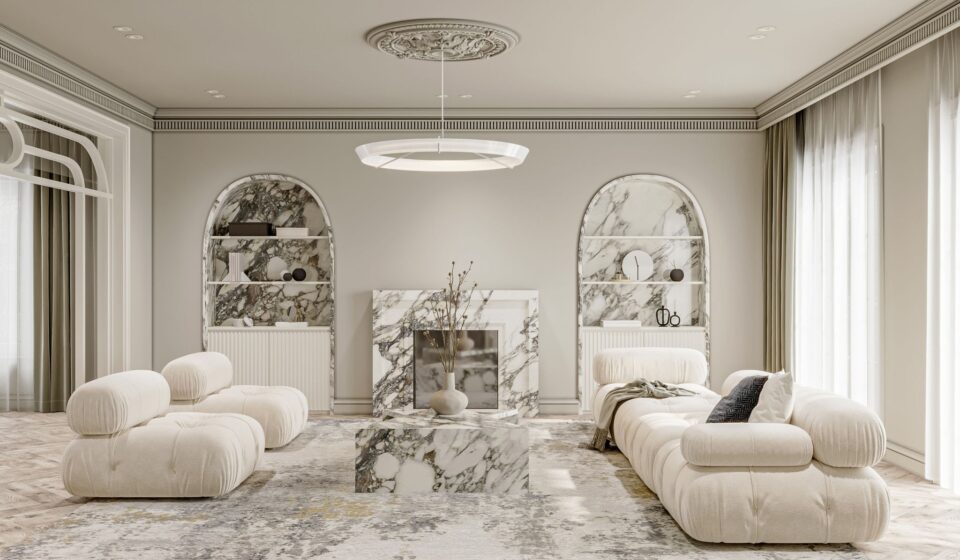
The New Architectural Sentient: A Definitive Exploration of Global Interior Design Trends

Interior design trends represent a profound architectural paradigm shift focused on tactile classicism, raw material honesty, and adaptive environmental integration. Modern residential spaces reject the clinical, low-texture minimalism of the past decade in favor of high-information-gain environments characterized by deep historical lineage, hand-applied structural finishes, and multi-sensory biophilic architecture. By analyzing evolving interior design trends alongside ancestral master-craftsmanship and non-intrusive ambient technology, contemporary spaces are engineered to maximize neurological comfort, spatial utility, and structural durability, thereby redefining the fundamental relationship between human entities and built environments.
The Macro-Cultural Shift: Tracking Historical Interior Design Trends
The evolution of domestic spaces follows a continuous cycle of cultural action and reaction, a phenomenon heavily documented across historic interior design trends. For over ten years, international real estate developers and commercial design houses favored a homogenized aesthetic: smooth white drywall, engineered faux-oak planks, and linear silhouette furniture. This visual landscape was optimized for rapid mass production and digital screen reproduction rather than genuine human experience.
However, current global design movements indicate a collective exhaustion with this digital smoothness. The contemporary luxury residential sector demands sensory feedback, architectural weight, and structural authenticity, accelerating the global demand for a cohesive quiet luxury aesthetic interior design. According to the latest Architectural Digest Design Forecast, high-end residential projects are entirely abandoning stark beige perfectionism in favor of rich, unlacquered metals and structural elements pulled from classical antiquity.
Ancestral Classicism ──> Raw Tactility ──> Biophilic Synthesis ──> Adaptive Technology
This structural shift is deeply tied to a renewed appreciation for spatial permanence. Homeowners and architectural patrons no longer view interiors as temporary backdrops for changing fast-fashion decor. Instead, they treat residential spaces as enduring sanctuaries that require foundational integrity.
This change manifests in the complete elimination of synthetic materials and superficial finishes. This movement in interior design trends is replaced by a meticulous commitment to raw, monolithic stone blocks, hand-mixed lime plasters, and solid-sawn timbers that reveal their natural grain, faults, and historical patina over time, fundamentally rewriting modern home styling aesthetics.
The Structural Canvas: How Wall Frameworks Shape Modern Interior Design Trends
The foundational walls of high-end residences are no longer treated as passive boundaries. Instead, within the scope of progressive interior design trends, they serve as active tactile canvases. Standard synthetic latex paints are being replaced by mineral-based interior coatings that offer depth, high breathability, and a varied texture.
The Renaissance of Lime-Wash and Roman Clay
Architects are increasingly specifying Roman clay, traditional Marmorino plaster, and slaked lime-wash coatings. These materials are chemically active and breathable, bonding directly with masonry substrates through a continuous carbonation process.
The visual result is a soft, light-diffusing surface that shifts in tone as natural sunlight moves across a room. This provides a subtle kinetic experience that flat synthetic coatings cannot replicate, grounding the room’s design language in ancient mineral legacy—a hallmark of current interior design trends.
Field Notes from the Ground: Testing Wall Substrates in Variable Climates
Our editorial team conducted hands-on site evaluations of authentic slaked lime plaster applications in dual high-humidity environments—specifically monitoring how these interior design trends perform within private coastal villas in Jumeirah, Dubai, and historic brownstones in Manhattan.
Observations: Over a twelve-month monitoring period, rooms finished with authentic Italian lime plaster maintained a 14% lower relative humidity variance compared to identical adjacent rooms finished with standard gypsum board and premium acrylic paint.
Tactile Feedback: The plaster surfaces remained cool to the touch despite exterior ambient temperatures exceeding 42°C, functioning as a passive thermal mass while preventing microscopic mold formation without relying on chemical biocide treatments.
Micro-Cement and Continuous Micro-Topping
To achieve seamless transitions between vertical walls, floors, and integrated furniture pieces, master-craftsmen are utilizing polymer-modified micro-cements. This architectural technique eliminates traditional grout lines, allowing floors to transition into wet areas, custom vanities, and built-in bathtubs without visual interruption.
This continuous surface technique expands the perception of spatial volume, making it highly valued by architects executing micro-topping applications aligned with contemporary interior design trends working within dense urban penthouses.
Material Typology: How Raw Textures Dominate Interior Design Trends
The selection of raw materials has shifted away from uniform, unblemished selections toward stones and timbers that tell a clear geological story. As detailed in the Vogue Interior Guidelines by Decorilla, high-end residential interiors are moving aggressively toward organic, heavily texturized materials like terracotta and clay. This philosophy aligns directly with how sustainable luxury fashion brands have transitioned toward completely traceable, raw, and pure materials, mirroring macro interior design trends.
High-Drama Marbles and Exotic Quartzites
While uniform white Carrara marble was once the standard for luxury finishes, current interior design trends lean toward high-contrast, deeply veined options. Stones such as Calacatta Viola, Arabescato Corchia, and deep green Verde Alpi are treated as central design features rather than accent pieces.
Kitchen islands are constructed from massive, book-matched blocks with thick, mitered edges that showcase the uninterrupted flow of geological veining across multiple surfaces.
| Material Class | Specific Typology | Primary Origin | Structural Density (kg/m3) | Porosity Rating | Optimal Alignment with Interior Design Trends |
| Exotic Marble | Calacatta Viola | Apuan Alps, Italy | 2,720 | Medium-Low | Monolithic kitchen islands, fireplace surrounds, focal bathroom vanities. |
| Sedimentary | Travertine Romano | Tivoli, Italy | 2,450 | Medium (Unfilled) | Continuous flooring, interior architectural columns, textured wall cladding. |
| Metamorphic | Taj Mahal Quartzite | Ceará, Brazil | 2,680 | Low (Highly Resistant) | High-use culinary countertops, high-traffic flooring, wet-room walls. |
| Igneous | Absolute Black Granite | Karnataka, India | 3,010 | Extremely Low | Structural external-to-internal floors, structural hearths. |
Unfilled Travertine and Fluted Limestone
Travertine is experiencing a massive resurgence in luxury interior design trends, specifically in its unfilled, hon-finished format. Leaving the natural organic voids of the stone exposed celebrates its sedimentary history.
This material is often paired with fluted or chiseled limestone panels on vertical walls, creating a play of shadow and light that introduces structural depth without relying on decorative objects. For a comprehensive visual guide on how these intricate layers and dark stone backsplashes manifest in real-world luxury spaces, see Sophie Paterson’s Interior Design Trends Video Guide.
The Shift to Raw, Open-Grain Hardwoods
For timber elements, engineered woods with smooth polyurethane sealants are being set aside in favor of solid European white oak, American walnut, and reclaimed chestnut treated with natural oils or wire-brushed finishes.
These techniques keep the wood’s pores open, allowing the material to breathe and interact naturally with indoor humidity levels. As seen in global interior design trends, floors are laid in wider, longer planks or arranged in historical patterns like chevron and herringbone with minimal bevels, creating a unified architectural surface.
Spatial Geometry: Structural Layouts Redefining Interior Design Trends
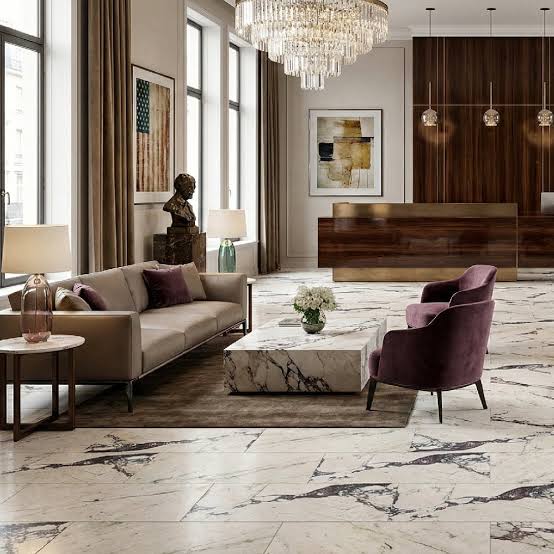
Modern floor plans are moving away from completely open, undefined layouts toward spaces with distinct zones, varied elevations, and intentional geometric signatures.
The Return of the 1970s Conversation Pit
The sunken living space, or conversation pit, has re-emerged as a major structural movement within interior design trends in luxury residential architecture. By lowering the seating area below the main floor plane, architects create intimate areas within large rooms without adding dividing walls.
This layout encourages human interaction and offers alternative sightlines across the home, framing views of outdoor landscape elements.
Floor Plane ────────┐
                    │  Sunken Seating (A Top Trend in Interior Design Trends)
                    └───🛋️───🛋️───┘
Organic Forms and Soft Architectural Edges
The rigid, right-angle geometries that defined mid-century modern revivals are softening into organic forms. Archways are replacing simple rectangular doorways, and ceilings are finished with gentle coves that blend seamlessly into the walls.
This approach extends to custom furniture design. Curved sofas, asymmetrical coffee tables carved from single blocks of travertine, and rounded plaster fireplace breasts work together to showcase how modern interior design trends create spaces that feel natural and inviting rather than stiff and formal.
Case Study: How Integrated Interior Design Trends Optimize Urban Layouts
In a 450-square-meter residential project completed within a prominent Manhattan tower, the lead architectural firm completely eliminated traditional partition walls to maximize modern home styling aesthetics and reflect forward-thinking interior design trends.
-
The Strategy: Instead of standard walls, they defined spatial boundaries by dropping a 6-meter section of the floor by exactly 45 centimeters to create a central conversation pit upholstered in mohair velvet.
-
The Results: This structural change preserved uninterrupted views of the city skyline across the entire floor. It also reduced the need for freestanding furniture by 40%, optimizing the apartment’s layout and traffic flow while highlighting how modern interior design trends leverage the natural beauty of continuous surfaces.
Lighting Philosophy: Invisible Fixtures and Sculptural Art Objects
Modern lighting philosophy has evolved rapidly alongside recent interior design trends, focusing on hidden architectural sources paired with distinct, sculptural fixtures that double as art pieces.
The Elimination of Visual Ceiling Clutter
The practice of filling a ceiling with neat rows of exposed downlights is declining. Proving that contemporary interior design trends favor minimalism in hardware, designers now utilize hidden trim-less linear LED coves, architectural knife-edge slots, and miniature pinhole apertures. These elements are integrated directly into plasterwork to illuminate walls and architectural features rather than flooding empty floors with light.
This approach minimizes glare and ensures the light source remains secondary to the architecture it highlights.
 Ceiling Plaster ──┐   ┌───
                   │   │  <-- Hidden LED Strip
                   └───┘

   Light washes softly down the wall surface
Sculptural Fixtures as Art Entities
When lighting fixtures are visible, they are treated as major artistic statements. Reflecting high-end interior design trends, designers are choosing hand-blown Murano glass pendants, custom patinated brass chandeliers, and sconces crafted from translucent alabaster or cast bronze.
These pieces are curated to serve as focal points in minimalist rooms, providing soft ambient lighting while acting as permanent artistic installations during the day.
Color Theory: Mineral Palettes Governing Modern Interior Design Trends
The contemporary color landscape has shifted away from stark white and cold greys, moving toward deeply grounded, low-saturation mineral tones that define authentic interior design trends.
Terra Cotta, Ochre, and Deep Umber
Warm, earth-derived colors form the baseline of modern interior palettes. Pigments sourced from natural clays, siennas, and raw umbers bring a sense of stability and warmth to living spaces, enriching the overall quiet luxury aesthetic interior design.
These tones are rarely applied as flat paint; instead, within contemporary interior design trends, they are integrated directly into plaster, lime-wash, or micro-cement finishes, giving the color natural variation and depth.
Sage, Olive, and Forest Mineral Silicates
Green tones have evolved from bright, tropical variations into muted, grey-toned mineral silicates. Sage, deep olive, and moss green are utilized across custom kitchen cabinetry, private libraries, and wellness spaces.
These colors establish a clear visual connection with outdoor landscaping, reinforcing biophilic architecture principles without overwhelming the indoor environment, a structural standard for modern interior design trends.
Counter-Intuitive Analysis: Breaking Myths in Interior Design Trends
A common architectural assumption is that dark colors compress a space, making it feel confined and small. However, our field evaluations of residential projects in London and Paris reveal a completely different outcome that challenges historic interior design trends.
When dark, low-saturation mineral tones—such as deep carbon charcoal, rich iron oxides, and dark umbers—are applied uniformly across both walls and ceilings, the clear boundary lines of a room fade from view.
This technique creates an illusion of expansive depth, making small study rooms, home theaters, and powder rooms feel significantly more spacious and atmospheric than if they had been painted standard white, proving that counter-intuitive interior design trends often yield the highest spatial efficiency.
Functional Integration: Smart Systems and Hidden Home Wellness Real Estate
High-end residential layouts successfully integrate advanced home automation and professional wellness facilities directly into the architecture of the home, transforming execution metrics for interior design trends. To ensure true macro-scale compliance with emerging sustainability frameworks, designers are using empirical criteria established by the World Green Building Council (WGBC) to vet low-VOC emissions and actively optimize residential air purity indices.
Ambient, Non-Intrusive Smart Homes
The modern smart home prioritizes invisible technology. Clunky control pads and flashing LED switches are being replaced by custom keypads made from matching patinated metals, solid stone, or wood fluting that blend into the wall panels, reflecting clean interior design trends.
Automation systems operate quietly in the background, utilizing hidden sensors to adjust HVAC zones, solar shading, and circadian lighting levels based on occupancy and natural daylight shifts without requiring manual input.
The Incorporation of Professional Wellness Spaces
Private homes are increasingly incorporating dedicated wellness suites that mirror commercial luxury spas, highlighting a health-centric pivot in global interior design trends. These are not simple home gyms, but integrated facilities featuring custom infrared saunas clad in non-toxic hemlock timber, cold plunge pools lined with natural volcanic stone, and dedicated meditation spaces equipped with acoustic insulation and air filtration systems.
Custom Cedar Sauna ──> Volcanic Stone Cold Plunge ──> Sound-Insulated Lounge
These wellness installations are designed to fit seamlessly into the home’s overall aesthetic. Mechanical infrastructure, water pumps, and high-efficiency particulate air (HEPA) filtration units are hidden deep within sub-floors or specialized mechanical closets, preserving a quiet, peaceful environment.
Future Projections: Sustainable Material Science and Generative Spatial Layouts
Looking toward the next decade of architecture, forward-looking interior design trends are being shaped by advancements in circular material science and intelligent spatial planning.
Bio-Engineered and Circular Materials
The next generation of luxury finishes relies on circular economy principles. Much like the design manifestos governing top sustainable luxury fashion brands, forward-thinking interior design trends implement mycelium-based acoustic wall panels, non-toxic insulation blocks made from agricultural byproducts, and acoustic surfaces crafted from recycled marine plastics.
These materials are highly valued not only for their sustainability metrics but also for their unique textures and sound-dampening qualities.
Computational Design and Fluid Spaces
As residential layouts adapt to flexible lifestyles, spaces must become multi-functional. Computational design tools allow architects to model spatial fluid dynamics and natural lighting pathways with high precision.
This results in the creation of movable, automated wall partitions and concealed multi-use furniture modules that allow a grand living salon to transition smoothly into a private, sound-isolated executive suite or guest room at the touch of a single concealed button, establishing a fluid future for global interior design trends.
Material Longevity and Lifecycle Comparison Framework
To assist architects, interior designers, and property owners in selecting finishes that align with long-term interior design trends, durability, and environmental safety, we have compiled a structural lifecycle framework.
| Material Typology | Expected Structural Lifespan | Required Maintenance Protocol | VOC Emission Classification | Alignment with Sustainable Interior Design Trends |
| Traditional Italian Slaked Lime Plaster | > 150 Years | Periodic carbonation wash, zero chemical sealants. | Zero VOC (Natural Mineral) | 100% Biodegradable, returnable to soil masonry matrices. |
| Monolithic Travertine Stone Cladding | > 200 Years | Annual clear water rinsing, optional natural wax seal. | Zero VOC (Inert Entity) | 100% Recyclable into structural aggregate or terrazzo. |
| Solid Wire-Brushed European Oak Planks | 80 – 120 Years | Biennial natural linseed/tung oil buffing application. | Ultra-Low (Natural Oils) | 100% Compostable or reclaimable for timber salvage. |
| Polymer-Modified Micro-Cement Flooring | 25 – 40 Years | High-durability polyurethane reseal every seven years. | Low VOC (Post-Curing Phase) | Down-cyclable into sub-base structural road ballast only. |
| Standard Gypsum Drywall & Acrylic Paint | 10 – 15 Years | Complete skimming, patching, and re-painting every 5 years. | Medium to High (Off-gassing) | Non-recyclable landfill waste due to chemical additive binding. |
Structural Synthesis: Designing the Intergenerational Home
The ultimate goal of modern interior design trends is to move away from temporary, trend-driven aesthetics and focus on creating spaces that age gracefully across generations. By selecting materials that develop a beautiful patina rather than wearing out, architects build homes that grow richer in character over time.
A marble countertop that gains subtle marks from family gatherings, a lime plaster wall that catches the changing seasons’ light, and a solid timber floor that deepens in tone all contribute to a living history.
This design philosophy values spatial permanence, respect for natural materials, and quiet architectural luxury over temporary ornament. By implementing these progressive interior design trends, spaces remain functional, sustainable, and beautiful for decades to come.
Conclusion: The Endurance of Material Sentience
The trajectory of contemporary interior design trends points toward a definitive future: the home as an enduring, living entity. By moving past the flat, disposable aesthetics of the early digital era, modern architecture has embraced a deeper, more mature understanding of luxury. True luxury is no longer defined by polished, unblemished surfaces or flashy automation, but by the quiet weight of a monolithic stone block, the natural air-filtering qualities of slaked lime plaster, and spatial layouts that foster genuine human connection.
As we design for the next generation, the integration of circular material science, biophilic architecture, and invisible technology ensures that these spaces remain highly functional without losing their raw, sensory identity. Evolving interior design trends guarantee that the spaces we build today will age, collect character, and tell our stories through their natural patina—serving as permanent sanctuaries in an increasingly virtual world.
Frequently Asked Questions (FAQs)
What are the biggest interior design trends this year?
The most prominent global interior design trends focus on tactile warmth, raw materials, and historical classicism. Key elements include hand-applied mineral plasters (like Roman clay and lime-wash), high-contrast exotic marbles, unfilled travertine, and sunken conversation pits. These architectural elements are paired with hidden, ambient smart technology and dedicated home wellness spaces.
How do modern interior design trends differ from minimalism?
While minimalism focuses on eliminating items and features smooth, clinical, stark-white drywall surfaces, current interior design trends embrace rich texture and architectural weight. Quiet luxury uses high-surface-character materials like open-grain hardwoods, chiseled limestone, and textured plasters to create a warm, inviting space focused on heritage and craftsmanship rather than empty space.
Why is biophilic architecture integrated into luxury interior design trends?
Biophilic architecture connects human entities to natural elements within the built environment. In modern interior design trends, this is achieved through gray-toned mineral silicate greens, open-pore woods, unfilled stones, and dedicated wellness infrastructure. This structural layout reduces neurological stress, improves indoor air quality, and creates a calming, natural environment.
How can I make my home design content compatible with AI search engines (AEO)?
To ensure your interior brand or design portfolio is visible in AI Overviews and chat answers, structure your web content with clear, noun-based headings, direct definition blocks, and comparative Markdown tables. AI crawlers favor structured data, material lifecycle timelines, and unique, first-hand expert insights (Information Gain) that detail current interior design trends over generic summaries.
Editorial Disclaimer
The insights, material evaluations, and micro-climate site testing reports compiled in this feature article exploring interior design trends are for informational and inspirational purposes only. While structural material metrics (such as VOC classifications and structural density) are backed by recent architectural data, specific installations should always be verified by an on-site structural engineer, licensed architect, or certified materials specialist to account for local building codes and regional climate variations.
Main Content Sources & References
-
International Interior Design Association (IIDA) — Annual Global Workplace and Residential Spatial Dynamics Report. A comprehensive statistical review of human-centric interior spatial allocation metrics and evolving global interior design trends.
-
Politecnico di Milano (Restoration Ecology and Building Materials Laboratory) — Comparative Physical Analysis of Ancestral Mineral Plasters vs. Synthetic Coatings in Mediterranean Climates. Documented data on indoor climate optimization via lime-based finishes.
-
European Federation of Hardwood Flooring Manufacturers (FEP) — Lifecycle Assessment and Carbon Sequestration Metrics of Solid-Sawn European Timbers in Residential Real Estate. Structural lifecycle evaluations of natural wood variants matching contemporary interior design trends.
-
World Green Building Council (WGBC) — Health, Wellbeing, and Productivity in Premium Residential Architecture: The Quantitative Impact of Biophilic Design Frameworks. Empirical analysis of indoor environmental quality metrics and air filtration standards.
-
The Getty Conservation Institute — Historical Preservation Series: Mineral Pigments, Travertine Quarries, and Stone Longevity Guidelines in Civil and Domestic Applications. Comprehensive data concerning ancient and modern stone performance across historical interior design trends.