
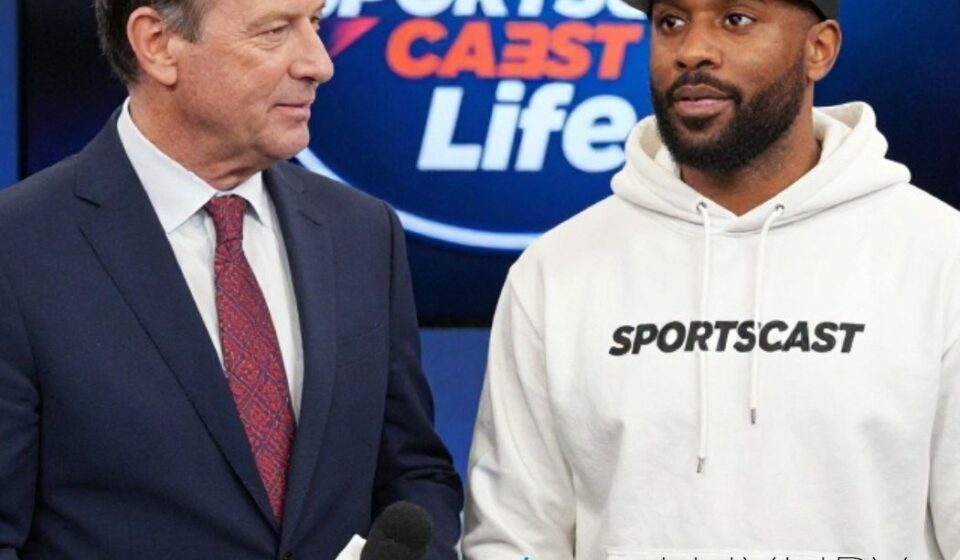
It’s 11:47 p.m. on a Sunday in February. Mike Tirico has just finished calling the Super Bowl for NBC. Most people would call it a night. Instead, he grabs his pre-packed bags, heads to a private jet, and flies to Italy to host Winter Olympics coverage the next evening. His secret weapon? Two cups of coffee and a lifetime of preparation.
That’s the sportscast life in a nutshell. It’s not just about having a golden voice or a quick wit. It’s a profession that demands relentless preparation, physical endurance, emotional resilience, and an almost obsessive love for the game — whatever game you’re covering. And in 2026, it’s a career undergoing its most dramatic transformation since the advent of television.
Whether you’re an aspiring broadcaster dreaming of the big leagues, a curious fan wondering what happens behind the mic, or a mid-career professional navigating the chaos, this deep dive will give you the unfiltered truth about life as a sportscaster in the modern era.
Background: What Exactly Is the Sportscast Life?
The term “sportscast life” encompasses far more than the 60 minutes you see on screen. It’s an entire ecosystem: the pre-dawn research sessions, the airport lounges, the production meetings, the social media engagement, the relationships with coaches and players, and yes, the occasional 2 a.m. hotel-room script rewrite.
For decades, sportscasting was a relatively stable career path. You paid your dues in minor league markets, climbed the ladder, and eventually landed a comfortable regional or national gig. But the ground has shifted dramatically. As veteran NBC Sports Boston reporter Trenni Casey put it, the industry now demands “multifaceted content creators who can shoot, edit, and engage across all social platforms” — and the era of the “one-person-band” journalist has returned.
The numbers tell the story. Global sports media rights climbed to over $67 billion in 2026, up nearly 10% from the previous year, with North America accounting for more than half of that spending. Meanwhile, traditional regional sports networks — once the backbone of local sportscasting jobs — are collapsing under the weight of cord-cutting. More money is flowing into sports than ever, but it’s not always flowing to the people behind the microphone.
Welcome to the paradox of the modern sportscast life.
The Daily Grind: What a Sportscaster’s Day Actually Looks Like
Ask ten sportscasters what their typical day looks like, and you’ll get ten different answers. But certain patterns emerge.
Preparation Is Everything
For Nuggets play-by-play announcer Chris Marlowe, game day starts with notes, “ladders” (organized charts of players and storylines), and listening to coaches’ press conferences to extract one or two usable insights for the broadcast. “The minute the game is over,” he says, “I’m thinking about the next game”.
That obsessive preparation is non-negotiable at the highest level. Kevin Harlan, one of the most traveled sportscasters of his era, maintains leather-bound weekly planners documenting every flight, every backup route, and every assignment across his three national employers — CBS Sports, Amazon Prime Video, and Westwood One Sports. “If I don’t stay on schedule,” Harlan says, “well, I don’t like that feeling”.
The Travel Reality
Travel is the great equalizer of the sportscast life. It doesn’t matter if you’re calling a mid-major college basketball game in a 3,000-seat gym or Thursday Night Football — you’re on the road, often for weeks at a time. Tennis Channel host Steve Weissman, who spends up to 45 days on the road, has built a portable fitness routine around yoga, weight training, and a minimum of 50 push-ups before every shower.
For some, the grind becomes unsustainable. Former NBC 6 lead sportscaster Sara Cardona left her local TV job in 2026, citing burnout. “Working weekends, holidays and then just the 2 to 11:30 schedule is a grind,” she said. “I admire those that have been doing it for a long time because it’s not easy at all”.
The Performance Pressure
Every live broadcast carries the weight of the moment. Marlowe’s mantra is disarmingly simple: “When I’m calling a game, one thing that I always pay attention to is don’t screw it up”. That anxiety never fully goes away. The best broadcasters channel it into sharper focus — knowing that a game-winning call can become legendary, and a missed one can become a career footnote.
The Multifaceted Modern Sportscaster: Why “Just a Voice” Is No Longer Enough
The days of showing up, calling the game, and going home are over. Today’s sportscaster is a content machine.
Trenni Casey’s advice is blunt: “You cannot just be a sideline reporter. You cannot just be an anchor. You cannot just be a writer. You have to be able to do all of it, and you don’t need to be the best at every facet of it, but you need to be pretty good at all of them”.
That means shooting your own B-roll, editing highlight packages, writing for web, hosting a podcast, and maintaining an active — but authentic — social media presence. Some sportscasters have leaned into this. Sam Levitt, the Voice of the Amarillo Sod Poodles, built a following of over 357,000 on TikTok as “TikTok’s Sportscaster,” blending comedy with play-by-play. Brad Galli of Detroit has built a digital-first sports reporting operation that meets fans on the platforms where they already spend their time.
The Counterargument: Fundamentals Still Win
But here’s the nuance most career advice articles miss. Veteran broadcasters Will Flemming and Frank Cusumano want young people to hear a hard truth: social media virality is not a career strategy. “I would not think of yourself as an online personality presence,” Flemming said. “I think it’s a sugar high these days.” His prescription? Master fundamentals first, build human connections deliberately, and read books. “If you can just be a more well-rounded human being in the world that we’re in now, that’s something I tell young aspiring broadcasters all the time”.
Cusumano’s standard for interns is even more direct: “By the end of this internship, I better know your name. You have got to be the greatest intern of all time because there’s such few jobs in this business”.
The sportscast life rewards those who can balance both: digital savvy and old-school fundamentals.
The Business Realities: Salaries, Job Security, and the Shifting Landscape
What Sportscasters Actually Earn
Here’s where expectations often collide with reality. According to Salary.com data from 2025, the average annual salary for a sports broadcaster in the United States ranges from roughly $42,000 to $70,000, depending on location and market size. In Pearland, Texas, the average is $55,985. In Fremont, California, it’s $70,834. Entry-level sports anchor positions in markets like West Bloomfield, Michigan, list starting salaries around $46,000 to $50,000.
Yes, top-tier talents like Stephen A. Smith command nine-figure deals. But those are the outliers, not the norm. For every national voice, there are hundreds of local broadcasters grinding through 2 to 11:30 p.m. shifts for modest pay.
The Regional Sports Network Collapse
The economic foundation of local sportscasting has cracked. Regional sports networks (RSNs) — which once paid teams billions for local broadcast rights and employed legions of broadcasters — are in freefall. As of mid-2026, U.S. pay-TV subscriptions had fallen from approximately 100 million in 2016 to around 62 million. Main Street Sports, which owned roughly 15 RSN channels, is winding down operations, and MLB has taken over distribution for 14 teams.
The fallout for broadcasters is real: fewer local jobs, more centralized production hubs, and a scramble for streaming-era roles that may not yet fully exist. FanDuel Sports Network’s centralized production hub in Denver, for example, drew criticism from workers who feared it would hurt broadcast quality and eliminate local expertise.
The Growth Areas
But it’s not all doom and gloom. Women’s sports are experiencing a broadcasting boom, with expanded coverage creating new opportunities for analysts, reporters, and play-by-play voices. Streaming platforms are spending aggressively on sports rights — an estimated $14.2 billion in 2026 alone — and they need talent. Active players are also entering the broadcast booth in unprecedented numbers, from Draymond Green’s guest analyst appearances to Caitlin Clark’s studio work for NBC.
The sportscast life is becoming more diverse, more digital, and more fragmented — but also more opportunity-rich for those who adapt.
The AI Disruption: Bot Costas or Better Broadcasts?
No conversation about the sportscast life in 2026 is complete without addressing the elephant in the production truck: artificial intelligence.
AI has moved from the fringes to the center of sports broadcasting. Amazon Prime Video uses AI to spotlight defenders likely to blitz pre-snap. ESPN has deployed AI-generated voices tuned to sound like real anchors for personalized SportsCenter recaps. Telemundo’s World Cup coverage featured AI-generated segments that sent analysts flying through New York City.
And then there’s the uncanny. In 2026, the New Mexico Open featured “Duff Foreman,” the first AI-generated golf announcer to join a professional broadcast, providing live, unscripted, data-driven commentary on club selection, wind conditions, and strategy. Jim Nantz has even been approached about licensing his voice for an AI project that would continue calling events “from the grave”.
The Human Element Endures — For Now
Fans and critics have pushed back. Awful Announcing’s Matt Yoder wrote that AI “may have the capacity to kill us all and wipe out humanity as we know it, but one thing it can’t do yet is provide interesting golf analysis”. The AI golf commentator was widely panned.
Still, the technology is improving. The 2026 Milan-Cortina Winter Olympics featured AI-supported real-time 360-degree replays and an “Olympic GPT” tool for fan queries. AI is making broadcasts more efficient, more personalized, and more data-rich. The question is whether it will make the human sportscaster more or less essential.
Most industry insiders believe the human element — storytelling, emotional connection, the ability to read a room — remains irreplaceable. But the definition of what a sportscaster does is shifting. The future sportscaster may spend less time narrating and more time crafting narratives, interpreting data, and building community.
Practical Tips for Aspiring Sportscasters
If you’re drawn to the sportscast life, here’s how to give yourself a real shot.
1. Build fundamentals before you build a brand. Learn to write conversationally, call a game accurately, and report without notes when necessary. Will Flemming’s advice to read books and become a well-rounded person isn’t quaint — it’s strategic. The best broadcasters are storytellers first.
2. Treat internships like auditions. Cusumano’s standard — “By the end of this internship, I better know your name” — should be yours. Be the first to arrive, the last to leave, and the one who asks the smartest questions.
3. Learn every tool in the kit. Shoot, edit, write, produce, host, and post. You don’t need to be an expert at all of it, but you need to be competent at most of it. Full Sail University and similar programs emphasize broadcast writing, sports production, on-air delivery, and highlight creation for exactly this reason.
4. Network deliberately, not desperately. Don’t send mass emails. Build relationships with one or two mentors at a time. The Sportscasters Talent Agency of America recommends starting your job search at least three months before you need a job, and leaning on alumni networks.
5. Use social media as a showcase, not a substitute. Post highlights, stories, and behind-the-scenes content. But don’t confuse follower count with broadcasting skill. Flemming’s warning is worth repeating: “If you only think of yourself as how many followers you have … I do not think that’s the right way to build a career”.
Common Mistakes and How to Avoid Them
Mistake #1: Over-relying on stats. Will Flemming’s observation is sharp: “People have enough numbers at their own job. We don’t need to flood them with numbers.” His conviction: “People want to be told stories. They want to relax. They want to take it easy”. Statistics support the story; they don’t replace it.
Mistake #2: Neglecting your health. Burnout is rampant in the industry. A 2025 study in Communication & Sport found that sports broadcasters who left local TV cited feeling “overworked and underpaid,” with many blaming newsroom management for their exit. Build sustainable routines — exercise, sleep hygiene, and actual days off — before you need them.
Mistake #3: Ignoring the contract fine print. Sara Cardona’s experience is instructive: local news contracts often restrict outside sponsorship deals, limiting a broadcaster’s earning potential in the social media era. Understand what you’re signing before you sign it.
Mistake #4: Assuming the job is just talking. The sportscast life is research, relationships, logistics, and resilience. The talking is the easy part.
Pros, Cons, and a Balanced Look at the Sportscast Life
Pros:
-
Front-row access to the biggest moments in sports
-
A creative outlet that combines storytelling, performance, and analysis
-
Expanding opportunities in women’s sports, streaming, and digital-first media
-
The satisfaction of being the soundtrack to fans’ memories
Cons:
-
Modest pay relative to the hours and travel required
-
High burnout and turnover, especially in local TV
-
Job insecurity amid RSN collapses and AI experimentation
-
Time away from family, holidays spent in press boxes, and relentless travel schedules
The honest assessment: the sportscast life is not for everyone. It rewards those who genuinely love the process — the research, the craft, the relationships — as much as the spotlight.
Future Trends: What the Sportscast Life Looks Like in 2030
Personalization will go deeper. AI-powered broadcasts tailored to individual viewing preferences — your favorite team, your preferred analyst, your language — are already in trial phases. ESPN’s “SportsCenter for You” is an early example.
The booth will become a content studio. Sportscasters will increasingly be expected to produce podcasts, social clips, newsletters, and live streams alongside traditional broadcasts.
Regional will go national — and vice versa. As RSNs collapse, leagues may centralize local broadcasts, creating new national roles for local voices. The NBA is already exploring a consolidated local broadcast model for the 2027-28 season.
AI will handle more, but humans will handle the moments. Expect AI to manage data overlays, replay angles, and personalized recaps. Expect humans to handle the championship calls, the emotional interviews, and the stories that make sports matter.
Conclusion: The Sportscast Life Is a Calling, Not a Job
The sportscast life in 2026 is messier, more demanding, and more uncertain than it was a decade ago. Salaries are uneven. Job security is fragile. The technology is changing faster than anyone can track. And the hours? They’re brutal.
But for those who feel the pull — who can’t watch a game without mentally calling the action, who light up at the challenge of telling a story in real time — there’s no better life. The sportscast life is a calling. It’s the privilege of being the voice that fans hear when they remember the greatest moments of their lives.
If you’re ready for it, the mic is waiting.
Key Takeaways
-
The sportscast life demands more than a good voice. Modern broadcasters must shoot, edit, write, and engage across platforms.
-
Salaries vary widely, from roughly $42,000 to $70,000 for most broadcasters, with top-tier exceptions.
-
AI is transforming the industry — from personalized recaps to AI announcers — but human storytelling remains irreplaceable.
-
Burnout is a real risk. Sustainable routines, contract awareness, and genuine passion are essential.
-
Fundamentals still matter most. Social media can open doors, but old-school skills and relationships build careers.
-
The future is digital-first. Streaming, personalization, and centralized production will reshape the sportscast life through 2030.
Frequently Asked Questions
Q: How much does a sportscaster make?
A: Most sports broadcasters earn between $42,000 and $70,000 annually, depending on market size and experience. Top national talents can earn millions, but those are outliers.
Q: Do I need a college degree to become a sportscaster?
A: While not strictly required, most sportscasters have degrees in communications, broadcasting, or journalism. Hands-on experience through internships and student media is equally important.
Q: Will AI replace sportscasters?
A: AI is automating data-heavy tasks and enabling personalized broadcasts, but human storytelling, emotional connection, and live improvisation remain irreplaceable. Expect augmentation, not replacement — at least in the near term.
Q: What’s the hardest part of the sportscast life?
A: Travel and time away from family. Many broadcasters work weekends, holidays, and late nights, and the schedule can be grueling.
Q: How do I break into the industry?
A: Start early, intern aggressively, build a demo reel, network deliberately, and be willing to start in small markets. The Sportscasters Talent Agency of America recommends beginning your job search at least three months in advance.
Q: Is social media necessary for a sportscasting career?
A: It helps with visibility and personal branding, but veteran broadcasters warn against relying on virality. Fundamentals and relationships matter more for long-term success.
Sources
-
Casey, T., & Holtan, S. (2025). Game Over? What Colleges Need to Know about Sportscasting’s Future. Captivate Podcast.
-
Radio Ink. (2026, June 16). What Really Gets You Hired in Sports Radio? Not TikTok, Pros Say.
-
USA Today. (2026, June 2). Inside the NBA and WNBA’s booming player-to-broadcast pipeline.
-
The Hollywood Reporter. (2026, September 4). AI Is Bringing Broadcasters Back From the Dead — and Creating New Ones.
-
The New York Times. (2026, February 11). Mike Tirico Went From the Super Bowl to the Olympics on Two Cups of Coffee.
-
PBS. (2026, January 16). Day in the life of a Nuggets announcer.
-
Sports Business Journal. (2026, March 20). SBJ Unpacks: How Kevin Harlan navigates the miles.
-
Hull, K. (2025). Loved It, Miss It, Would Never Go Back: Why U.S. Local Television Sports Broadcasters are Leaving the Industry. Communication & Sport, 13(2), 303–320.
-
Sports Video Group. (2026, September 10). First AI-Generated Golf Announcer To Debut During New Mexico Open.
-
Salary.com. (2025). Sports Broadcaster Salary Data.
-
CNBC. (2026, April 2). Regional sports networks are faltering even as ratings soar.
-
S&P Global Market Intelligence. (2026, April 8). Global sports rights climb to over $67 billion in 2026.
-
SportsPro. (2026, February 2). Streamers to spend US$14.2bn on sports rights in 2026.
-
Miami Herald. (2026, June 24). Sara Cardona explains why she left NBC 6.
-
Sportscasters Talent Agency of America. (2025). Smart advice for the sportscasting job market.
-
Fox Sports. (2026, September 11). Doris Burke and Doc Rivers named to ESPN and ABC’s top NBA crew.
FOR FURTHER INFORMATION, VISIT: THELUXURYLIFEMAGAZINE.COM