
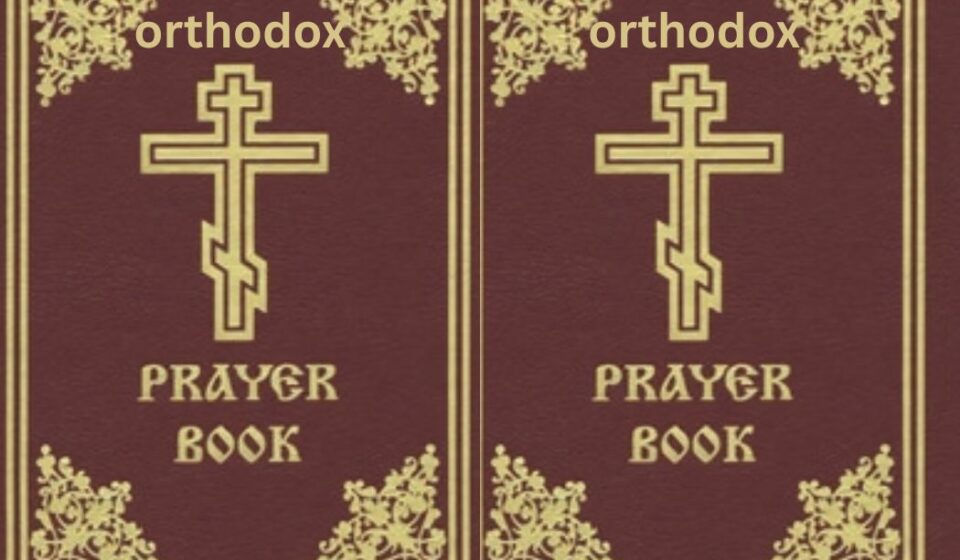
Open any Orthodox Christian’s prayer corner, and you will likely find a small, worn volume with ribbon markers, dog-eared pages, and a faint scent of incense. That book — the Orthodox prayer book — has shaped the spiritual lives of countless believers for centuries. But in 2026, with smartphones buzzing and attention spans shrinking, does a printed collection of ancient prayers still have a place?
The answer is a resounding yes. In fact, as digital distractions intensify, the Orthodox prayer book has become more valuable, not less. It offers something no algorithm can replicate: a fixed, disciplined, theologically rich framework for conversing with God. Whether you are a lifelong Orthodox Christian, a convert, or simply curious about Eastern Christian spirituality, understanding the Orthodox prayer book is essential to understanding how Orthodox Christians actually pray.
This guide will walk you through everything you need to know: the history, the major editions, how to build a sustainable prayer rule, common pitfalls, and where the tradition is heading in 2026 and beyond.
What Exactly Is an Orthodox Prayer Book?
An Orthodox prayer book (often called a molitvoslov in Slavic traditions or proseuchetarion in Greek) is a collection of prayers designed primarily for private devotional use by laypeople. It is distinct from the large liturgical service books used by clergy — such as the Euchologion (priest’s book of sacraments) or the Horologion (Book of Hours) — though it often borrows from them.
Think of it this way: the liturgical books contain the Church’s public worship. The prayer book translates that same theological vision into a portable, personal format. It is the Church’s prayer life adapted for the kitchen table, the bedside, the commute, and the quiet moments of daily life.
A Brief History
Before printing, prayer books were handwritten and often lavishly illuminated. Because of the cost, they were largely limited to clergy, monastics, and the wealthy. With the advent of the printing press, prayer books became accessible to ordinary laypeople, and they have been a cornerstone of Orthodox piety ever since.
The term Euchologion (Greek for “Book of Prayers”) was historically applied to what we now distinguish as either the priest’s service book or the layperson’s prayer collection. The Slavonic Molitvoslov served a similar dual purpose before specialization occurred. By the 17th century, printed prayer books for personal use were circulating widely in Slavic lands and Greek-speaking regions alike.
The Anatomy of an Orthodox Prayer Book
Not all prayer books are identical, but most share a recognizable core structure. Understanding these components helps you navigate any edition you pick up.
Morning and Evening Prayers
This is the heart of the daily prayer rule for most Orthodox Christians. The morning prayers typically include the Trisagion, the Lord’s Prayer, the Symbol of Faith (Nicene Creed), and a series of petitions for the day ahead. Evening prayers include an examination of conscience, prayers for forgiveness, and commemoration of the departed. The Jordanville Prayer Book, for example, contains “full Morning and Evening Prayers” alongside the Divine Liturgy and a wealth of additional material.
Preparation for Holy Communion and Confession
Most comprehensive prayer books include the Canon of Preparation (often three canons: to Christ, to the Theotokos, and to the Guardian Angel), the Akathist hymns, and the Thanksgiving Prayers after Communion. These are essential for anyone approaching the chalice.
The Psalter
Many prayer books include the Psalms, often divided into the twenty kathismata used in Orthodox liturgical reading. The Psalter is the prayer book within the prayer book — the foundational text of all Christian prayer.
Canons, Akathists, and Troparia
These hymnographic texts enrich personal devotion, especially during fasting seasons or in preparation for feasts. A good prayer book will include at least the Small Supplicatory Canon to the Theotokos and the Canon of Repentance.
Occasional Prayers
Prayers before meals, before study, for the sick, for travelers, for the deceased — these “occasional” prayers sanctify the ordinary moments of life. The St. Tikhon’s Orthodox Christian Prayers, for instance, includes “Prayer for Any Meal, Before Study” and many others.
Instructional Material
Many editions include explanatory notes on posture, the Jesus Prayer, fasting, and how to approach confession. The Old Believer Prayer Book is particularly noted for its extensive instructional content and reader-service formats.
Major Editions and Translations: Which Orthodox Prayer Book Is Right for You?
Choosing a prayer book can feel overwhelming. Here is a comparison of the most widely used editions in the English-speaking world.
The Jordanville Prayer Book (Holy Trinity Monastery)
The gold standard for traditional English. First published in 1979, it remains “perhaps the most popular Orthodox prayer book published in the English language,” selling thousands of copies annually. It uses Victorian English (“Thou/Thy”) and follows Russian monastic usage. It includes the Divine Liturgy of St. John Chrysostom, akathists, canons, and a Psalter according to the Septuagint.
Best for: Those who love traditional language and want a comprehensive, one-volume resource rooted in Russian tradition.
Watch out for: The ROCOR-specific prayers for the Russian nation, which some may wish to adapt.
The Ancient Faith Prayer Book
A modern-language alternative that has received “overwhelmingly positive feedback” for its “clear organization and accessibility for both beginners and seasoned Orthodox practitioners”. The language is contemporary and easy to follow, making it ideal for newcomers.
Best for: Converts, inquirers, and anyone who finds Elizabethan English a barrier to prayer.
My Orthodox Prayer Book (Theodore Stylianopoulos)
A pocket-sized classic published by the Greek Orthodox Archdiocese. It is described as “intended for both personal and family devotions,” with “fresh format and contemporary language” and clear direction about prayer, Bible study, confession, and Holy Communion. One reviewer noted receiving the same book at Sunday School graduation over 35 years ago and still using a “very worn” copy.
Best for: Greek Orthodox families, young adults, and those wanting a compact, affordable option.
Orthodox Christian Prayers (St. Tikhon’s Monastery Press)
Edited by Hieromonk Herman and Priest John Mikitish, this pocket-size volume refines the language of the beloved 1982 St. Tikhon’s edition. It follows traditional Russian/OCA usage and includes daily prayers, prayers for various needs, canons, akathists, and troparia.
Best for: Those in the OCA tradition or anyone seeking a beautifully bound, “old English” prayer book with a Russian flavor.
The Anthologion (Saint Ignatius Orthodox Press)
A monumental 1,300+ page “prayer library in a single book.” It uniquely includes the Horologion with Lenten and Paschal variants, the Octoechos, General and Festal Menaion, selections from the Triodion and Pentecostarion, the full Psalter divided into kathismata, and more. It is designed to offer “the full daily office of prayer in a slightly simplified form” — essentially an Orthodox equivalent to the Western Breviary.
Best for: Serious laypeople who want to pray the daily cycle of services at home and are willing to invest in learning a more complex system.
A Prayer Book for Orthodox Christians (Holy Transfiguration Monastery)
A hardbound Old English prayer book following Greek usage, with a translation in harmony with the monastery’s acclaimed Psalter and Great Horologion. It includes the services of Small Compline, Vespers, Matins, and the Divine Liturgy, plus akathists and canons.
Best for: Those who follow Greek/Athonite usage and appreciate the HTM translation style.
How to Use an Orthodox Prayer Book: A Practical Guide
Owning a prayer book is one thing. Praying with it consistently is another. Here is a practical framework.
1. Start with a Prayer Rule, Not a Marathon
The Orthodox tradition emphasizes a prayer rule (kanon) — a fixed, manageable set of prayers said daily. Fr. Christopher Metropulos advises setting “a dedicated time and place for prayer” and using a timer so you are “not bound to clock-watching”. Begin with the morning and evening prayers only. Add canons and akathists later.
2. Seek Guidance from a Spiritual Father
This is non-negotiable in Orthodox practice. St. Silouan the Athonite warned that if you think you can guide yourself by books alone, “you are on a dangerous path and not far from delusion”. Your priest or spiritual father should help you calibrate the length and content of your rule.
3. Pray with Your Body
Orthodox prayer is not merely intellectual. The OCN guide recommends including “standing, kneeling, bowing, making the sign of the cross, or prostrating”. The Jordanville Prayer Book includes helpful instructions on when to bow and cross yourself.
4. Avoid Rushing
“Before praying, quiet your soul by reflecting on the awe, holiness, and graciousness of the God you approach,” writes Metropulos. “Replace worldly thoughts with heavenly ones”. If a phrase moves you, linger there. Let the words sink in.
5. Don’t Let the Rule Become a Taskmaster
“The Prayer Rule is external protection we put on for a purpose,” Metropulos reminds us. “Never lose sight that it is a protection, not the ultimate purpose”. If your rule is crushing you, it is too long. If it is boring you, you may need to add variety or seek deeper understanding.
Common Mistakes and How to Avoid Them
Even sincere believers stumble. Here are the most common pitfalls.
Mistake #1: Legalism
“Legalism arises when someone believes he can be saved by the observance of rules and regulations,” warns one Orthodox reflection. The prayer book is a tool, not a magic formula. Missing a day does not condemn you. Praying the entire Psalter in one sitting does not make you holier than the person who prayed five minutes with tears.
Solution: Remember that prayer is a relationship, not a transaction. Regular confession and spiritual guidance keep legalism in check.
Mistake #2: Abandoning the Rule Entirely Because You Missed a Day
This is the flip side of legalism — despair. Many people give up their prayer rule because they “failed” by missing a morning.
Solution: Be flexible. The tradition recognizes that circumstances change. A shortened rule said with attention is better than a full rule rushed through.
Mistake #3: Using the Wrong Translation for Your Stage
A beginner who picks up the Anthologion may drown. A seasoned prayer warrior who uses only a minimal pocket book may stagnate.
Solution: Match the book to your stage. Start with the Ancient Faith Prayer Book or My Orthodox Prayer Book. Graduate to Jordanville or the Anthologion when ready.
Mistake #4: Neglecting the Jesus Prayer
The Jesus Prayer — “Lord Jesus Christ, Son of God, have mercy on me, a sinner” — is the heartbeat of Orthodox spirituality. Many prayer books include a section on it, often with the Rule of Saint Pachomius. Yet beginners often skip it in favor of longer written prayers.
Solution: Integrate the Jesus Prayer throughout the day, not just during formal prayer times. It is the simplest and most profound prayer in the Orthodox arsenal.
Mistake #5: Praying Only from the Book
The prayer book is a guide, not a cage. The tradition encourages spontaneous prayer as well. One Orthodox writer notes that written prayers can become “thoughtless and contrived” if used mechanically, but they also protect us from self-centered “Amazon wish list” prayers.
Solution: Use the book as a foundation, then add your own words. Both are needed.
Print vs. Digital: The 2026 Landscape
As of 2026, the Orthodox prayer book exists in three main formats: print, digital text, and app-based.
The Case for Print
Print remains the gold standard for devotional use. It is distraction-free. It does not buzz. It engages the body — the weight of the book, the turning of pages, the ribbon marker. The Jordanville Prayer Book, for example, is praised for its “beautiful design” and “well-bound quality” that enhances the prayer experience.
The Digital Text Option
Kindle and PDF editions offer portability and searchability. The Jordanville Prayer Book and several others are available digitally. For travelers or those with limited shelf space, this is a viable option.
The App Revolution
In 2026, Orthodox prayer apps have matured significantly. Athon: Orthodox Bible offers “a complete prayer book with audio,” daily Scripture readings, fasting calendars, lives of over 900 saints, and even AI-powered Orthodox Q&A. Prayerbook UOC provides all prayers and rites offline in Church Slavonic and Ukrainian. The Orthodox Christian Prayerbook app offers morning prayers and premium subscriptions starting at $3.99/month.
The Greek Orthodox Archdiocese reported over 1,000,000 monthly page accesses for its DCS website and up to 40,000 monthly sessions on its iOS app as of 2026.
The Verdict
Digital apps are excellent for supplementary use — checking a reading, learning a new prayer, praying while traveling. But for the core daily rule, print remains superior for most people. The tactile, non-notified experience supports attention and reverence in ways that screens struggle to replicate.
Pros, Cons, and Balanced Analysis
Pros of Using an Orthodox Prayer Book:
-
Provides theological grounding and protects against self-centered prayer
-
Connects you to centuries of Christian tradition
-
Offers structure for those who don’t know what to say
-
Portable and adaptable to different life stages
-
Rich in scriptural and patristic content
Cons and Challenges:
-
Can become legalistic if used mechanically
-
Traditional language can be a barrier for some
-
Comprehensive editions can overwhelm beginners
-
Print books can be expensive and bulky
-
Digital versions can introduce distraction
The Balanced View: The prayer book is a tool, not a master. It exists to serve your relationship with God, not to replace it. The best prayer book is the one you actually use — consistently, attentively, and with the guidance of a spiritual father.
Future Trends and Predictions
Looking ahead to the late 2020s and beyond, several trends are shaping the Orthodox prayer book landscape.
1. AI-Assisted Prayer and Study. Apps like Athon already feature AI-powered Q&A. We can expect more sophisticated tools that help users find relevant prayers, understand difficult passages, and adapt rules based on church calendar and personal circumstances. The key question will be whether AI enhances or replaces the human element of prayer.
2. Pan-Orthodox Editions. The Anthologion represents a significant step toward a pan-Orthodox prayer book that transcends jurisdictional boundaries. We are likely to see more editions designed for use across Greek, Russian, Serbian, and Antiochian communities.
3. Modern Language Renaissance. The success of the Ancient Faith Prayer Book and similar modern-language editions signals a growing demand for accessible texts without sacrificing theological depth. Expect more translations that balance beauty and clarity.
4. Audio Prayer. With the rise of audio content, prayer books with professionally recorded audio — like those offered in the Athon app — will become more common. This serves commuters, the visually impaired, and those who learn better by hearing.
5. Hybrid Print-Digital Editions. Some publishers are experimenting with print books that include QR codes linking to audio or digital supplements. This bridges the tactile and the digital.
Conclusion: Key Takeaways
The Orthodox prayer book is far more than a book. It is a doorway into the Church’s living tradition of prayer — a tradition that stretches from the desert fathers to the digital age. Whether you pray from a worn Jordanville volume or a prayer app on your phone, the goal remains the same: communion with God.
Key Takeaways:
-
The Orthodox prayer book (molitvoslov) is a collection of prayers for private devotional use, distinct from liturgical service books.
-
Major editions include the Jordanville Prayer Book, Ancient Faith Prayer Book, My Orthodox Prayer Book, St. Tikhon’s Orthodox Christian Prayers, and the Anthologion.
-
A prayer rule should be manageable, guided by a spiritual father, and flexible enough to adapt to life’s seasons.
-
Common mistakes include legalism, despair over missed days, wrong translation levels, and neglecting the Jesus Prayer.
-
Print remains superior for core devotional use, while digital apps serve as valuable supplements.
-
Future trends point toward AI-assisted tools, pan-Orthodox editions, modern language translations, and audio prayer resources.
Frequently Asked Questions (FAQs)
Q1: What is the best Orthodox prayer book for a beginner?
The Ancient Faith Prayer Book or My Orthodox Prayer Book are excellent starting points due to their modern language and manageable size. If you prefer traditional English, the Jordanville Prayer Book is the classic choice, but it can be overwhelming initially.
Q2: Can I use a digital prayer book instead of a printed one?
Yes, but with caution. Digital versions are convenient for travel and study. However, for your daily prayer rule, a printed book minimizes distraction and supports a more reverent, focused experience. Many people use both.
Q3: Do I need a spiritual father to use an Orthodox prayer book?
Ideally, yes. The Orthodox tradition strongly emphasizes guidance from a priest or experienced spiritual mentor, especially when establishing or changing your prayer rule. Self-guided prayer carries risks of delusion and pride.
Q4: What is the difference between the Jordanville Prayer Book and the Anthologion?
The Jordanville Prayer Book is a traditional Russian-style collection focused on morning/evening prayers, canons, and akathists. The Anthologion is a much larger, more comprehensive volume that includes the daily cycle of services (Horologion, Octoechos, Menaion selections) — essentially a full prayer library in one book.
Q5: Is it okay to write in my prayer book?
Many Orthodox Christians underline, highlight, or add notes in their prayer books. It is a personal devotional tool. However, if the book is blessed for liturgical use, treat it with appropriate reverence.
Q6: How long should my prayer rule be?
There is no universal answer. A common starting point is 10–15 minutes in the morning and 10–15 minutes in the evening. Your spiritual father should help you calibrate based on your circumstances, health, and stage of spiritual growth.
Q7: What if I miss a day of prayer?
Do not despair. Simply resume the next day. The prayer rule is a discipline, not a salvation checklist. God’s mercy is greater than your inconsistency.
Q8: Are there Orthodox prayer books in languages other than English?
Absolutely. Prayer books exist in Greek, Church Slavonic, Russian, Serbian, Romanian, Arabic, Ukrainian, and many other languages. In 2026, digital apps like Prayerbook UOC offer bilingual and multilingual options.
Sources
-
OrthodoxWiki, “Prayer Book” — overview of English-language editions and history
-
OCN / Fr. Christopher Metropulos, “Simple Guidance for Developing an Orthodox Prayer Rule”
-
Google Books, “Prayer Book” (Jordanville) — publication history and description
-
Ancient Faith Store, Jordanville Prayer Book customer reviews
-
Ancient Faith Store, “The Ancient Faith Prayer Book” customer reviews
-
St. Tikhon’s Monastery Press, “Orthodox Christian Prayers”
-
Saint Ignatius Orthodox Press, “Anthologion” product description
-
Apple App Store, “Athon: Orthodox Bible” app listing
-
Orthodox Marketplace, “My Orthodox Prayer Book” product description and reviews
-
Orthodox Christian Network, “An Aid to Prayer: Some Thoughts on the Use of a Prayer Book”
-
St. Silouan the Athonite, quoted in Orthodox spiritual guidance sources
FOR FURTHER INFORMATION, VISIT: THELUXURYLIFEMAGAZINE.COM