
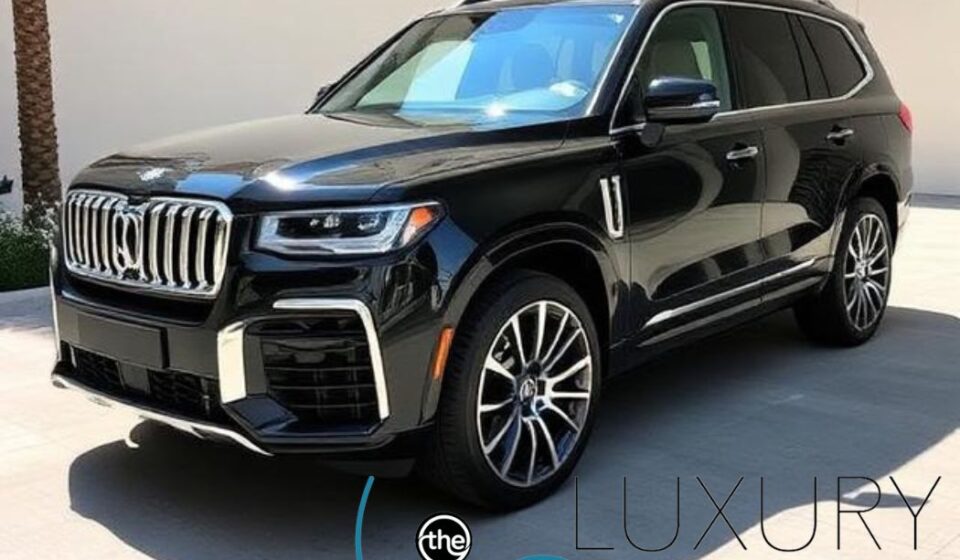
Luxury SUV for Sale: Remember the sheer frustration of buying a car that looked perfect on the showroom floor but turned into a daily annoyance? The cupholder that can’t hold your travel mug. The infotainment system that requires three steps to adjust the climate control. The back seat that makes your 6-foot teenager look like a sardine.
You’re in the market for a luxury SUV in 2026, and you’re not just looking for transportation. You’re seeking a seamless experience—something that makes your daily life easier, not harder. Yet the luxury SUV market is more crowded and confusing than ever, with prices ranging from $50,000 to well over $400,000.
This guide cuts through the marketing hype to help you find the luxury SUV that genuinely fits your life. We’ll analyze the market, reveal what experts recommend (and what they say to avoid), explore what the future holds—and give you a practical, no-nonsense checklist to avoid buyer’s remorse.
Table of Contents
ToggleThe 2026 Luxury SUV Landscape: What’s Happening Right Now
The $1,000,000 SUV is on the Horizon
Let’s start with the extraordinary: the super SUV class is pushing toward hypercar territory. Rolls-Royce’s Black Badge Cullinan starts around $472,750, while the Ferrari Purosangue is roughly $435,000. But experts predict a million-dollar SUV is inevitable—a vehicle that serves as a status symbol as much as a family hauler. It’s a far cry from 1987 when the Range Rover arrived in the US at $30,000.
The Market is Booming
Despite eye-watering prices, luxury SUVs are selling faster than ever. CarGurus’ 2026 Mid-Year Review reveals robust consumer demand across the segment. The Lexus RX remains the undisputed sales champion with over 10,000 units sold annually, followed closely by the Mercedes-Benz GLE-Class and BMW X5.
The Electric Revolution Arrives
2026 marks a turning point for electric luxury SUVs. The Genesis GV90, expected to debut in August 2026, will feature dramatic Rolls-Royce-style coach doors and a lounge-like interior. Genesis Europe managing director Peter Kronschnabl confirmed the coach-door setup, stating that “the only other brand with coach doors is Rolls-Royce”. The GV90 will use a 110 kWh battery with around 500 horsepower and 350+ miles of range. This is the clearest sign yet that even traditional luxury boundaries are blurring.
| Rank | Model | Starting Price | Key Strength |
|---|---|---|---|
| 1 | Lexus RX | $51,175 | Exceptional reliability, gentle ride |
| 2 | BMW X5 | $67,600 | Potent powertrains, deluxe cabin |
| 3 | BMW X6 | $76,400 | Sporty handling, stylish cabin |
| 4 | Audi Q8 | $75,600 | Spacious seats, gentle ride |
| 5 | Porsche Cayenne | $88,800 | Athletic handling, plush cabin |
Table: Top-ranked midsize luxury SUVs for 2026 based on CARFAX Expert Ratings
The Expert-Verified “Dos and Don’ts”
Which Luxury SUVs to Avoid in 2026
Consumer Reports has done the legwork to identify disappointing luxury SUVs. Based on their rigorous testing and owner satisfaction surveys :
Avoid: Alfa Romeo Tonale. CR notes “inconsistent power delivery,” “mundane handling,” “rough ride,” and “loud cabin” with interior quality that doesn’t match the price. Instead, consider the BMW X1.
Avoid: Land Rover Defender. While refined and quick, it suffers from “frustrating controls,” below-average reliability, and subpar fuel economy (18 mpg). Instead, choose the BMW X5, which averages 23 mpg and has above-average reliability.
Avoid: Mercedes-Benz GLS. The infotainment system is “distracting to use while driving because many common tasks require multiple steps.” The BMW X7 is the recommended alternative.
Which Luxury SUVs Are the Best Bets
The Lexus RX continues to dominate with its “impeccable build quality” and “beautifully smooth and quiet ride”. It’s offered with multiple hybrid variants, including the plug-in RX 450h+ with 61 km of electric range. The BMW X5 is praised as “the best of Germany’s midsize SUV offerings”—combining performance, luxury, and technology with “reasonable fuel economy”. For those seeking a sportier feel, the Porsche Cayenne delivers “performance befitting its Porsche badge”.
The Long-Term Ownership Reality: What It Really Costs
A luxury SUV’s purchase price is only the beginning. According to industry experts, the true cost of ownership over 10 years can be breathtaking.
Depreciation: The Stealth Cost
“The biggest long-term cost of owning a luxury SUV is quite likely to be the cost of depreciation,” says Alan Gelfand, owner of German Car Depot. “Luxury cars depreciate more quickly than non-luxury vehicles,” adds Melanie Musson of AutoInsurance.org. “They also have a higher starting price, so that depreciation has a bigger impact.” If an $80,000 luxury SUV depreciates by 50%, you lose $40,000 in value.
Maintenance and Repair: The Hidden Expense
Gelfand notes that maintenance costs range from “$1,000 to $2,500 per year for brake replacements and similar wear parts for most luxury SUVs, which translates to $10,000 to $25,000 in 10 years.” For complex European models, costs are even higher. Air ride systems, computerized components, and turbocharged engines can create “unforeseen repair bills averaging $2,000 to $6,000 per incident”.
Insurance Premiums
Because luxury SUVs are much more expensive, insurance premiums are higher. Depending on your record and location, expect “to pay in the $3,000 range annually for full coverage.
A Real-World Example: The Genesis GV70
To make these numbers concrete, consider the 2026 Genesis GV70. Kelley Blue Book estimates a base GV70 will cost **$80,126 over five years**, including $29,418 in depreciation. The top model rises to **$92,283**, with depreciation taking a whopping $42,442. That’s nearly half the vehicle’s value. In contrast, alternatives like the Honda CR-V Hybrid cost roughly $35,000 to $40,000 over five years—saving you $21,000 to $26,000.
Your “No Regret” Luxury SUV Buying Checklist
Based on expert advice from industry insiders, here’s a practical checklist to avoid buyer’s remorse :
Rule Zero: If It Irritates You in the Showroom, It Will Haunt You at Home
We’re good at tolerating small annoyances when we’re excited, and terrible at tolerating them when we’re late. Test these five remorse triggers:
1. Infotainment Speed and Sanity. Pair your phone. Set navigation. Change the cabin temperature. Find your audio presets. Do it quickly. Check for screen lag, menu depth, and logic. If you find yourself thinking “This is fine, I’ll learn it,” pause. That sentence has ended more happy ownership experiences than mechanical failures ever have.
2. Cabin Life. Bring your large water bottle and coffee cup. Place them in the cupholders. Put your phone where you instinctively place it. Plug in. Unplug. Plug in again. Does the phone slide or block other functions? Is charging convenient, or a chore? Also ask: “What works forever, what’s a trial, and what costs money later?”.
3. The Rear-Seat Truth. Set the driver seat to your position. Then sit behind yourself—not for two seconds, but properly. Check knee room, foot space, headroom, and car-seat reality. If you plan to keep this SUV for years, rear-seat usability matters even if you don’t have passengers every day.
4. Cargo Loading Ergonomics. Do the suitcase test: lift in, lift out, repeat. Check lift-over height, tailgate speed, opening shape, and floor height. If loading feels awkward in the showroom, it will be miserable in a parking lot with wet shoes and a week’s worth of groceries.
5. Night and Rain Visibility. Check A-pillar thickness and blind spots, mirror view and camera clarity, wiper sweep and headlight quality. Take a test drive that includes a tight U-turn, two parking attempts, and full-lock turning at low speed. If it feels clumsy at 5 mph, city life will punish you daily.
Drivetrain Match: Don’t Buy Your Fantasy
Match the drivetrain to your actual routine, not your identity :
-
Turbo: For response and passing power—but expect more fuel stops.
-
Hybrid: For excellent fuel economy with no lifestyle change.
-
Plug-in Hybrid: Only if charging is truly part of your daily routine. If you can’t charge reliably at home or work, a plug-in hybrid becomes “expensive ‘potential’ you never use”.
Future Trends: Where Luxury SUVs Are Headed
The Coach Door Revolution: Luxury SUV for Sale
Genesis’s GV90 with coach doors signals a shift in how luxury SUVs define themselves. This feature, traditionally reserved for ultra-luxury brands, creates a “wider and more theatrical opening than conventional SUV doors” . It represents a move toward “rolling lounge” interiors rather than simply upscale family vehicles.
Electrification Expands
While electric luxury SUVs are central to long-term plans, automakers are hedging. Genesis plans to introduce its first hybrid by the end of 2027 and range-extender models later. This reflects the reality that buyers want “lower fuel use without depending entirely on charging infrastructure”. The market is adapting—used hybrid sales are up 34% and prices are at all-time highs.
McLaren Enters the Fray
McLaren is reportedly working on its first SUV for 2028, further pushing the boundaries of performance and exclusivity in the segment.
Key Takeaways: Luxury SUV for Sale
-
Do your research: Models like the Lexus RX, BMW X5, and Genesis GV80 consistently earn top marks, while the Alfa Romeo Tonale, Land Rover Defender, and Mercedes-Benz GLS are frequently flagged for issues.
-
Test the five remorse triggers: Infotainment, cabin storage, rear seats, cargo ergonomics, and visibility.
-
Match drivetrain to reality: Buy the powertrain that fits your routine, not your fantasy.
-
Budget for total ownership: Depreciation, maintenance, and insurance can double the cost of ownership over five years.
-
Consider alternatives: Non-luxury hybrids like the Honda CR-V Hybrid or Toyota RAV4 Hybrid offer 80-90% of the luxury experience at a fraction of the cost.
-
Luxury is relief, not flash: The smartest purchase is the one that still feels like a good idea when you’re tired, late, and loading groceries in the rain.
Luxury, at its best, is the feeling that your car makes your day easier—quietly, without demanding a user manual and a subscription plan. Buy the SUV that removes friction from your life, and you won’t need to justify it later. You’ll just enjoy it.
Sources Used:
-
Supercar Blondie – Super SUVs pushing luxury to new extremes (2026)
-
Le Guide de l’auto – Best Midsize Luxury SUVs in 2026
-
Yahoo Finance – What luxury SUVs really cost retirees over 10 years
-
Yahoo! Autos – Genesis GV90 coach doors confirmed
-
WGN-TV/TestMiles – Luxury SUV buying checklist
-
Pluang/CarGurus – 2026 Mid-Year Review market trends
-
CARFAX – Best 2-Row Midsize Luxury SUVs in 2026
-
Yahoo! Autos – Genesis GV70 ownership cost analysis
-
Automotive Addicts – Genesis GV90 electric luxury flagship
-
Jalopnik – Consumer Reports luxury SUVs to avoid
-
Yahoo! Autos – Best-selling luxury vehicles 2026
-
CarGurus – Best Luxury SUVs of 2026
-
CarEdge – Lexus LX 600 cost of ownership
-
Automotive Addicts – GV90 coach doors confirmed
-
Quartz – Consumer Reports 5 luxury SUVs to avoid

admin
M Umer Abbasi is a luxury lifestyle journalist and editorial curator specializing in haute horology, passion investments, and avant-garde design. With an eye for flawless craftsmanship and heritage storytelling, he deconstructs the world of high-ticket assets—from secondary watch market trends to the evolution of bespoke tailoring. His work focuses on shifting the luxury narrative away from fleeting trends and toward timeless design, raw materials, and true artisanship. When he isn’t dissecting mechanical complications or reviewing five-star sanctuaries, he tracks blue-chip alternative asset indices. Connect with him via cbdfame@gmail.com