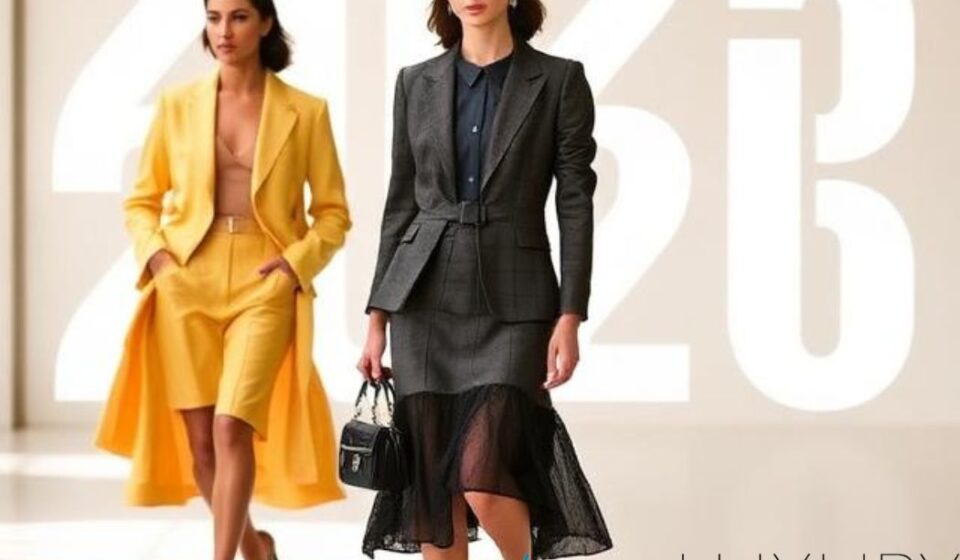
Luxury Fashion: For the past few years, the world of high fashion seemed to be holding its breath. We were living in the age of “Quiet Luxury”—an era defined by beige cashmere, logo-less totes, and the kind of understated elegance that only those “in the know” could recognize. It was a reaction to the logomania of the 2010s, a sartorial sigh of relief. But as 2026 unfolds, a shift is palpable. The silence is ending, but not with a crash—rather, with a murmur of emotional depth and creative explosion.
Have you noticed that the “stealth wealth” aesthetic, while still relevant, feels slightly… predictable? The fashion pendulum is swinging again. We are entering a phase where luxury is no longer just about restraint or perfection; it’s about resonance.
This article is your guide to the new luxury landscape. We aren’t just talking about handbags and suits; we are analyzing a cultural shift toward emotional connection, sustainability, and a redefinition of status itself. By the end of this read, you’ll understand exactly where the industry is heading and how to navigate it—whether you are a collector, a curious observer, or an industry professional.
Table of Contents
ToggleBackground: The Evolution of Luxury
To understand where we are going, we must look at where we have been. Modern luxury has gone through distinct phases.
The Era of Logo-Mania: Luxury Fashion
In the early 2000s, luxury was a broadcast. It was about visibility. If you had it, you flaunted it (often via a monogrammed canvas bag). This was the era of “status signaling” where the brand logo was the primary source of value.
The Rise of Quiet Luxury
Then came the correction. The “quiet luxury” trend, championed by brands like Loro Piana and The Row, prioritized material and cut over branding. It was an intellectual pursuit—a code for the ultra-wealthy to recognize each other without the “noise” of logos. It was “stealth wealth,” but it often felt cold. It removed the logo, but it also removed some of the emotion.
The 2026 Shift: Emotional Depth
Today, we are seeing a synthesis. Consumers are rejecting the “cold” perfection of minimalism. They want things that feel personal and tactile. As Neslişah Yılmaz Hidayetoğlu recently noted, luxury is evolving from “silent perfection toward a richer, more human experience where emotion, sensation and meaning define true value”. This is the pivot toward a luxury that feels alive.
Main In-Depth Sections
1. The Great Creative Resurgence: From Stealth to “Loud Luxury”
One of the most significant drivers of change in 2026 is the influx of new creative directors at major fashion houses. We are witnessing the most significant turnover in creative leadership in three decades. This “Creative Class” is injecting new energy and, importantly, a shift in aesthetics.
From Minimalism to Maximalism
The “Fashion Pendulum” is swinging back toward a more colorful, expressive, and bold maximalism. After years of beige, we are seeing a resurgence of bold block colours, tassels, and voluminous silhouettes.
-
The “Bubble” Silhouette: At the Fall 2026 Couture shows, designers like Pierpaolo Piccioli at Balenciaga explored exaggerated volumes, treating the female form as something malleable and sculptural.
-
The Corset & Fantasy: There was a trend toward extreme corsetry and “fantastical” designs—evoking mythical creatures and warriors, signaling a desire for escape and narrative.
This isn’t just about being “louder” for the sake of it. There is a commercial logic to this shift. When fashion is minimalist, consumers need fewer pieces. When it becomes more complex and statement-driven, the wardrobe expands. As Morgan Stanley analysts note, a shift toward maximalism “could be material, as consumers traditionally need more new pieces when dressing more ostentatiously”.
2. The Spectrum of Expression: Quiet Luxury vs. Desi Maximalism
Interestingly, the “battle” of aesthetics isn’t a winner-takes-all scenario. “Quiet Luxury” is evolving, while a cultural variant—”Desi Maximalism”—is proving that maximalism can be rooted in heritage and purpose.
The Evolution of Quiet Luxury
Today’s quiet luxury isn’t just boring beige. It’s about “intention.” It values craftsmanship and timelessness. As designer Aarya Kumar puts it, quiet luxury is “a return to confidence… so assured in what you’re wearing that it doesn’t need to announce itself”.
The Rise of Cultural Maximalism
On the other side of the spectrum, “Desi Maximalism” is a powerful counter-trend. It is a “refusal to keep editing ourselves down”. For many cultures, minimalism was a shorthand for being taken seriously, often at the cost of cultural honesty. Today, there is a deliberate embracing of zardozi embroidery, vibrant colors, and nostalgic patterns that tell a story. This isn’t about clutter; it’s about “cultural muscle memory”.
Key Insight: The “winner” in 2026 isn’t a specific aesthetic, but the intention behind the choice. Whether you choose a single Cartier bangle or a kitschy embroidered piece, the value lies in the story and the authenticity.
3. Redefining Gender: The Man Birkin and Fluid Tailoring
Luxury is finally becoming unisex—not as a trend, but as a structural evolution of the market.
The Man Birkin
The Hermès Birkin, once the pinnacle of feminine status, is now being carried by men. Celebrities like Timothée Chalamet and A$AP Rocky have normalized this. But historically, the Birkin is descended from the “Haut à Courroies,” a utilitarian equestrian bag used by both men and women. Men carrying a Birkin aren’t just “borrowing”; they are reclaiming a heritage of craftsmanship.
The Economic Upside
This is a massive market opportunity. The men’s luxury bag market is projected to grow significantly, and gender-neutral fashion is a multi-billion dollar industry. As Luca Solca from Bernstein notes, “Imagine if men adopted bags like they were buying men’s purses in the 70s… this would give new growth to the leather-goods category”.
Tailoring
Similarly, androgynous tailoring is moving from the fringes to the mainstream. Tailoring is now a fluid terrain, with brands like Gucci and Rick Owens designing clothes that fit the person, not the gender.
4. The Sustainability Imperative: From Rarity to Responsibility
Sustainability is no longer a “nice-to-have” for luxury brands; it is becoming a competitive necessity. The definition of luxury is shifting to include the longevity of the planet.
The Data and Regulation: Luxury Fashion
The luxury industry faces pressures from dwindling natural resources and stricter regulations. As a Square Management study notes, marginal adjustments are no longer enough; the sector needs a “profound transformation of its business models”.
Circularity in Action
Brands are moving beyond “recycling” to “upcycling” and “repurposing.”
-
Dolce & Gabbana’s DG Recover: More than five tons of fabrics and ten thousand archival pieces have been regenerated. This isn’t just about recycling waste; it’s about creative rebirth.
-
Dior’s Dream in Green: Dior is applying rigorous standards for traceability in materials like cotton, wool, and silk, aiming to train all employees on environmental issues by 2026.
-
Repair: Hermès and Chanel have turned repair into a pillar of their client relationships, extending product life and reinforcing brand loyalty.
5. The Market Outlook: Recovery and Realignment
After two years of contraction, the luxury market is forecast to grow by 2% to 4% in 2026, reaching up to 424 billion USD.
A “Healthier” Situation: Luxury Fashion
Bain & Company reports that prices have stabilized, and “entry-level” offerings are making luxury more accessible again. This is a “healthier situation” compared to the steep price hikes that alienated some consumers.
Regional Drivers: Luxury Fashion
-
Americas: The U.S. is leading the recovery, with young consumers under 35 fueling sales.
-
Asia-Pacific: China is expected to return to growth, driven by domestic consumption and online ready-to-wear sales.
-
Europe: Growth is slower, lagging due to a dip in tourism caused by geopolitical tensions.
Practical Tips: How to Navigate Luxury in 2026
-
Invest in Emotion: Buy pieces that make you feel something. The new luxury is tactile and experiential.
-
Embrace “Loud Luxury” Strategically: If you are tired of beige, invest in a statement piece in a bold block colour (like electric blue) that stands out.
-
Question the Gender Code: Explore accessories and tailoring outside of your traditional “section.” Unisex is the future.
-
Look for Certifications: Seek out brands that use LWG-certified leathers or RWS-certified wool. These certifications are tangible proof of sustainability.
-
Consider the “Cost Per Wear”: Invest in high-quality pieces that can be repaired and will last a decade.
Common Mistakes & Challenges
-
Mistake: Equating “Loud Luxury” with tackiness. True maximalism is about cohesion, not clutter. It’s about storytelling.
-
Challenge: Authenticating “Ethical” Claims. With the rise of sustainability, “greenwashing” is a risk. Look for verifiable data (like percentages of recycled materials).
-
Mistake: Ignoring the “Middle Class” Shift. Luxury is getting an entry-level price correction. Don’t assume you can’t participate if you look for smaller leather goods or beauty products.
Pros, Cons, and Balanced Analysis
| Aspect | Pros | Cons |
|---|---|---|
| Creative Shift | Exciting new designs; Wardrobe refresh; Material commercial opportunity. | “Creature-like” designs and extreme volumes may alienate “wearable” clients. |
| Sustainability | Positive environmental impact; Increased brand loyalty; Long-term resource security. | Complexity of logistics; Higher costs; Risk of “greenwashing” and consumer distrust. |
| Gender Fluidity | Opens new markets; Promotes inclusivity; Large economic growth potential. | Historical brand divisions are difficult to tear down; Market education is needed. |
Future Trends & Predictions
-
The “Sensory” Revolution: We will see more integration of technology like Nanotechnology and Aromatherapy in fabrics. Clothes that “respond” to the body or carry memory are imminent.
-
The Healing of Consumer Relationships: Brands will have to fight hard to regain “customer love” after price hikes.
-
Blockchain for Transparency: Traceability via blockchain will become standard practice to verify the origins of materials.
Conclusion: The Key Takeaways
Luxury in 2026 is a fascinating paradox. It is simultaneously loud and quiet, nostalgic and futuristic.
-
Emotion is the new exclusivity: Perfection can be copied, but emotion cannot.
-
Creativity drives consumption: The fashion pendulum is swinging toward maximalism, creating commercial opportunity.
-
Sustainability is strategic: It’s not just an image problem; it’s about resource security and business model survival.
-
Gender is dead: The future of luxury is unisex, driven by heritage and identity.
The future of luxury lies in depth. It is no longer enough to just be seen. You must be felt.
FAQs: Luxury Fashion
1. Is “Quiet Luxury” dead?
No. It is evolving. It is becoming “quieter” but more emotionally resonant, moving away from cold perfection toward tactility and meaning.
2. Why are men carrying Birkin bags?
The Birkin is reclaiming its heritage as a utilitarian item. Men are using it as a universal symbol of craftsmanship and status, not as a feminine accessory.
3. What is “Loud Luxury”?
It is a resurgence of maximalism—bold colours, voluminous silhouettes, tassels, and high-impact dressing, representing a shift from minimalism.
4. Is the luxury market growing?
Yes, modestly. Bain forecasts 2-4% growth in 2026, largely driven by the Americas and improvements in China.
5. How can I spot a truly sustainable luxury brand?
Look beyond marketing. Check for third-party certifications (LWG for leather, RWS for wool). Look for data regarding their supply chain traceability and circularity initiatives.
Sources
-
Daily Sabah. “Luxury today: From quiet perfection to emotional depth.” (2026)
-
Vogue. “Trending at the Fall 2026 Couture Shows.” (2026)
-
Dolce&Gabbana. “Materials and Circularity: toward a responsible future.” (2025)
-
Morgan Stanley. “Luxury Gets Creative.” (2025)
-
BurdaLuxury. “Man Birkins & Androgynous Tailoring.” (2025)
-
AP News. “Luxury consumers seen nudging sector back to growth.” (2026)
-
SheThePeople. “Quiet Luxury Or Desi Maximalism?” (2026)
-
BBC. “Style trends to look out for in 2026.” (2025)
-
FashionNetwork. “As natural resources dwindle, luxury fashion must pursue sustainability.” (2026)
-
MarketResearch.com. “Luxury Fashion Market Report.” (2026)

admin
M Umer Abbasi is a luxury lifestyle journalist and editorial curator specializing in haute horology, passion investments, and avant-garde design. With an eye for flawless craftsmanship and heritage storytelling, he deconstructs the world of high-ticket assets—from secondary watch market trends to the evolution of bespoke tailoring. His work focuses on shifting the luxury narrative away from fleeting trends and toward timeless design, raw materials, and true artisanship. When he isn’t dissecting mechanical complications or reviewing five-star sanctuaries, he tracks blue-chip alternative asset indices. Connect with him via cbdfame@gmail.com