
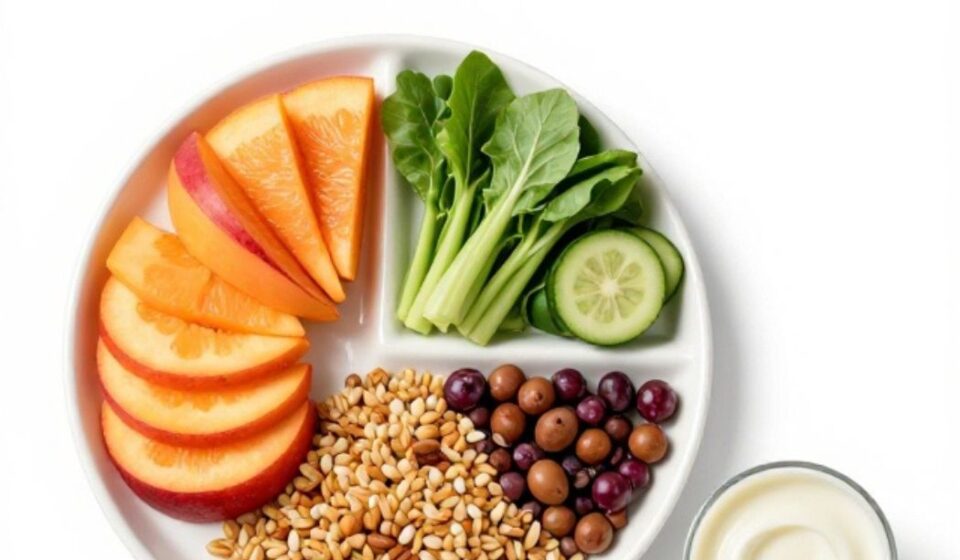
If you typed “myplate.gov“ into your browser this morning and landed somewhere called RealFood.gov, you’re not alone in your confusion. For fifteen years, MyPlate was the friendly face of American nutrition guidance—a simple quartered plate that told you to fill half your meal with fruits and vegetables and split the rest between grains and protein. It was in school cafeterias, on pediatricians’ walls, and in the back of millions of minds trying to eat a little better.
Then, on January 7, 2026, the U.S. Department of Agriculture and the Department of Health and Human Services released the 2025–2030 Dietary Guidelines for Americans and, in the same breath, retired the MyPlate.gov consumer website. The plate icon is out. An inverted pyramid is in. The interactive MyPlate Plan calculator—the tool that gave you personalized food-group targets based on your age, height, weight, and activity level—went offline with no federal replacement.
This matters more than a logo change. If you built meal plans, lesson materials, or clinical handouts around MyPlate, your framework hasn’t broken—but the ground beneath it has shifted. This article cuts through the noise: what actually changed, what survived, how to interpret the new guidance with a critical eye, and where to find a working MyPlate Plan in 2026 if you still want one.
Background: From Pyramid to Plate to… Inverted Pyramid?
The MyPlate Era (2011–2026)
MyPlate launched in 2011 as a deliberate simplification of the old Food Guide Pyramid, which had grown cluttered with serving counts and confusing tiers. The plate metaphor was intuitive: visualize your meal, make half of it produce, and you’re most of the way there. Over time, MyPlate.gov added a personalized calculator, a recipe library (1,072 recipes), tip sheets, quizzes, and mobile tools. It became the default teaching tool for dietitians, SNAP-Ed educators, and school nutrition programs.
The January 2026 Reset
The 2025–2030 Dietary Guidelines represent what HHS Secretary Robert F. Kennedy Jr. called “the most significant reset of federal nutrition policy in decades” . The headline messages: prioritize protein at every meal, consume full-fat dairy without added sugars, choose whole grains while sharply reducing refined carbohydrates, and limit highly processed foods. Red meat is explicitly named among recommended proteins. Butter and beef tallow earned mentions that would have been unthinkable in the previous edition.
The visual change—an inverted pyramid with protein, dairy, healthy fats, fruits, and vegetables at the wide top and whole grains at the narrow base—is symbolic of a deeper philosophical shift: away from “eat less fat, less meat” and toward “eat real food, prioritize protein”.
What Actually Happened to the MyPlate Plan Calculator?
This is the question flooding search engines. The short answer: the federal government removed it, and no federal site has rebuilt it.
What Was Lost
The interactive MyPlate Plan calculator used energy equations from the Institute of Medicine and USDA Food Pattern tables to generate personalized daily targets across five food groups. That tool, the food-group education pages, portion guides, and the MyPlate Kitchen recipe collection all disappeared from the federal web when MyPlate.gov redirected to RealFood.gov.
What Survived (and Where)
The MyPlate brand didn’t vanish entirely. USDA’s Food and Nutrition Service continues to use MyPlate materials for its Team Nutrition school-meal program at fns.usda.gov/tn/myplate. More practically for consumers, independent sites have preserved the MyPlate tooling. MyPlate.food, an unaffiliated project, maintains a working calculator built on the same IOM equations and USDA tables the federal tool used, plus the complete 1,072-recipe library with nutrition data intact. The site explicitly labels itself as documenting the 2020–2025 MyPlate framework rather than the new 2025–2030 edition—a meaningful distinction if you care which guideline set you’re following.
One critical caveat: These third-party tools are not government sites. They are preservation projects. For authoritative guidance on the current federal recommendations, RealFood.gov is the source.
The New Framework: What the 2025–2030 Guidelines Actually Say (and What They Don’t)
The Protein Pivot
The most consequential change is the protein target: 1.2 to 1.6 grams per kilogram of body weight per day, nearly double the upper range of previous recommendations. For a 150-pound adult, that’s 81 to 104 grams of protein daily—a meaningful increase for most people.
But here’s what the headlines miss: the scientific advisory committee’s report did not support this dramatic increase for the general population. Harvard nutrition faculty who served on the committee noted that protein intake among Americans is already adequate for most people, and the emphasis on animal sources—particularly red meat—deviates from the committee’s plant-forward recommendations. The guidelines mention plant proteins (beans, peas, lentils) but list them last, after meat.
Practical translation: If you feel better eating more protein, the new guidelines give you permission. If you have kidney disease, are vegetarian by preference, or simply don’t want to double your meat intake, the previous MyPlate framework remains scientifically defensible. The guidelines are guidance, not prescription.
Full-Fat Dairy Returns
Previous guidance pushed low-fat and fat-free dairy. The 2025–2030 edition recommends full-fat dairy without added sugars. The rationale centers on satiety and reducing added sugar intake—but critics point out that three daily servings of full-fat dairy makes the saturated fat limit (still under 10% of calories) harder to meet. If you’re lactose intolerant or don’t consume dairy culturally, there’s no nutritional requirement to start; calcium and protein are available elsewhere.
What Stayed the Same (More Than You’d Think)
Despite the rhetorical reset, the quantitative recommendations for fruits, vegetables, whole grains, and oils are largely consistent with previous editions. The saturated fat cap (under 10% of calories) and sodium limits remain unchanged. The emphasis on whole foods over ultra-processed products is stronger, but directionally similar to prior guidance.
What Disappeared
The plate visual. The personalized calculator. The “make half your plate fruits and vegetables” slogan as the organizing principle. In its place: an inverted pyramid that most nutrition educators agree is harder to apply at a single meal. A plate tells you what to do at dinner. A pyramid tells you what to do over a week—or a lifetime. Both have value, but they serve different cognitive purposes.
How to Build a MyPlate-Style Plan in 2026 (Without the Federal Calculator)
If the MyPlate framework worked for you—and for many people, the half-plate produce rule is the single most actionable nutrition instruction ever devised—you can keep using it. Here’s how.
Option 1: Use a Preserved Calculator
MyPlate.food offers a free calculator that replicates the federal tool’s output using the same underlying equations. You enter age, sex, height, weight, and activity level, and receive daily food-group targets and a calorie level (1,200–2,500). It also provides six ready-made weekly plans at different calorie levels, each built from real USDA recipes with full nutrition data. No account is required for the calculator or printable templates; the drag-and-drop planner requires a free login.
Best for: People who want the 2020–2025 MyPlate framework preserved as it was, with working tools and recipes.
Option 2: DIY with the Half-Plate Rule
You don’t need a calculator to apply the core MyPlate principle. At each main meal:
-
Fill half your plate with vegetables and fruits (emphasize non-starchy vegetables; include dark green, red, and orange varieties across the week).
-
Split the remaining half between lean protein and whole grains.
-
Add a serving of dairy (or fortified soy) on the side.
This heuristic is less precise than a personalized plan, but it’s more durable. It survives website retirements, guideline revisions, and busy Tuesday nights.
Option 3: Follow the New Guidelines (With Eyes Open)
If you want to align with the 2025–2030 framework, anchor your meals around:
-
A palm-sized portion of protein at each meal (animal or plant)
-
Full-fat dairy if you tolerate it and enjoy it
-
Vegetables and fruits in whole forms
-
Whole grains over refined
-
Minimal ultra-processed foods and added sugars
The inverted pyramid is less intuitive than the plate, but the underlying advice—eat real food, prioritize protein, reduce processed carbohydrates—is coherent. Just know that you’re following a guideline set that diverges from its own scientific advisory committee on several key points, particularly the emphasis on animal protein and full-fat dairy.
Common Mistakes and How to Avoid Them
Mistake 1: Treating the Guidelines as Gospel (or as Garbage)
Both extremes miss the point. The 2025–2030 DGAs contain genuinely useful emphases—reducing ultra-processed foods, prioritizing whole grains, limiting added sugars—alongside contested recommendations. The Harvard committee members who helped review the science did not unanimously endorse the final document. Use the parts that serve you; don’t feel obligated to adopt the parts that don’t.
Mistake 2: Assuming the MyPlate Calculator Was Perfect
The MyPlate Plan was a population-level tool, not a clinical prescription. It used broad equations that couldn’t account for metabolic conditions, medication effects, food access constraints, or cultural food patterns. A GLP-1 user, for example, may need substantially more protein and different portion sizes than a standard MyPlate plan provides. Use it as a starting point, not a verdict.
Mistake 3: Chasing Protein Without Context
The new protein targets are achievable but require intention. A common failure mode is adding a protein shake to an otherwise unchanged diet—which adds calories without improving overall diet quality. Better: replace refined carbohydrate calories with protein calories. Swap the morning pastry for eggs. Add beans to the lunch salad instead of croutons. The goal is substitution, not addition.
Mistake 4: Forgetting That “Real Food” Is a Spectrum
The new guidelines’ “eat real food” tagline is rhetorically powerful and practically vague. Canned beans are processed. Frozen vegetables are processed. Olive oil is processed. The meaningful distinction is between minimally processed whole foods and ultra-processed products engineered for hyper-palatability. Don’t let the slogan push you toward unnecessary scratch-cooking guilt.
Pros, Cons, and a Balanced Take
The Case for the New Direction
Pros:
-
Clear, simple messaging (“eat real food”) that’s easier to communicate than nutrient-by-nutrient targets.
-
Protein emphasis may benefit older adults at risk of sarcopenia and people using appetite-suppressing medications.
-
Full-fat dairy guidance acknowledges that low-fat products often compensate with added sugars.
-
Stronger stance against ultra-processed foods aligns with a growing body of research.
Cons:
-
The inverted pyramid is less actionable at the meal level than the plate.
-
Protein targets exceed what the scientific advisory committee recommended for the general population.
-
Red meat prioritization conflicts with substantial evidence linking processed and red meat to chronic disease risk.
-
Full-fat dairy recommendation sits awkwardly alongside the unchanged saturated fat cap.
-
The loss of the federal calculator creates a practical gap for educators and clinicians.
The MyPlate Framework’s Enduring Value
The plate metaphor worked because it was spatially intuitive. You don’t need a calculator to look at your dinner and ask: is half of this plants? The new pyramid asks you to think in weekly proportions and food categories—a more abstract cognitive task. For nutrition education, especially with children and low-literacy populations, the plate’s simplicity was a feature, not a limitation.
Future Trends: What Comes Next
The AI Meal-Planning Replacement
RealFood.gov offers an AI meal-planning assistant rather than a deterministic calculator. This reflects a broader shift: from standardized equations to conversational, personalized guidance. The upside is flexibility—an AI can account for preferences, restrictions, and cultural context in ways a calculator never could. The downside is opacity: you can’t audit an AI’s reasoning the way you could check the IOM equations. For now, the federal AI tool is nascent, and independent calculators like MyPlate.food fill the precision gap.
The Guideline Wars Are Not Over
The 2025–2030 DGAs were contentious before they were published. The scientific advisory committee’s report and the final document diverge on protein sources, dairy fat, and the role of plant-based eating. Expect continued debate among nutrition scientists, clinicians, and policymakers. The next edition (2030–2035) will likely revisit these decisions.
The Preservation Movement
The fact that independent projects scrambled to archive and rebuild MyPlate tools within months of the shutdown reveals something important: people valued the MyPlate framework enough to preserve it voluntarily. This decentralized archiving model may become more common as federal nutrition guidance swings with political administrations. If you depend on a specific tool, export your data and note the underlying equations while the tool is live.
Conclusion: Your Plate, Your Choice
The retirement of MyPlate.gov is a genuine loss for anyone who relied on its calculator, recipes, or educational materials. But the framework itself—half produce, split the rest between protein and whole grains, choose minimally processed foods—remains one of the most practical eating heuristics ever devised. It didn’t stop working because a website went offline.
The 2025–2030 guidelines offer a different lens, one that may suit you better if you’re focused on protein intake, muscle preservation, or reducing ultra-processed foods. Just go in knowing that the science behind some of its most publicized recommendations is contested, including by the experts who reviewed the evidence.
Key Takeaways
-
MyPlate.gov was retired in January 2026; the calculator and recipe library are no longer on federal sites.
-
Preserved tools exist at MyPlate.food, built on the same equations and recipes the federal site used.
-
The core MyPlate rule still works: half your plate vegetables and fruits, the rest split between lean protein and whole grains.
-
The new guidelines prioritize protein (1.2–1.6 g/kg/day) and full-fat dairy, but these recommendations diverge from the scientific advisory committee’s report.
-
The inverted pyramid is less meal-actionable than the plate; use whichever framework helps you eat well.
-
“Real food” beats “perfect food.” The best plan is the one you can actually follow.
Frequently Asked Questions
Is MyPlate discontinued permanently?
The MyPlate.gov consumer website and calculator are retired as of January 2026. The MyPlate brand persists in USDA school nutrition materials, and independent sites maintain the calculator and recipes. It is not expected to return as the federal consumer icon.
Can I still get a personalized MyPlate Plan?
Yes, through third-party preservation sites like MyPlate.food, which replicate the federal calculator using the same IOM equations and USDA food pattern tables. No federal replacement calculator exists.
What replaced the MyPlate plate visual?
An inverted food pyramid with protein, dairy, healthy fats, fruits, and vegetables at the wide top and whole grains at the narrow base.
Are the new Dietary Guidelines scientifically sound?
They contain useful emphases (reducing ultra-processed foods, prioritizing whole grains) alongside recommendations that diverge from the scientific advisory committee’s report, particularly on protein sources and full-fat dairy. Harvard committee members publicly noted these deviations. Treat them as guidance, not gospel.
Should I switch from MyPlate to the new guidelines?
Only if the new framework serves your goals better. If the half-plate rule helped you eat more vegetables and you felt good, there’s no urgent reason to abandon it. If you’re focused on protein intake or muscle preservation, the new protein targets may be worth adopting—ideally with plant proteins emphasized alongside animal sources.
Where can I find the official 2025–2030 Dietary Guidelines?
RealFood.gov hosts the full text and consumer-facing materials.
Sources
-
USDA & HHS, 2025–2030 Dietary Guidelines for Americans (via RealFood.gov), January 2026
-
MyPlate.gov, “What is MyPlate?” (archived content)
-
HHS Press Release, “Kennedy, Rollins Unveil Historic Reset of U.S. Nutrition Policy,” January 7, 2026
-
MyPlate.food, “Is MyPlate Discontinued? The 2026 Transition, Explained”
-
MyPlate.food, “MyPlate Meal Planner — Free Personalized Weekly Plan (2026)”
-
UT Southwestern Medical Center, “What do the new Dietary Guidelines for Americans mean for you?” March 2026
-
Harvard T.H. Chan School of Public Health, “Understanding the new Dietary Guidelines for Americans,” January 2026
-
Brigham and Women’s Hospital Health Library, “Diet to Help Prevent Heart Disease,” March 2025
-
Journal of the Academy of Nutrition and Dietetics, “Adherence to MyPlate Guidelines During GLP-1 Treatment,” 2025
FOR FURTHER INFORMATION, VISIT: THELUXURYLIFEMAGAZINE.COM