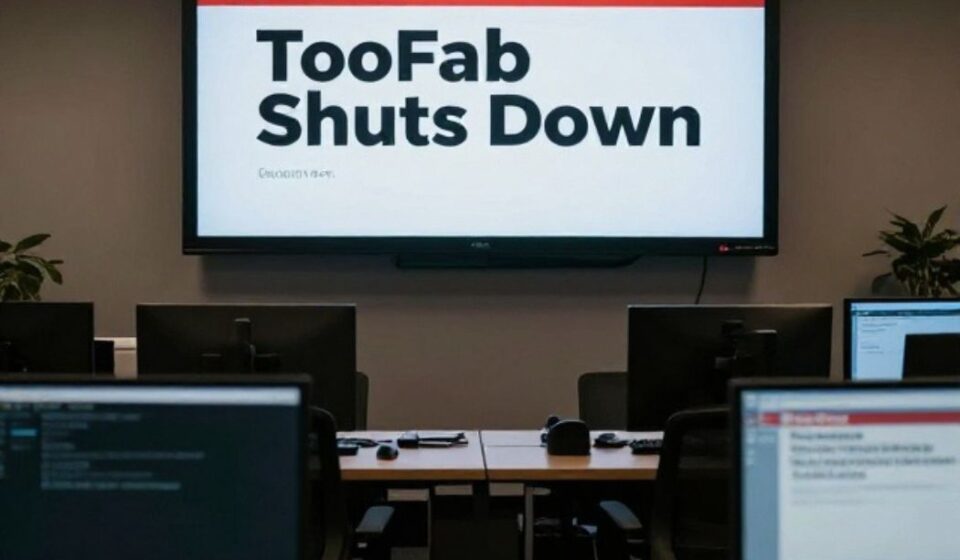
In January 2026, a small but distinctive corner of the celebrity news internet went quiet. TooFab—the sister site to TMZ that launched in 2011 with a promise to cover “all things fabulous”—ceased operations, with roughly five to six staff members laid off as part of the shutdown. For a generation of pop-culture obsessives who bookmarked the site for red carpet photos, reality TV drama analysis, and interviews that felt just a notch more substantive than a typical tabloid hit, the closure felt like the end of a strange little era.
But TooFab’s story is more than a simple obituary for a niche entertainment blog. It is a case study in how digital media brands are born, branded, sustained, and ultimately discarded within a larger corporate ecosystem. It is also a story about the strange gravitational pull of the TMZ universe—a place where a site can be simultaneously credible enough to be cited by national news outlets and questionable enough to earn a “low credibility” rating from media watchdogs.
This article examines TooFab with the depth it rarely received while alive: its origins, its editorial identity, its structural weaknesses, the warning signs that preceded its demise, and what its closure tells us about the future of celebrity journalism in an era of algorithmic feeds and shrinking attention spans.
Background: The Birth of a “Fabulous” Sibling
From Trademark to TMZ Adjacent
TooFab’s roots trace back to a trademark filing. In September 2010, Warner Bros. Entertainment Inc. filed for the “TOO FAB” mark, with EHM Productions Inc. later recorded as the new owner after registration. The site itself launched in 2011, positioning itself as the internet’s home for entertainment news, fashion, lifestyle, and red carpet photography. From the beginning, its corporate lineage was intertwined with TMZ, the aggressive paparazzi-driven gossip machine owned by the same parent entity, EHM Productions, a wholly-owned subsidiary of Fox Corporation.
That association was both a blessing and a curse. On one hand, TooFab inherited TMZ’s Rolodex, its infrastructure, and its cultural proximity to the entertainment industry’s most closely guarded circles. On the other hand, it inherited TMZ’s reputation: sensational, combative, and perpetually accused of prioritizing clicks over craft.
The Scandinavian Namesake Problem
Here is a fact that confuses search engines and casual researchers alike: there are two entirely unrelated entities named “Toofab.” The one this article examines is the American entertainment news site. The other is Toofab AB, a Swedish construction and project management consultancy based in Stockholm, founded in 2011 and acquired by XPartners Samhällsbyggnad in 2022. The Swedish firm’s website (toofab.se) regularly publishes welcome posts for new hires—civil engineers and urban planners—and updates about warehouse renovations in Frihamnen. This naming collision is a minor SEO headache for both parties, but it serves as a useful reminder: when researching TooFab, pay attention to the domain.
The Editorial Identity: What Made TooFab Different (and What Didn’t)
Beyond the Red Carpet
TooFab’s self-description evolved over the years. By the mid-2020s, it billed itself as “a trusted source for breaking pop culture news—from exclusive film and TV interviews to decoding the biggest drama in reality television”. It carved out a niche that was broader than pure gossip but narrower than general entertainment. It covered the intersection of social justice and Hollywood, true crime with a celebrity lens, and human-interest stories that spilled beyond the velvet rope.
This was a canny positioning. TMZ proper was the place for the raw feed: the airport confrontations, the legal filings, the parking lot ambushes. TooFab could be the slightly more presentable sibling—the one you could cite in a conversation without feeling quite as guilty. Its exclusive interviews with actors and musicians, and its willingness to analyze reality TV as a cultural artifact rather than merely a source of screenshots, gave it a patina of legitimacy that TMZ rarely sought.
The Credibility Tightrope
That patina, however, was thin. Media Bias/Fact Check rated TooFab as “Left” in bias and “Mixed” in factual reporting, ultimately assigning it a “LOW CREDIBILITY” rating based on “a lack of transparency, poor sourcing, and frequent sensational headlines that mislead the reader”. The watchdog noted that TooFab lacked an about page and did not openly disclose ownership, despite being copyrighted to EHM Productions. Examples cited included a story about a 21-year-old Instagrammer boasting about not social distancing (sourced solely to Instagram) and a piece about a “viral toilet licker” threatening to cough on Dr. Phil.
This is the essential tension of TooFab’s existence: it wanted to be taken seriously enough to land interviews and citations, but it operated within a corporate culture that rewarded velocity and provocation over verification. The result was a brand that could be cited by national news organizations while simultaneously being flagged as unreliable by press watchdogs. That is not a stable foundation for long-term trust.
The Cracks Beneath the Surface: Culture, Lawsuits, and Warning Signs
The “Bro Fest” Allegations
In August 2020, a former TooFab employee named Bernadette Zilio filed complaints with the U.S. Equal Employment Opportunity Commission and the California Department of Fair Employment and Housing, alleging a toxic, sexist work environment at TMZ and TooFab. Zilio, who worked at the companies from 2015 to 2020, described the workplace as a “boys’ club,” “100% a bro fest,” and a “freaking frat house”. The complaint alleged that female employees were belittled, held to different standards, excluded from business and social interactions, and retaliated against when they complained.
The filing named TooFab managing editor Shyam Dodge and senior producer Ross McDonagh, among others, and claimed that Zilio was fired after multiple HR complaints. TMZ and TooFab responded with a statement asserting that Zilio was let go “because of multiple and documented incidents of plagiarism and inaccurate reporting,” calling the claims “a blatant attempt to use negative publicity and inaccurate claims to force TooFab and TMZ to pay a monetary settlement”.
The veracity of the specific allegations remains a matter of legal record and competing narratives. But the broader signal is difficult to ignore. A brand that positions itself as covering the “intersection of social justice and Hollywood” while allegedly harboring a workplace culture that female employees described as a “frat house” is a brand operating with a significant integrity gap. Whether or not the claims were ultimately proven, they contributed to a reputational drag that no amount of exclusive interviews could fully offset.
The Shrinking Room for Mid-Size Digital Brands
TooFab’s closure in January 2026 did not happen in a vacuum. TheWrap reported that the shutdown came after a series of staff shakeups at TMZ earlier in 2025, including the departures of senior investigative producer Dennis Broad, head of digital media operations John Brix, and senior web producer Jacob Stern. TMZ founder Harvey Levin reportedly told staff that the company had completed its planned restructuring and was “doing better than ever” as it reached its 20th birthday.
Read between the lines: TooFab was collateral damage in a broader consolidation. When a parent company decides to trim, the sibling site with five or six employees and no distinct revenue moat is an obvious target. TooFab’s traffic, while respectable—with roughly 64% of its audience in the United States and a global rank that hovered in the low five figures—was not enough to justify its continued existence as a separate brand. The site’s content could be absorbed into TMZ proper, or simply abandoned as the audience migrated to TikTok, Instagram, and YouTube for the same red carpet clips and reality TV reactions.
Practical Lessons: What TooFab’s Story Teaches About Digital Media Survival
For Aspiring Media Professionals
1. Brand adjacency is not a strategy.
TooFab lived in TMZ’s shadow. It benefited from the association but never fully escaped it. If you are building a media brand within a larger organization, ask yourself: what does this brand do that the parent cannot? If the answer is “the same thing but slightly nicer,” you are vulnerable.
2. Credibility is a long game, and it can be lost quickly.
TooFab’s “low credibility” rating from Media Bias/Fact Check may not have directly caused its closure, but it reflected a set of editorial habits—sensational headlines, thin sourcing—that made the brand disposable. In an era of information overload, trust is the only durable currency.
3. Workplace culture is a brand asset.
The 2020 discrimination allegations did not appear in TooFab’s official shutdown announcement, but they were part of its public story. In the age of Glassdoor and social media, how a company treats its people is not a private matter. It becomes part of the brand’s legible identity.
For Media Consumers
1. Check the parent.
When you read a celebrity news story, look at who owns the site. TooFab’s corporate parentage (EHM Productions, Fox Corporation) shaped its editorial priorities and its legal posture. Understanding the ownership structure helps you calibrate your trust.
2. Distinguish between “cited” and “credible.”
TooFab’s content was sometimes cited by national outlets, but citation is not the same as verification. A story can be picked up because it is viral, not because it is true.
3. Notice what disappears.
When a site like TooFab shuts down, an archive of interviews, photos, and cultural commentary becomes orphaned. Links break. Context is lost. If you value a niche publication, support it—or at least archive what matters to you.
Common Challenges and Solutions: The Structural Dilemmas TooFab Faced
Challenge: Differentiating from the parent brand.
TooFab’s content overlapped significantly with TMZ’s core offering. Solution: A successful sibling site needs a clearly articulated editorial mission that the parent cannot or will not fulfill. For example, a site focused on analysis rather than breaking news, or on underrepresented voices in entertainment, would have a clearer reason to exist.
Challenge: Monetizing mid-funnel attention.
TooFab’s audience was interested but not enormous. Advertisers pay for scale or for precision. TooFab had neither the scale of TMZ nor the precision of a niche vertical (like a dedicated reality TV blog or a fashion-only site). Solution: Subscription models, events, or branded content with a clearly defined niche audience can sustain smaller operations—but they require investment and patience, neither of which is guaranteed in a corporate restructuring.
Challenge: Recovering from reputational damage.
The 2020 lawsuit and the low credibility rating created a reputational ceiling. Solution: Transparency and editorial investment. An about page, a published corrections policy, and a visible commitment to sourcing standards would not have solved everything, but they would have signaled seriousness.
Pros, Cons, and a Balanced Assessment
What TooFab Got Right
-
Access and interviews. The site’s exclusive film and TV interviews and A-list celebrity access were genuine assets. It provided a platform for conversations that TMZ’s format did not accommodate.
-
Niche breadth. By covering the intersection of entertainment with social justice, true crime, and human interest, TooFab acknowledged that celebrity culture does not exist in a vacuum.
-
Visual identity. The brand’s red carpet photography and fashion coverage gave it a distinct aesthetic within the TMZ ecosystem.
Where It Fell Short
-
Credibility deficits. The “low credibility” rating and examples of sensational, thinly sourced stories undermined trust.
-
Workplace allegations. The 2020 discrimination claims cast a shadow over the brand’s stated values.
-
Strategic vulnerability. TooFab never established a clear enough reason to exist independently of TMZ, making it an easy target for cost-cutting.
The Balanced Take
TooFab was neither a journalistic travesty nor a misunderstood gem. It was a competent, occasionally insightful, structurally compromised entertainment news site operating in the orbit of a more powerful and more problematic parent brand. Its closure is a loss for readers who appreciated its specific mix of red carpet glamour and reality TV analysis, but it is not a surprise. The conditions that made TooFab possible—a booming digital ad market, a parent company willing to fund a sibling brand, and an audience with enough disposable attention to visit a separate website for celebrity content—have all eroded.
Future Trends: What Comes After TooFab?
The TMZ Model, Minus the Siblings
TMZ itself appears to be consolidating rather than expanding. Levin’s assurance that restructuring is complete suggests a future in which TMZ is a leaner, more focused operation. The era of the celebrity news “network” with multiple branded verticals may be over. Expect fewer experiments, more aggregation, and more video-first content designed for social platforms rather than owned websites.
The Creator Economy Eats Celebrity News
The function TooFab served—curated, personality-driven entertainment commentary—is increasingly performed by individual creators on TikTok, YouTube, and Substack. A creator with 500,000 engaged followers and a distinct voice can operate with lower overhead and higher trust than a corporate-owned mid-size site. The future of celebrity journalism may not be a website at all; it may be a person with a ring light and a strong point of view.
The Archive Problem
When sites like TooFab shut down, their archives often become inaccessible or are folded into the parent site without clear labeling. This is a quiet crisis for cultural historians and researchers. If you care about the preservation of digital media history, the time to advocate for public archives and library partnerships is now.
Conclusion: Key Takeaways
-
TooFab launched in 2011 as TMZ’s “fabulous” sibling, offering red carpet coverage, celebrity interviews, and reality TV analysis with a slightly softer touch than its aggressive parent.
-
It never escaped TMZ’s shadow. The association provided access and infrastructure but also imported reputational baggage, including a 2020 discrimination lawsuit and a “low credibility” rating from media watchdogs.
-
The site shut down in January 2026 as part of a broader restructuring at TMZ, with roughly five to six staff members laid off.
-
The closure reflects a larger trend: mid-size digital media brands without a distinct revenue model or a fiercely loyal niche audience are increasingly vulnerable to corporate consolidation.
-
The TooFab name is not unique. A separate Swedish construction consultancy also operates under the “Toofab” name, a reminder to verify sources when researching.
-
The lessons are clear: brand adjacency is not a strategy, credibility is a long game, and workplace culture is part of your public identity—whether you acknowledge it or not.
Detailed FAQs
Q: What was TooFab?
A: TooFab was an American entertainment news website launched in 2011 as a sister site to TMZ. It covered celebrity news, fashion, red carpet events, reality TV, and the intersection of entertainment with social issues.
Q: When did TooFab shut down?
A: TooFab ceased operations in January 2026. TheWrap reported that staff were informed of the decision in November 2025, with layoffs taking effect at the start of the new year.
Q: Who owned TooFab?
A: TooFab was owned and operated by EHM Productions Inc., a wholly-owned subsidiary of Fox Corporation. It was closely affiliated with TMZ.
Q: Was TooFab credible?
A: Media Bias/Fact Check rated TooFab as “Mixed” in factual reporting and assigned it a “LOW CREDIBILITY” rating, citing a lack of transparency, poor sourcing, and sensational headlines. However, the site was also cited by national news organizations and conducted exclusive interviews with celebrities.
Q: What happened to the TooFab staff?
A: Approximately five to six staff members were laid off in January 2026, according to sources who spoke to TheWrap. Severance packages were reportedly provided.
Q: Is TooFab the same as the Swedish company Toofab AB?
A: No. Toofab AB is an unrelated Swedish construction and project management consultancy based in Stockholm, founded in 2011 and acquired by XPartners Samhällsbyggnad in 2022. The two entities share a name but no corporate connection.
Q: What was the 2020 lawsuit about?
A: Former TooFab employee Bernadette Zilio filed EEOC and California DFEH complaints alleging a sexist, “frat house” workplace culture at TMZ and TooFab. The company denied the allegations, stating that Zilio was terminated for documented plagiarism and reporting errors.
Q: What does TooFab’s closure mean for celebrity journalism?
A: It suggests that mid-size, general-interest entertainment sites are becoming unsustainable. The future of celebrity news likely lies in either large-scale aggregators like TMZ or individual creators with direct audience relationships on platforms like TikTok and YouTube.
Sources
-
TheWrap: “TMZ to Shutter Sister Site TooFab in January, Plans to Gut Entire Staff | Exclusive”
-
Brandfetch: TooFab brand profile and description
-
Media Bias/Fact Check: “TooFab – Bias and Credibility”
-
Wigdor LLP (via TheWrap): “Warner Bros Entertainment Hit With Lawsuit by Former TMZ Employee”
-
Wigdor LLP (via Law360): “Ex-TMZ Employee Decries Sexism In EEOC Complaint”
-
EasyCounter: Photos.toofab.com traffic data
-
Furm.com: TOO FAB Trademark record
-
PitchBook: Toofab (Swedish entity) company profile
-
toofab.se: Swedish company news and updates
FOR FURTHER INFORMATION, VISIT: THELUXURYLIFEMAGAZINE.COM