
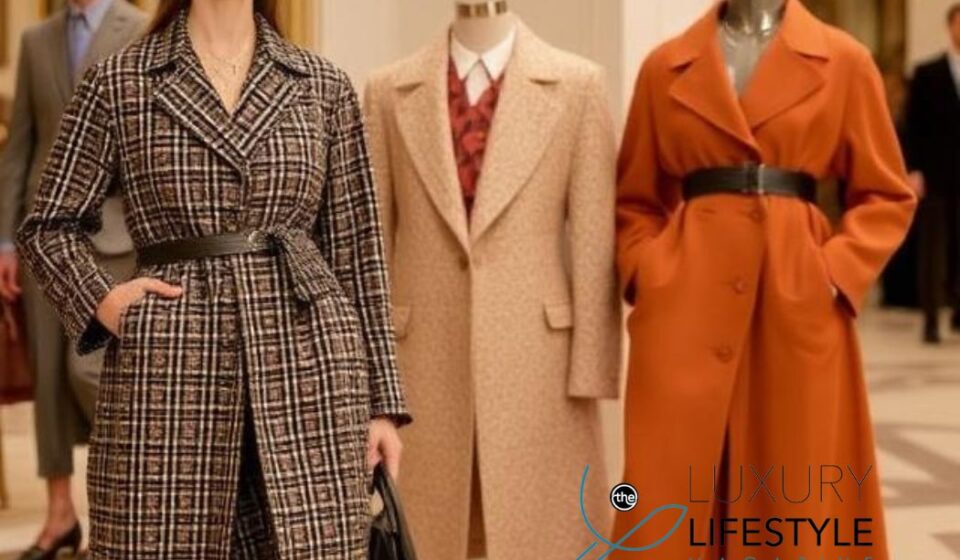
What is it about Italian luxury clothing that makes the world stop and stare?
Picture this: you’re walking through the streets of Florence, and you spot a gentleman whose outfit catches your eye. It’s not flashy—no visible logos, no screaming labels. Yet his blazer drapes perfectly, his cashmere sweater looks impossibly soft, and his trousers seem to have been made specifically for him. Something about the cut, the fabric, the way it moves with him whispers “quality” before he even speaks.
That’s the magic of Italian luxury.
From the workshops of Milan to the Tuscan hills, Italian luxury brands have built a reputation that transcends fashion cycles, geopolitical shifts, and consumer whims. As of 2026, the global high-end goods market sits at approximately €1.44 trillion, with personal luxury goods—including clothing—holding steady at €358 billion. Italy’s luxury goods market alone is expected to reach $20.15 billion in 2026, with clothing and apparel claiming a dominant 47.85% market share.
But here’s the thing: while everyone knows Gucci, Prada, and Armani, the Italian luxury landscape is far richer, more diverse, and more fascinating than the big-name headlines suggest. This article will take you beyond the obvious, exploring the heritage, the craftsmanship, the current trends, and the future of Italian luxury brands clothing.
The Legacy: Why Italian Luxury Clothing Stands Apart
The Meaning of “Made in Italy”
Let’s address the elephant in the room. In a globalized world where manufacturing bounces between continents, what does “Made in Italy” actually mean in 2026?
It means heritage, craftsmanship, and a cultural legacy that can’t be factory-stamped. The Italian government reinforced this in 2023 by implementing official certification seals for Italian-manufactured products, aiming to protect authenticity and differentiate genuine luxury items from counterfeits.
But the label carries deeper weight. As one Deloitte report notes, Italian craftsmanship has evolved from a mark of quality to a critical competitive advantage in the global luxury arena. It’s not just about where something is made—it’s about how it’s made. The human touch, the generational knowledge, the obsession with detail that can’t be programmed into a machine.
The Quiet Luxury Roots You Haven’t Heard Of
Here’s where things get interesting. While the term “quiet luxury” recently exploded on TikTok and HBO’s Succession, certain Italian labels have been practicing it for nearly a century.
Take Fedeli, founded in Monza in 1934. Luigi Fedeli began by making knitted hats, then expanded into luxury cashmere—but here’s the revolutionary part: he treated cashmere not as a special-occasion fabric, but as one for everyday wear. His motto, “The Luxury of Style,” captured a philosophy that predates the influencer-driven “stealth wealth” aesthetic by generations.
Or consider Slowear, whose story began in 1951 when Incotex was founded in Venice to produce trousers for workers and the military. By the 1960s, the company had evolved into a specialist in smart-casual trousers. In 2003, Incotex consolidated with Montedoro (outerwear), Zanone (knitwear), and Glanshirt (shirts) under the Slowear umbrella—all dedicated to clothes that resist trends in favor of timeless quality.
Massimo Alba, launched in 2006, took a different but equally compelling path. Created initially as a gift for his wife—just eight wardrobe essentials—the label emphasizes relaxed, unstructured cuts and garment-dyed fabrics. When Daniel Craig chose Massimo Alba for his portrayal of James Bond in No Time to Die, the brand cemented its association with understated, refined elegance.
And then there’s Barena Venezia, which roots its identity in Venice’s local workwear traditions—clothes once worn by fishermen, farmers, and gondoliers, reinterpreted for modern life. Brad Pitt, George Clooney, and Daniel Craig are all fans of its relaxed silhouettes and open-weave linens.
These brands prove that Italian luxury has always been about more than flash—it’s about authenticity, functionality, and the quiet confidence that comes from wearing something truly well-made.
The Italian Luxury Landscape in 2026: What’s Happening Now
The Major Players and Their Evolving Strategies
The headline names remain as powerful as ever. Prada, founded in Milan in 1913, continues its intellectual, avant-garde approach under the visionary leadership of Miuccia Prada. The brand’s nylon jackets and Saffiano leather goods symbolize its ability to balance innovation with tradition. Sister brand Miu Miu (launched in 1993) has carved out a distinct identity as a rebellious, intellectual alternative, particularly known for its micro-skirts and quilted leather.
Valentino experienced a major transition in 2024 when longtime creative director Pierpaolo Piccioli departed, replaced by Alessandro Michele. This marks a new chapter for the Roman house, famous for its “Valentino Red” and romantic feminine silhouettes. Meanwhile, Giorgio Armani, founded in 1975, continues to define “Italian Chic” through urban, streetwear-inspired designs under its Emporio Armani line, alongside the main signature collection.
But some of the most interesting developments are happening with heritage brands undergoing renewal.
Heritage Brands Reborn
Malo, founded in Florence in 1972, is one such story. Acquired by US investment fund Glickman Capital in 2025, the cashmere house has launched a global relaunch with a new creative team and archival capsule collection. CEO Michelle Kessler-Sanders captured the philosophy: “We’re not chasing trends; we’re refining what timeless luxury looks and feels like today”. The brand has returned to the US market after nearly a decade, now available at Saks Fifth Avenue and Neiman Marcus.
Trussardi, acquired by Italian textile group Miroglio in March 2024, has taken a novel approach to its relaunch. Rather than appoint a single creative director, the label created a design collective called “Gentle Society.” The collection focuses on “more accessible progressive luxury” with “more democratic prices”—leather jackets around €500, jeans between €140 and €240.
This strategy reflects a broader trend: the polarisation between ultra-high-end luxury and more accessible premium segments. As Altagamma’s 2025 Observatory noted, the luxury market faces pressures from “ultra-fast fashion imported from China” and a need for a “new pact of the supply chain” to protect Italian manufacturing.
The Rise of Contemporary Italian Knitwear
One of the most exciting sub-sectors in Italian luxury clothing is knitwear. Privati Firenze, founded in Tuscany in 2015, represents the new wave of Italian brands that combine heritage with modern accessibility. Using advanced 3D knit technology alongside artisanal craftsmanship, the brand offers premium sweaters and cardigans made with yarns from Loro Piana and Zegna Baruffa—at accessible price points from €114 for merino crewnecks to €490 for long cashmere cardigans.
The brand’s success reflects a broader shift: consumers increasingly want authentic, well-made pieces they can wear daily, not just special-occasion items.
The Italian Luxury Market in 2026: Key Trends and Insights
Market Confidence and Pragmatic Growth
Despite global geopolitical instability and slowing demand in key markets, the Italian luxury sector looks toward 2026 with cautious optimism. According to Deloitte’s Global Powers of Luxury 2026 report, 84% of Italian Fashion & Luxury executives expect stable or growing revenues—significantly higher than the global average of 66.9%.
Italian executives identify their top growth drivers as:
-
Customer experience and loyalty (38%)
-
Innovation (20%)
-
Digital acceleration (18%)
-
Entry into new segments (14%)
-
M&A or brand extensions (10%)
There’s a distinct focus on “pragmatism” over aggressive expansion. Growth will be measured, disciplined, with selective investments and a focus on efficiency.
The China Question
China remains a central concern. In 2025, the Chinese luxury market experienced significant weakness (-8 to -6%) . However, 2026 projections suggest a moderate recovery with +4% growth, driven by an increasing number of High Net Worth Individuals (HNWI).
The caveat? The phenomenon of “luxury shame” in China continues to direct consumer attention toward experiences rather than products. This aligns with a global shift toward experiential consumption—spending on travel, wellness, and hospitality rather than material goods.
The AI and Sustainability Frontier
Artificial Intelligence emerges as a key strategic lever, with 30% of Italian executives considering it important for product innovation, marketing, and supply chain optimization. However, only 6% of Italian companies report integrating GenAI into their most relevant functions, highlighting a significant opportunity gap.
Sustainability, meanwhile, is no longer optional. The EU’s Digital Product Passport (DPP), mandatory by 2030, requires comprehensive documentation of products’ environmental credentials. Italy, as the fourth-largest apparel market in the EU (import value €18.2 billion in 2023), faces this challenge head-on.
Navigating Italian Luxury: Practical Guidance
How to Choose Authentic Italian Luxury
Given the prevalence of counterfeit goods—in 2024, the Italian Ministry of Enterprises seized nearly 9,000 counterfeit products, shut down 354 websites, and issued over 2,000 fines—buying authentic Italian luxury requires vigilance.
Look for the “Made in Italy” certification, introduced by the Italian government in 2023. This official seal provides assurance of genuine Italian manufacturing.
Understand the pricing tiers. Brands like Privati Firenze demonstrate that authentic Italian luxury doesn’t have to be stratospheric—their pieces start at €114. Trussardi’s relaunch positions leather jackets around €500. Compare this to the ultra-premium end, where Kiton suits require approximately 25 hours of handwork and command corresponding prices.
Investment Dressing: Pieces Worth the Investment
Not all Italian luxury clothing is created equal. For a wardrobe that balances style, durability, and value, consider:
Knitwear is where Italy truly excels. Brands like Fedeli and Malo offer cashmere designed for everyday wear, not just occasional luxury. Privati Firenze and Zanone (part of Slowear) demonstrate that premium yarns like merino, alpaca, and silk can be both accessible and enduring.
Tailored jackets from brands like Boglioli revolutionized menswear by introducing unstructured blazers that combine comfort with classic Italian tailoring.
Outerwear from brands like Aspesi and C.P. Company blends technical innovation with Italian design sensibility. Aspesi’s 1970s down jacket remains an iconic example of functional luxury.
Common Mistakes and How to Avoid Them
Mistake 1: Buying for the Label, Not the Quality
Too many buyers fixate on logos and brand recognition rather than craftsmanship. The irony is that the most discerning Italian luxury often doesn’t broadcast its identity. Brands like Loro Piana, Brunello Cucinelli, and Massimo Alba prioritize quality over visibility.
Solution: Touch the fabric, examine the stitching, test the drape. Let the quality speak for itself.
Mistake 2: Overlooking Emerging Brands
The fashion press tends to focus on the big names, but many of the most interesting developments are happening with smaller, specialized houses.
Solution: Explore brands like Privati Firenze, Fedeli, Slowear, and Malo alongside the more obvious choices.
Mistake 3: Expecting Tradition to Mean Stagnant
Italian luxury has a reputation for tradition, but innovation is equally central. From Prada’s use of nylon to Stone Island’s textile research, Italian brands push boundaries as much as they honor history.
Solution: Look for brands that combine heritage with forward-thinking design.
Pros, Cons, and Balanced Analysis
Pros of Investing in Italian Luxury Clothing
-
Superior quality: Italian craftsmanship means garments that last for years, not months.
-
Timeless design: Many Italian brands focus on classic silhouettes that transcend trends.
-
Brand heritage: You’re buying into a story, a tradition, a cultural lineage.
-
Resale value: Well-maintained Italian luxury often retains significant value.
Cons to Consider
-
Cost: Quality comes at a price, and Italian luxury isn’t affordable for everyone.
-
Maintenance: Luxury fabrics like cashmere and silk require careful care.
-
Counterfeit risk: The prevalence of fakes means you need to be vigilant about authenticity.
-
Changing preferences: The shift toward experiential consumption may reduce demand for material luxury.
 Future Trends and Predictions
What to Expect from Italian Luxury Brands in the Coming Years
1. A focus on “conscious luxury”
Italian brands are prioritizing sustainability through reduced environmental impact, circularity, and supply chain transparency. The EU’s Digital Product Passport will accelerate this trend, turning compliance into competitive advantage.
2. Price recalibration
Executives cite pricing recalibration as a key tool for financial stabilization. The polarisation between ultra-high-end and accessible luxury is likely to continue, with brands like Trussardi targeting the “democratic luxury” segment.
3. The experience economy
As Bain & Company senior partner Claudia D’Arpizio notes: “After the era of shopping sprees, luxury enters a new season where experiences, emotions, and values become the true engine of growth”. This suggests more brand investment in hospitality, wellness, and experiential retail.
4. Digital transformation
With digital acceleration identified as a top growth driver, expect more investment in omnichannel and e-commerce. Italy’s executives rank digital transformation among their top priorities.
5. Talent focus
Italy ranks first in the world for investment priorities in people, culture, and organizational readiness (24%, well above the global average). This reflects the need for new skills to support technological transition while preserving craft traditions.
6. New markets
North America remains the priority market, followed by the Middle East (in constant expansion at +4-6%), while Europe shows more modest growth. India, the “eternal promise of luxury,” continues to grow at +7%.
Conclusion
Italian luxury clothing in 2026 represents a fascinating paradox: it’s both deeply rooted in centuries of tradition and constantly evolving. The brands that succeed are those that honor their heritage while embracing innovation, sustainability, and changing consumer preferences.
The quiet luxury movement isn’t a passing trend. It’s a return to fundamental values: quality, craftsmanship, and authenticity. Brands like Fedeli, Malo, and Slowear have been practicing this for decades. The current fascination with “stealth wealth” simply validates what these houses have always known.
Whether you’re investing in your first Italian luxury piece or expanding a well-curated wardrobe, remember that the best Italian luxury tells a story—of craftsmen who’ve spent generations perfecting their art, of families who’ve built their reputations on integrity, and of a country that treats style as a cultural necessity, not just a commercial pursuit.
Key Takeaways
-
Italian luxury is more than big-name brands—specialized houses like Fedeli, Malo, and Slowear offer exceptional quality without the flashy logos.
-
“Quiet luxury” isn’t new—many Italian brands practiced understated elegance decades before the term went viral.
-
The market in 2026 shows cautious optimism, with 84% of Italian executives expecting stable or growing revenues.
-
Sustainability is becoming mandatory with the EU’s Digital Product Passport approaching in 2030.
-
Emerging Italian knitwear brands like Privati Firenze combine artisan traditions with accessible price points.
-
The future of Italian luxury lies in balancing heritage with innovation—from AI adoption to experience-driven growth.
Detailed FAQs
What are the most iconic Italian luxury clothing brands?
The most globally recognized include Gucci, Prada, Giorgio Armani, Valentino, Dolce & Gabbana, and Versace. However, discerning buyers also seek out heritage houses like Loro Piana, Brunello Cucinelli, Zegna, Bottega Veneta, and Fendi. For those exploring beyond the obvious, Fedeli, Malo, Slowear, and Kiton offer exceptional craftsmanship with more understated branding.
What is “quiet luxury” and why is it associated with Italian brands?
“Quiet luxury” refers to refinement without ostentation—clothing defined by cut, texture, and ease rather than logos or visible branding. Italian brands like Loro Piana, Brunello Cucinelli, and Fedeli have practiced this philosophy for decades. The term recently gained mainstream popularity through social media and HBO’s Succession, but these Italian houses were fluent in the language long before it became trendy.
How can I verify if Italian luxury clothing is authentic?
Look for the official “Made in Italy” certification seal introduced by the Italian government in 2023. Buy from authorized retailers, reputable department stores, and brand boutiques. Be wary of prices that seem too good to be true—genuine Italian luxury involves significant craftsmanship costs. Italian authorities seized nearly 9,000 counterfeit products in 2024 alone, so vigilance is essential.
What are the price ranges for Italian luxury clothing?
Prices vary widely. Emerging brands like Privati Firenze offer premium knitwear starting at €114 for merino crewnecks, with cashmere cardigans up to €490. Trussardi’s relaunch positions leather jackets around €500 and jeans at €140-240. At the ultra-premium end, bespoke tailoring from houses like Brioni and Kiton can reach several thousand euros.
Why is Italian craftsmanship considered superior?
Italian craftsmanship prioritizes handcrafted nuances, design innovation, and cultural legacy over sheer technical engineering. The “Made in Italy” label has transcended its geographic meaning to symbolize heritage, exclusivity, and unparalleled quality. Italian brands often maintain vertical integration, controlling everything from raw material sourcing to final production.
What is the future outlook for Italian luxury brands in 2026?
The outlook is cautiously optimistic. The Altagamma Consensus estimates +5% growth for the high-end sector in 2026. Key priorities include customer experience, innovation, digital acceleration, and sustainability. The market faces challenges from geopolitical instability, fluctuating exchange rates, and changing Chinese consumer behavior, but Italian executives remain more confident than their global counterparts.
What are the best Italian luxury clothing brands for men?
For suits and tailoring, Brioni, Kiton, and Corneliani are exceptional choices. Zegna offers excellent formal and casual wear. For knitwear, look at Malo, Fedeli, and Privati Firenze. For outerwear, Stone Island and C.P. Company (originally Italian) blend technical innovation with style. For ready-to-wear with understated elegance, Loro Piana and Brunello Cucinelli are top picks.
Are there Italian luxury brands focusing on sustainability?
Yes, sustainability is a growing priority. Italian brands are investing in traceable supply chains and embracing circular economy principles. The EU’s Digital Product Passport, mandatory by 2030, is accelerating this trend. Some brands, like Brunello Cucinelli, are known for “humanistic capitalism”—ethical production and humane working conditions. Others are integrating recycled fibers (Privati Firenze’s “Green Cashmere” initiative) and reducing environmental impact.
How is the Italian luxury market performing compared to other regions?
Italy remains one of the most confident luxury markets globally. 84% of Italian executives expect stable or growing revenues in 2026, compared to the global average of 66.9%. North America remains the priority market, while China is expected to recover moderately. The Middle East continues to expand, and India shows robust growth at +7%.
What are the emerging trends in Italian luxury clothing?
Key trends include the rise of contemporary knitwear with accessible pricing, the polarisation between ultra-premium and “democratic luxury” segments, a focus on sustainability and circularity, digital transformation (including selective AI adoption), and greater attention to talent development and craft preservation. Italian executives also prioritize investment in people, culture, and organizational readiness above the global average.
Sources
-
South China Morning Post. “The roots of Italian quiet luxury, from Aspesi to Fedeli and Barena.” October 2025.
-
FashionNetwork. “Trussardi relaunches in ‘democratic luxury’ segment.” April 2025.
-
FashionUnited. “Brand Radar: Privati Firenze – where Tuscan tradition meets modern knitwear style.” October 2025.
-
FashionUnited. “Italian heritage brand Malo relaunches with new vision.” November 2025.
-
Montenapo Daily. “Fashion & Luxury, Deloitte: Italy to Restore Confidence in Revenues and Margins in 2026.” January 2026.
-
GII Research. “Italy Luxury Goods – Market Share Analysis, Industry Trends & Statistics, Growth Forecasts (2026 – 2031).” 2026.
-
FashionUnited Italy. “Osservatorio Altagamma: per il lusso ripresa stimata del +5% nel 2026.” November 2025.
-
Printemps. “6 ITALIAN LUXURY BRANDS TO FOLLOW.” March 2026.
-
The Fashionisto. “Italian Designer Brands: The Best of Men’s Luxury Clothing.” August 2025.
This article was researched and written in 2026, using the most current data and industry analyses available. Italian luxury fashion is a dynamic field, and we recommend checking brand websites and authorized retailers for the most up-to-date product information and availability.
FOR FURTHER INFORMATION, VISIT: theluxurylifemagazine.com