
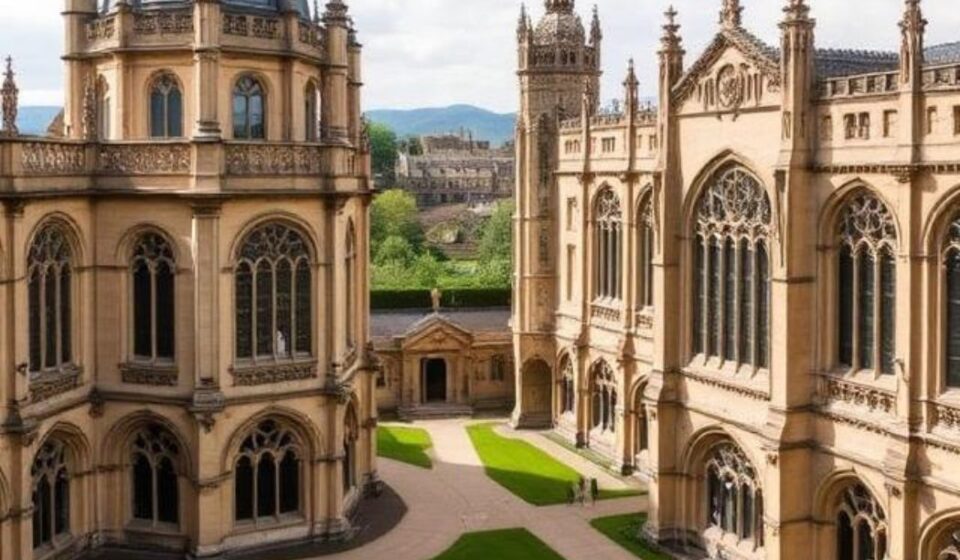
Oxford vs Cambridge: The year is 1209. A group of disgruntled scholars, fleeing a violent town-and-gown dispute at the University of Oxford, packs their bags and heads northeast to the marshy fens of Cambridge. They establish a new institution, unwittingly setting the stage for the most prestigious and enduring rivalry in the academic world. Over 800 years later, the question remains one of the most agonizing decisions a prospective student can face: Oxford or Cambridge?
This isn’t just a choice; it’s a commitment. For most applicants, the decision is binding—official UCAS policy prevents you from applying to both universities in the same year. It’s a fork in the road that can shape your future, but also a decision that is deeply personal. Many assume the two are interchangeable, the “Oxbridge” portmanteau suggesting a single monolithic entity. But scratch beneath the surface of the dreaming spires, and you’ll find two distinct institutions with unique cultures, academic strengths, and personalities.
From a student’s perspective, the truth is that while both will deliver a world-class education, your academic goals and personal preferences will likely lead you towards one over the other. I’ve spoken with countless students who chose based on a gut feeling after visiting the town, or who were drawn to a specific course that was more established at one of the schools. There’s no “wrong” choice here, but a lack of research can lead to a missed opportunity for the perfect fit.
The challenge, of course, is the rule: you have to pick one. It creates an incredible amount of pressure, but it also forces you to do your homework thoroughly. So, let’s dive deep into what makes Oxford and Cambridge tick—and which one might be right for you.
Table of Contents
ToggleA Tale of Two Cities: Oxford vs Cambridge
To understand the universities, you have to understand their cities. They are not just places to study; they are the environment where you will live, breathe, and socialize for the next three or four years.
-
Oxford: The Vibrant City. Oxford is the larger, more bustling of the two. Often described as a city with a university, it’s a substantial urban center with a lively, sometimes chaotic, energy. You’ll find a wider variety of shops, restaurants, and entertainment options. It’s a bustling metropolis steeped in history, which some find invigorating and others find distracting. Oxford is also a fantastic base for exploring other parts of England, with the Cotswolds, Stratford-upon-Avon, and Warwick within easy reach.
-
Cambridge: The Quintessential Town. In contrast, Cambridge is often described as a university with a town attached to it. Its atmosphere is simpler, more tranquil, and arguably more charming. The town is built around the university colleges and the River Cam. Its lovely gardens and open green spaces, like Parker’s Piece, create a more serene environment. The city has a more intimate feel, which many students find perfect for focusing on their studies.
Academic Cultures and Strengths: Where to Focus Your Passion
While both universities are powerhouses across the board, they have distinct historical and contemporary areas of expertise. Depending on your field of study, one may offer a clear advantage or a more established network.
Science and Engineering
When it comes to STEM, Cambridge has long held the crown, particularly in mathematics, physics, and engineering, with a legacy that includes Sir Isaac Newton and Alan Turing. Its proximity to “Silicon Fen” provides a direct pipeline to a vibrant tech startup scene. However, the 2026 Times Higher Education Subject Rankings show a fascinating nuance: Oxford has now clinched the top spot in the UK for Engineering and Computer Science, while Cambridge remains a very close second.
-
Cambridge remains unbeatable for the pure sciences and mathematics.
-
Oxford is surging ahead in applied fields like Computer Science and Engineering, showing the highest teaching scores.
Arts, Humanities, and Social Sciences
This is where the rivalry becomes particularly stark. Cambridge currently holds the edge for Arts and Humanities according to the 2026 THE rankings, scoring high for its research environment. But Oxford is the undisputed leader for Social Sciences, with programs like its legendary Politics, Philosophy, and Economics (PPE) course shaping world leaders.
-
Oxford excels in social sciences, law, and humanities, producing a significant number of global leaders.
-
Cambridge often leads in modern languages, archaeology, and history.
The Bottom Line: If you’re studying English Literature or Social Sciences, Oxford’s reputation is almost unparalleled. If you’re a physicist or mathematician, Cambridge is your historic home. For Computer Science and Engineering in 2026, Oxford is narrowly in the lead.
The Deciding Factor: The Teaching System
The most unique aspect of studying at either university is the tutorial or supervision system. This is the “secret sauce” of an Oxbridge education.
-
Oxford (Tutorials): You’ll typically meet with a tutor and one or two other students. The focus is on discussing a pre-written essay or problem set, leading to deep intellectual debate and critical feedback.
-
Cambridge (Supervisions): This is a similar small-group teaching experience. It’s often considered slightly more rigorous and academic in tone, while Oxford tutorials might lean slightly more towards open debate.
In both systems, you will be taught by world-leading experts in their fields on a weekly basis. This is a level of personalized attention that is rare in any other university system globally.
Tradition, Culture, and the College System
Both universities operate on the collegiate system. You apply to a specific college (though with an “open application,” the university will assign you one). This college becomes your home base: it’s where you live, eat, and often have your tutorials/supervisions. It’s crucial to research different colleges as they have different sizes, cultures, and histories.
Then there’s the rowing. The annual Boat Race on the Thames is one of the most famous sporting events in the world. In 2026, Oxford’s Men’s and Women’s crews secured dominant victories, with the men winning 37-25 and the women winning a record-breaking 52-8. This rivalry is fierce and fun, but it’s only part of the broader sports rivalry that includes rugby, cricket, and more.
Both universities boast beautiful architecture and walkable town centres punctuated with convivial pubs and shops .
The Price Tag and Financial Aid: Oxford vs Cambridge
It’s no secret that a degree from either institution comes with a significant price tag, especially for international students. Tuition for 2025-26 can range from £27,024 to over £70,554 at Cambridge and £37,380 to £62,820 at Oxford, depending on the course. In a historical shift for 2026, LSE topped the UK rankings for the second year in a row, pushing both Oxford and Cambridge into a joint fourth place in The Times and The Sunday Times Good University Guide, highlighting the growing competition at the top of the UK academic landscape.
Financial aid is a key differentiator. Unlike US Ivy League schools that offer generous need-blind aid to international students, both Oxford and Cambridge offer very limited financial aid. They primarily focus on domestic students with exceptional financial hardship. International students should expect to pay the full cost of tuition and fees.
Which One Is Right For You?
Choose Oxford if:
-
You are interested in Social Sciences, Politics, Philosophy, Economics, or Law.
-
You prefer a vibrant, bustling city life with a lot to do and explore.
-
The idea of engaging in spirited academic debate during tutorials appeals to you.
-
You are applying for Computer Science or Engineering (where it currently has a statistical edge).
Choose Cambridge if:
-
You are passionate about Mathematics, Physics, or the core Natural Sciences.
-
You prefer a quieter, more intimate, and idyllic university town atmosphere.
-
You are drawn to the legacy of scientific giants like Newton, Darwin, and Hawking.
-
You thrive in a more rigid, research-driven academic environment.
Common Mistakes and How to Avoid Them
-
Mistake #1: Not researching specific colleges. The college you join will define your daily experience.
-
Mistake #2: Underestimating the admissions test. These are not standard exams; they are highly competitive and require dedicated preparation.
-
Mistake #3: Thinking they are “basically the same.” The cultures and academic strengths are truly distinct.
Pros, Cons, and Balanced Analysis
Oxford
-
Pros: Higher QS/THE overall ranking, higher name recognition globally, vibrant city life, top for social sciences/humanities.
-
Cons: Can feel overwhelming, less focused on pure sciences compared to Cambridge.
Cambridge
-
Pros: Unmatched legacy in STEM, serene atmosphere, close-knit community feel.
-
Cons: Slightly lower in certain global rankings, can feel quiet for those seeking a big-city atmosphere.
Future Trends and Predictions: Oxford vs Cambridge
The landscape is shifting. While Oxford and Cambridge will always be pillars of global academia, the rise of London universities like LSE and Imperial is creating a more competitive environment. For students, this means the “Oxbridge or bust” mentality is fading. The future of UK higher education is becoming more diverse. However, for the top-tier student, the unique small-group teaching model of Oxford and Cambridge will continue to be their strongest, most irreplaceable asset.
Key Takeaways
-
You can’t apply to both. The decision is final, so research thoroughly.
-
Academic focus is key. Cambridge is historically for STEM; Oxford for Social Sciences and Arts.
-
Consider the city. Do you want urban energy (Oxford) or tranquil charm (Cambridge)?
-
Financial aid is limited. International students must plan to pay full fees.
-
The tutorial/supervision system is the main draw.
Quick Summary
Choosing between Oxford Vs Cambridge is a highly personal decision that should be driven by your academic interests, career goals, and personal preferences. While Cambridge holds a legendary reputation in the sciences and mathematics, Oxford leads in the social sciences and humanities. Consider the atmosphere of the city itself—the bustling, vibrant Oxford versus the tranquil, charming Cambridge—and always factor in the financial reality of studying at these prestigious institutions.
Detailed FAQs About Oxford vs Cambridge
1. Which is older, Oxford or Cambridge?
Oxford is older, founded in the 11th century, making it the oldest university in the English-speaking world. Cambridge was founded in 1209 by scholars who left Oxford after a dispute.
2. Can I apply to both Oxford and Cambridge?
No. Due to official UCAS policy, you must choose only one to apply to in the same application cycle.
3. Which is better for Computer Science in 2026?
According to the 2026 THE Subject Rankings, Oxford is currently ranked #1 in the UK and globally for Computer Science, followed closely by Cambridge at #2.
4. Which university is harder to get into?
They are both incredibly selective, with similar and highly competitive admission rates, though this varies depending on the specific course you apply for.
5. Is there a difference in the tutorial system?
The system is called “tutorials” at Oxford and “supervisions” at Cambridge. They are broadly similar, involving small-group (often 1-3 students) teaching with an expert, but some perceive Cambridge supervisions to be more rigorously academic, while Oxford tutorials lean toward debate.
6. What is the cost of tuition?
For the 2025-26 academic year, international tuition ranges from approximately £37,380 to £62,820 at Oxford and £27,024 to £70,554 at Cambridge. Costs vary significantly by course.
7. Which city is better for visiting?
It depends on what you like. Oxford is the more substantial town with more to see and do, while Cambridge is simpler, more charming, and has lovely gardens along the River Cam.
8. What is the Varsity Match?
The Varsity Match is the annual rugby union fixture between Oxford and Cambridge. In 2026, Oxford’s Men’s and Women’s teams both secured decisive victories.
9. Which university has a better reputation for employment?
Both are among the most prestigious in the world and are highly regarded by employers. Oxford often has a slight edge in name recognition globally, but Cambridge is equally respected, especially in the tech and scientific sectors.
10. Can I get a scholarship as an international student?
Financial aid is extremely limited for international students at both institutions. Unlike some US Ivy League schools, they do not offer substantial need-blind aid to overseas applicants, so you should expect to cover the full cost.
Sources:
-
Oxford University Vs Cambridge University: Which one to prefer in the UK? – The Indian Express
-
Best universities in the UK 2026 – Times Higher Education
-
Best universities in the UK for computer science 2026 – Times Higher Education
-
Cambridge vs Oxford: Which university town should you visit? – Newsday
-
Oxford v Cambridge: which famous uni town should you add to your bucket list? – Western Advocate
-
Best universities for social sciences degrees in the UK 2026 – Times Higher Education
-
Oxford Engineering students power Dark Blue varsity victories – University of Oxford
-
LSE tops UK University rankings as Oxford and Cambridge drop out of top three for first time – qazinform.com
-
Best universities in the UK for arts and humanities degrees 2026 – Times Higher Education
-
英国排名前十大学及优势专业(2026 最新综合版) – 新东方
-
Best universities for engineering degrees in the UK – 2026 rankings – Times Higher Education
-
Top business schools in the UK 2026 – Times Higher Education

admin
M Umer Abbasi is a luxury lifestyle journalist and editorial curator specializing in haute horology, passion investments, and avant-garde design. With an eye for flawless craftsmanship and heritage storytelling, he deconstructs the world of high-ticket assets—from secondary watch market trends to the evolution of bespoke tailoring. His work focuses on shifting the luxury narrative away from fleeting trends and toward timeless design, raw materials, and true artisanship. When he isn’t dissecting mechanical complications or reviewing five-star sanctuaries, he tracks blue-chip alternative asset indices. Connect with him via cbdfame@gmail.com