
It was a Tuesday evening, and I was on my hands and knees, scrubbing a mysterious red stain from my sister’s brand-new hardwood floors. The culprit? A tipped-over glass of Merlot. As I watched the wood absorb the liquid like a sponge, I thought, “There has to be a better way to have a beautiful home without living in constant fear of your own life.”
That moment of desperation is precisely why millions of homeowners are turning to luxury vinyl plank (LVP) flooring. It’s the great equalizer in interior design—offering the soul-warming aesthetics of natural wood without the anxiety, maintenance, or staggering price tag.
But this isn’t your grandmother’s vinyl. The LVP of 2026 is a technological marvel that has industry experts projecting the global luxury vinyl tile market to reach a staggering $46.3 billion by 2030. It’s not just a trend; it’s a revolution in how we think about the very ground beneath our feet.
So, are you ready to make the switch? Let’s take a deep dive into everything you need to know about luxury vinyl plank flooring.
Table of Contents
Toggle2. Background: What Exactly is Luxury Vinyl Plank?
To understand the hype, we need to look under the hood. LVP is a high-performance floor covering composed of several layers fused together under heat and pressure. Think of it like a high-tech sandwich designed to withstand the apocalypse (or at least your golden retriever).
The Anatomy of an LVP Plank
-
The Wear Layer (The Bodyguard): This is the clear, durable top coat. Measured in “mils” (thousandths of an inch), this layer protects against scratches, stains, and scuffs. A 20mil wear layer is the gold standard for high-traffic residential use.
-
The Print Layer (The Artist): This is where the magic happens. Using advanced digital or rotogravure printing, this layer creates a photorealistic image of wood grain, stone, or tile.
-
The Core Layer (The Backbone): This provides stability. In Rigid Core LVP (like SPC or WPC), this layer is engineered for supreme durability and waterproofing.
-
The Backing Layer (The Foundation): Often made of PVC or a foam underlayment, this adds sound absorption and comfort underfoot.
LVP vs. LVT: Just a Name Game
Here is a secret that many retailers don’t tell you: Luxury Vinyl Plank (LVP) and Luxury Vinyl Tile (LVT) are essentially the same product. The only difference is the shape and the image on the print layer.
-
LVP: Shaped like a long plank (think 9″x48″ or 9″x60″) and looks like wood.
-
LVT: Usually square and looks like stone or ceramic.
So, when you are shopping, you are really just deciding if you want the look of wood or stone.
3. The 2026 Trends: Goodbye Gray, Hello Warmth
The design world has officially declared a moratorium on the “millennial gray” floors that dominated the last decade. In 2026, the trend is shifting to warmth, organic textures, and “sensory synchronization”.
1. The New Neutrals
Forget the cold, clinical grays. The buzzwords are “California Casual” and “Modern Nordic.” We are seeing a massive shift toward:
-
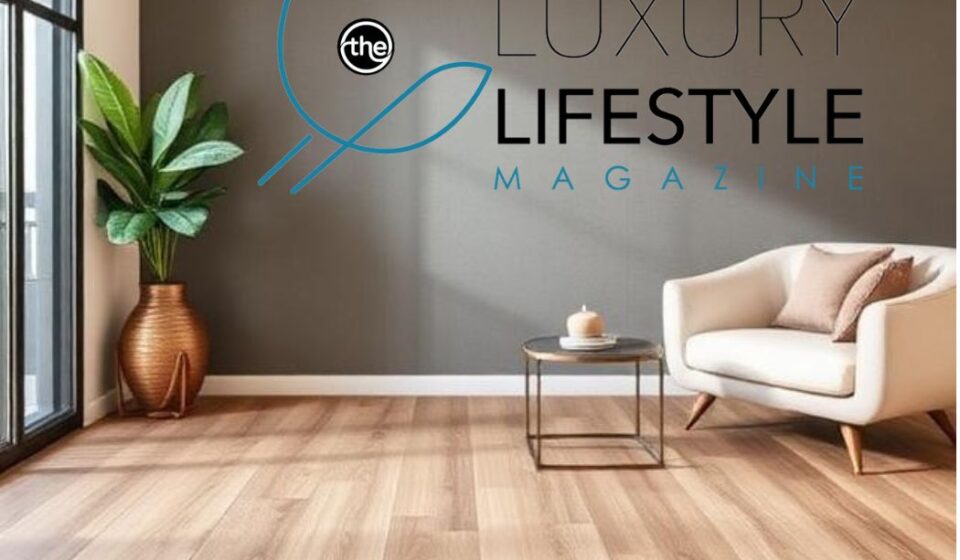
Honey and Sun-Drenched Oak: These medium-light tones make rooms feel airy and expansive.
-
Greige and Warm Taupe: The perfect bridge between beige and gray, offering a sophisticated “quiet luxury.
-
Earthy Browns and Soft Walnut: Deep, rich hues are making a comeback in bedrooms to create a cozy, cocoon-like atmosphere.
2. Advanced Textures (Embossed-in-Register)
The biggest giveaway of cheap vinyl is a flat, shiny surface. High-end LVP now features Embossed-in-Register (EIR) technology. This means the physical texture on the surface perfectly aligns with the printed wood grain. When you touch it, you feel the knots. When the light hits it, you see the cathedral patterns. It is virtually indistinguishable from real timber, even under direct light.
3. The Wide Plank Takeover
Forget the skinny strips of wood. The demand for “large format” is exploding. Planks measuring 7 to 9 inches wide and up to 5 feet long are the standard. These wider boards reduce visible seams, making small rooms appear larger and creating a seamless flow in open-concept homes. Some brands are even offering a massive 9″ x 60″ format for a truly grand look.
4. Herringbone is Back
Designers are using intricate layouts like Herringbone and Chevron in entryways and dining rooms to add “architectural interest” and prestige.
4. Practical Installation Advice: DIY or Pro?
One of the main selling points of LVP is its ease of installation. The majority of rigid core planks use a click-and-lock system that floats over the subfloor without glue or nails. This makes it a favorite for ambitious DIYers.
4.1 The Prep is the Price
The biggest mistake people make is skipping the subfloor prep. LVP requires a perfectly level surface. “Telegraphing” occurs when subfloor imperfections (like a small pebble or a low dip) show through the new floor. If you are installing over concrete, ensure it’s clean and dry.
4.2 Mix Your Planks
Wood is organic; it has variation. To get a natural look, open several boxes and mix the planks before you install them. This distributes the color and pattern variations evenly across the room.
4.3 Tools of the Trade
You don’t need a full woodshop. A sharp utility knife, a metal straight edge, and a rubber mallet are often all you need. For straight cuts, score the plank with the knife and snap it.
5. Common Mistakes and Challenges
Even with an easy product, things can go wrong.
Challenge 1: It Can Fade
The Problem: While the wear layer protects against scratches, LVT is susceptible to fading when exposed to prolonged direct sunlight (UV rays).
The Solution: Invest in high-quality LVP that includes a UV protective layer in the wear layer. Alternatively, use window treatments to block harsh rays during peak hours.
Challenge 2: Furniture Dents
The Problem: Heavy furniture (like a piano or a refrigerator) can create permanent indentations in the vinyl core.
The Solution: Always use felt pads or flat, wide furniture cups under legs to disperse the weight. For rolling chairs, use a clear chair mat designed for vinyl floors.
Challenge 3: Moisture Installation
The Problem: Although the planks are waterproof, moisture can seep through the seams or the edges if you are in a constantly wet environment.
The Solution: Ensure you are using a waterproof locking system. In basements, it is often recommended to use a moisture barrier underneath, even if the product claims to be waterproof.
6. Pros and Cons: The Balanced Analysis
The Good, The Great, and The Excellent
-
100% Waterproof: The ultimate game-changer. Perfect for kitchens, bathrooms, mudrooms, and basements.
-
Pet and Kid Friendly: The 20mil+ wear layers resist scratches from claws and dropped toys that would destroy real wood.
-
Cost-Effective: You get the look of hardwood or stone at a fraction of the cost of the natural materials.
-
Low Maintenance: No sanding, no sealing, no waxing. Sweep and occasional damp-mop.
-
Eco-Friendly Options: Many brands now offer FloorScore® and GREENGUARD certified products, ensuring low VOCs (Volatile Organic Compounds) for better indoor air quality.
The “Not-So-Bad” Cons
-
Not Hardwood: It doesn’t increase your home’s resale value in the same way solid hardwood does. Appraisers still view it as a high-end synthetic, not a premium structural material.
-
Synthetic Material: It is primarily made from PVC, which is not biodegradable. However, many manufacturers are moving toward recyclable components.
-
Imperfect Subfloor: It requires a nearly perfect subfloor. It will not “bend” to the floor like carpet.
7. Future Trends and Predictions
The LVP market is not just growing; it is innovating at breakneck speed.
1. The Rise of SPC (Stone Polymer Composite)
This is a step up from standard rigid core. SPC is denser and more durable than WPC, making it ideal for commercial spaces and high-traffic homes.
2. Smart Manufacturing
Digital twin technology and AI-driven quality control are becoming more common, allowing for even more realistic texture replication and consistency.
3. Sustainability is Key
Major players are investing in phthalate-free formulations and using recycled materials. Certifications like LEED and BREEAM are driving the demand for low-emission floors.
8. Conclusion and Key Takeaways
Luxury vinyl plank has successfully bridged the gap between beauty and practicality. In 2026, it stands as a testament to how far manufacturing has come, offering a floor that is simultaneously an art piece and a functional necessity.
Key Takeaways
-
Waterproof: LVP is the king of moisture resistance. It is safe for basements, bathrooms, and kitchens.
-
Trends: Avoid cold grays. Opt for warm oak hues, wide planks, and realistic Embossed-in-Register textures.
-
Quality: Always look for a 20mil wear layer for high-traffic areas and a rigid core construction for dimensional stability.
-
Installation: Prep your subfloor perfectly, mix your boxes of planks, and take your time with the layout.
-
Maintenance: It is easy to clean but protect it from UV rays and heavy furniture dents.
9. Detailed FAQs
Q: Is LVP really waterproof?
A: Yes. The core layers of rigid core LVP (like SPC and WPC) are completely waterproof. However, if you choose a glue-down version, the adhesive can sometimes be affected by moisture, so the floor might be waterproof, but the bond might not be. Always check the manufacturer’s specifications.
Q: How long does luxury vinyl plank last?
A: Depending on the quality of the wear layer (20mil+), LVP can last 15 to 25 years in residential settings, and often comes with a 10 to 15-year product warranty.
Q: Is LVP the same as Laminate?
A: Absolutely not. Laminate has a wood-pulp core (which can swell and warp with water). LVP has a vinyl core (which is 100% waterproof). This is the most significant distinction between the two.
Q: Can I install LVP over old tile or wood?
A: Yes. As long as the current surface is flat, dry, and solid, you can float a rigid core LVP right over it. This is a huge cost-saver for renovations.
Q: Does LVP look cheap?
A: Not anymore. Advancements in printing and texture (EIR) mean that high-end LVP is often mistaken for real wood. As one manufacturer put it, this is “vinyl flooring like you’ve never seen before”.
Sources
-
MSI Surfaces. “MSI’s Studio Collection: Domestically Sourced Luxurious Wide Plank Vinyl Flooring.” (January 2025)
-
Mannington Commercial. “What is Luxury Vinyl Tile (LVT)?” (July 2020)
-
Milliken. “What Is Luxury Vinyl Tile (LVT)?” (January 2025)
-
MSI Surfaces. “Luxury Vinyl Plank Vs. Luxury Vinyl Tile.” (2025)
-
Hallmark Floors. “Luxury Vinyl Plank Flooring: Top Benefits & Buying Tips.” (March 2026)
-
Tile and Stone Journal. “What is LVT and SPC Flooring.” (February 2025)
-
Research and Markets. “Luxury Vinyl Tiles – Company Evaluation Report.” (2025)
-
Empire Today. “Luxury Vinyl Plank vs Luxury Vinyl Tile: What’s the Difference?” (2024)
-
BuildDirect. “What to Know Before Installing Luxury Vinyl Plank Flooring.” (January 2025)
-
Research and Markets. “Luxury Vinyl Tile Floor Coverings – Global Strategic Business Report.” (October 2025)
-
Metroflor. “All You Need to Know About Luxury Vinyl Plank and Luxury Vinyl Tile Flooring.” (January 2025)
Tags:
luxury vinyl plank
admin
M Umer Abbasi is a luxury lifestyle journalist and editorial curator specializing in haute horology, passion investments, and avant-garde design. With an eye for flawless craftsmanship and heritage storytelling, he deconstructs the world of high-ticket assets—from secondary watch market trends to the evolution of bespoke tailoring. His work focuses on shifting the luxury narrative away from fleeting trends and toward timeless design, raw materials, and true artisanship. When he isn’t dissecting mechanical complications or reviewing five-star sanctuaries, he tracks blue-chip alternative asset indices. Connect with him via cbdfame@gmail.com