
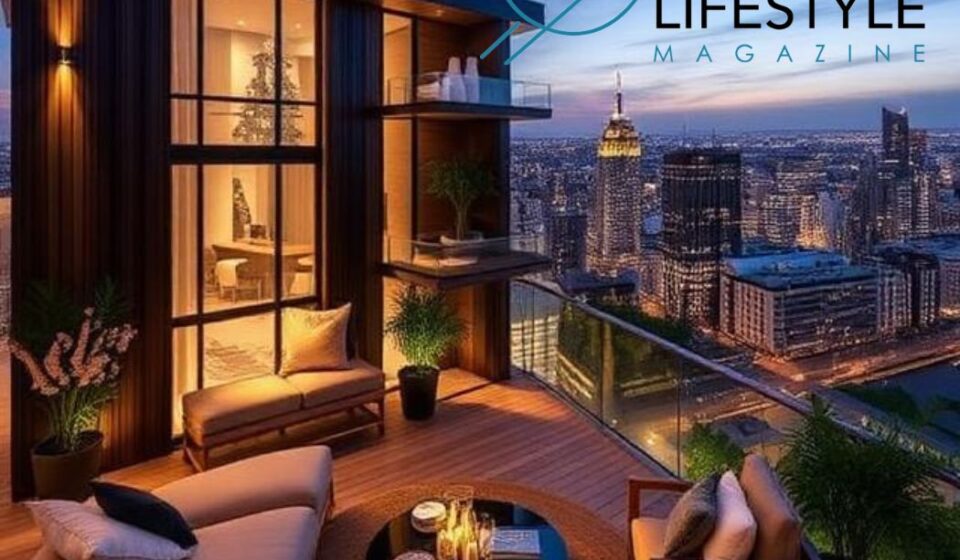
What does a luxury apartment actually mean in 2026?
If your answer is “granite countertops and a doorman,” you’re about a decade behind the market. In January 2026, a penthouse in New York’s West Village sold for $87.5 million, setting a new benchmark for the city. That transaction wasn’t driven by marble finishes or square footage alone. It was driven by something more elusive: quality of life.
The global luxury apartment market has undergone a fundamental transformation. After the pandemic-era frenzy of 2020–2023, the sector has entered what Christie’s International Real Estate calls a “healthier equilibrium”. Demand has cooled from record highs, but it hasn’t collapsed—it’s matured. Buyers are more deliberate, more discerning, and more focused on how a home actually feels rather than how it photographs.
This article cuts through the marketing gloss to examine what luxury apartments really mean in 2026: the trends reshaping design, the investment logic that separates winners from losers, and the practical decisions that determine whether you’re buying an asset or an obligation.
The State of Luxury Apartments in 2026: A Market Rebalancing
From Frenzy to Fundamentals
The Christie’s Prime Sentiment Index, which tracks buyer demand, price expectations, and inventory conditions across global luxury markets, registered 14.4 in 2026—down from 15.6 in 2025. At first glance, that looks like a slowdown. But context matters: any score above zero signals positive momentum. The slight dip reflects normalization, not decline.
“Demand is normalizing, which we see as evidence of a more balanced market,” said Gavin Swartzman, president of Christie’s International Real Estate. “Expectations of demand are still in the moderately high range, so it isn’t a frenzied market, it is just a solid market”.
The buyer demand component of the index dropped from 37.7 to 29.3, while price outlook actually improved slightly from 13.8 to 14.6. Translation: buyers are less desperate, but sellers remain confident. That’s a healthier dynamic than the bidding wars of 2021.
Where Growth Is Actually Happening
Not all luxury apartment markets are created equal in 2026. Knight Frank’s Global Residential Trends report forecasts that luxury home prices across 20 major cities will rise modestly over the next two years, but regional disparities are stark.
Seoul leads the world with luxury apartment prices projected to rise 11% in 2026 and 6% in 2027. The driver? A chronic shortage of new housing supply combined with intense demand from wealthy domestic and overseas Korean buyers seeking “trophy assets” in prime districts. Savills similarly forecasts Seoul prime residential values rising 6–7.9%.
Tokyo follows with 4–5.9% projected growth, recovering from an extraordinary 30% capital value increase in 2025. New York, Miami, and Hong Kong are all expected to see moderate but positive growth in the 2–4% range.
At the other end of the spectrum, Beijing and Shanghai are forecast to decline by 2–3.9% due to oversupply and weak buyer sentiment. This divergence matters: “global luxury” is no longer a monolithic concept. Local supply dynamics and demographic shifts now outweigh macro trends.
What Actually Defines a Luxury Apartment in 2026
The Death of Open Plan
For two decades, luxury apartment design followed a predictable script: remove walls, maximize light, create “flow.” That era is ending.
A growing number of high-end developments in London, New York, Paris, and Sydney are reintroducing defined rooms—entry foyers, dressing salons, private retreats, and carefully sequenced interiors. Sydney’s One Darling Point, a $500-million project by Lendlease and Mitsubishi Estate Asia, exemplifies this shift. Each apartment begins with a dedicated entry foyer featuring stone flooring and a custom timber portal, creating what the architects call “a distinct sense of arrival”.
“These homes are neo-classically inspired: foyers and ante-rooms, salons for dressing,” says Jeremy Bull of Alexander &CO., the project’s interior designer. “They are far more like homes, generous plays with scale and detail, rhythm and light”.
The buyer profile driving this change is revealing: downsizers moving from large family homes who refuse to compromise on privacy and “ceremony.” They’re not looking for a glass box with a view. They want the experience of a house, compressed into a vertical footprint.
Wellness Is the New Marble
Sotheby’s International Realty’s 2026 Luxury Outlook identifies a fundamental shift: buyers now prioritize quality of life over square footage. The global longevity market, estimated at $5.3 trillion in 2023, is projected to reach $8 trillion by 2030—and real estate is riding that wave.
What does this mean concretely? Luxury apartment buyers in 2026 are asking about:
-
Biophilic design and access to natural light and greenery
-
Spa-grade facilities: saunas, steam rooms, cold plunges, and wellness concierges
-
Air and water quality systems integrated into building infrastructure
-
Active social programming that combats isolation
In Islamabad, Pakistan, new developments like Imarat Residencies are marketing “wellness-centric floors” as a first-of-its-kind feature, combining biophilic design with community fitness and recreation facilities. In Lahore’s Askari developments, saunas, jacuzzis, and rooftop restaurants have become standard amenities in new luxury towers.
Branded Residences and the Trust Premium
The branded residence model—where a hospitality or fashion brand licenses its name and service standards to a residential development—has moved from novelty to expectation in many markets.
One Homes, a UK-based developer operating in Pakistan, has partnered with Versace Ceramics and Savills to signal international standards to diaspora buyers. Their flagship project, One Canal Road in Lahore, includes a 10,000-square-foot sky villa listed at Rs1 billion (approximately $3.6 million)—the most expensive penthouse ever offered in Pakistan.
Why does branding matter? For overseas buyers in particular, it reduces perceived risk. A recognized brand name provides implicit assurance of construction quality, management standards, and resale liquidity. In markets where trust is scarce, branding becomes a form of insurance.
The Investment Case: Yields, Appreciation, and Hidden Costs
Rental Yields: The Real Numbers
Luxury apartments in Pakistan’s prime locations are delivering net rental yields of 6–8% annually, according to industry reports. That’s significantly higher than the 2–4% typical of mature markets like London or New York, and it explains why overseas Pakistani investors—who remit over $35 billion annually—are increasingly directing capital toward premium apartment projects.
In Lahore specifically, luxury serviced apartments in prime areas offer yields of roughly 5–8%, plus capital appreciation as construction milestones complete. For diaspora investors accustomed to low yields in Western markets, these numbers are compelling.
The Appreciation Story (With Caveats)
Historical price data from Lahore’s Askari developments illustrates the long-term appreciation potential:
-
Askari 11 10-marla flats: +192.75% from December 2015 to July 2026
-
Askari 11 15-marla flats: +172.49% from January 2016 to July 2026
-
Askari 10 15-marla flats: +129.23% from October 2018 to August 2026
These are impressive figures. But they come with important caveats. First, past performance in a developing market doesn’t guarantee future returns. Second, these numbers don’t account for maintenance costs, vacancy periods, or currency depreciation for foreign investors. Third, the Pakistani rupee’s volatility means dollar-denominated returns may look very different from rupee-denominated ones.
The Costs Nobody Talks About
Luxury apartments carry luxury carrying costs. In Pakistan, these typically include:
-
Monthly maintenance charges for shared amenities (gyms, pools, security, landscaping)
-
Property taxes assessed on higher valuations
-
Service charges for concierge, housekeeping, or property management
-
Vacancy risk between tenants, especially for furnished units
A 6–8% gross yield can shrink to 4–5% net after these expenses. Smart buyers model the full cost structure before committing.
Practical Tips: How to Evaluate a Luxury Apartment in 2026
1. Read the Developer’s Track Record, Not the Brochure
In markets with limited regulatory oversight, delivery risk is real. One Homes claims that “more than half of the projects that start off promising big things stall” in Pakistan. Whether or not that statistic is precisely accurate, the underlying warning is valid.
Actionable step: Research the developer’s completed projects. Visit them. Talk to residents. A developer with three delivered projects and satisfied owners is worth more than one with ten “coming soon” towers.
2. Verify the Payment Structure
Many luxury apartment projects now sell on 3–4 year installment plans tied to construction milestones. This can make entry more accessible for salaried professionals and expat families. But it also means you’re paying for something that doesn’t exist yet.
Actionable step: Ensure your payment plan includes independent verification of construction progress before each installment. Some developers, like One Homes, have built this into their model with inspector-linked payments. If a developer won’t agree to this, treat it as a red flag.
3. Assess the Amenity-to-Unit Ratio
A building with 200 apartments and one small gym is not a luxury building. It’s a building with a gym.
Actionable step: Ask how many units will share each amenity. A luxury tower with 40–60 residences and comprehensive facilities is a fundamentally different living experience from one with 300 units and the same amenity list.
4. Understand the Service Charge Trajectory
Initial service charges are often artificially low to attract buyers. They rise as the building ages and maintenance needs increase.
Actionable step: Request the sinking fund schedule and projected service charge increases over 10 years. If the developer can’t provide this, you’re buying into uncertainty.
5. Location Still Beats Everything
Sotheby’s notes that “location remains the key factor” in luxury property, with major international cities continuing to attract capital and talent. In Pakistan, the highest-growth areas for luxury apartments include:
-
Lahore: Askari 10, 11, and 12; DHA; Gulberg; Bahria Town
-
Islamabad: FECHS, DHA Phase III, Jinnah Gardens
-
Karachi: Shaheed Millat Road and prime Clifton/DHA corridors
Actionable step: Prioritize proximity to employment centers, international schools, hospitals, and infrastructure that won’t be replicated elsewhere. Views are nice; convenience is essential.
Common Mistakes and How to Avoid Them
Mistake #1: Buying the Render, Not the Reality
Developers are master storytellers. Renders show lush terraces and infinity pools. Reality may deliver a courtyard with a fountain and a shared barbecue area.
Solution: Insist on visiting a completed project by the same developer. If none exists, consider whether you’re willing to be a beta tester.
Mistake #2: Ignoring the Exit Strategy
Luxury apartments can be harder to sell than houses in some markets because the buyer pool is smaller and more selective.
Solution: Before buying, research resale transaction volumes in the building or similar buildings. How long do units sit on the market? What’s the typical discount from asking price?
Mistake #3: Overestimating Rental Demand
A luxury apartment in a great building is not automatically a great rental property. Rental demand depends on proximity to corporate hubs, universities, and expat communities.
Solution: Talk to local property managers. Ask them what they could realistically rent your unit for, how long it would take to fill, and what tenant profile they’d target.
Mistake #4: Forgetting Currency Risk
For overseas investors, rupee-denominated returns can evaporate in dollar terms if the currency weakens.
Solution: Calculate returns in both local currency and your home currency. Consider whether the yield premium justifies the currency risk.
Pros and Cons: A Balanced View
Pros
-
Higher rental yields than mature markets (6–8% in Pakistan vs 2–4% in London/New York)
-
Lower entry points than comparable properties in Dubai or Singapore—Lahore luxury units are roughly 30% cheaper than comparable Dubai stock
-
Managed lifestyle with security, amenities, and maintenance handled professionally
-
Diaspora-friendly for overseas buyers seeking a lock-and-leave asset with emotional connection
-
Appreciation potential in undersupplied prime locations
Cons
-
Currency risk for foreign investors
-
Delivery risk in markets with weaker regulatory oversight
-
Ongoing costs that reduce net yields significantly
-
Resale liquidity can be limited compared to landed property
-
Amenity fatigue as buildings age and maintenance costs rise
-
Market divergence—not all cities or buildings appreciate equally
Future Trends: What’s Next for Luxury Apartments
The Wellness Building Becomes the Wellness Ecosystem
Expect to see luxury apartment buildings integrate healthcare services, longevity clinics, and mental health support directly into their amenity packages. The convergence of real estate and healthcare is already visible in premium developments, and it will accelerate as the longevity market grows toward $8 trillion.
Branded Everything
The branded residence model will expand beyond hospitality and fashion into technology, automotive, and wellness brands. Imagine a “Peloton Tower” or an “Apple Residences.” The brand becomes the differentiator in a crowded market.
Asia’s Supply Squeeze Intensifies
Seoul’s 11% price growth forecast is driven by structural supply constraints. Tokyo faces similar pressures. In both markets, the luxury apartment segment will increasingly resemble a closed club—limited supply, intense competition, and sustained price appreciation.
Pakistan’s High-Rise Moment
With $435 million in active luxury developments in Lahore and Islamabad alone, Pakistan is experiencing its first genuine high-rise luxury boom. Whether this matures into a stable asset class or overheats remains to be seen, but the institutional capital flowing in suggests this is more than a speculative bubble.
The Return of Privacy
The open-plan era is ending. Buyers want walls, doors, foyers, and retreats. Expect floor plans to become more segmented, more residential, and more expensive per square foot as usable space is “wasted” on corridors and entryways—which buyers will gladly pay for.
Key Takeaways
-
Luxury is redefined. In 2026, quality of life—wellness, privacy, service, and security—matters more than square footage or finishes.
-
The market has normalized, not collapsed. Christie’s Prime Sentiment Index remains positive; demand is deliberate rather than frenzied.
-
Yields are higher in emerging markets. Pakistan’s luxury apartments offer 6–8% net yields, significantly above mature Western markets.
-
Design is shifting toward defined spaces. The open-plan era is giving way to foyers, dressing rooms, and private retreats.
-
Due diligence is non-negotiable. Verify developer track records, payment structures, amenity ratios, and exit strategies before committing.
-
Asia leads growth. Seoul, Tokyo, and Hong Kong are outperforming Western markets, while Beijing and Shanghai decline.
FAQ: Luxury Apartments in 2026
Are luxury apartments a good investment in 2026?
It depends on the market. In undersupplied cities like Seoul and Tokyo, luxury apartments are projected to appreciate 6–11% annually. In Pakistan, rental yields of 6–8% make them attractive income assets. However, buyers must account for currency risk, maintenance costs, and delivery risk in emerging markets.
What defines a “luxury” apartment today?
In 2026, luxury is defined by wellness amenities (spas, gyms, biophilic design), privacy (defined rooms rather than open plan), service (concierge, security, property management), and location (proximity to employment, schools, and infrastructure).
Are branded residences worth the premium?
For overseas buyers and those unfamiliar with a local market, branded residences reduce perceived risk by attaching a recognized name to quality and service standards. The premium is often 10–20% over unbranded comparable properties, but resale liquidity may be better.
What’s the biggest mistake luxury apartment buyers make?
Ignoring ongoing costs. Service charges, maintenance fees, and vacancy periods can reduce a 7% gross yield to 4% net. Always model the full cost structure before buying.
Will open-plan layouts become obsolete?
Not obsolete, but they’re no longer the default for luxury. The upper end of the market is moving toward defined spaces—foyers, dressing rooms, private retreats—that offer the experience of a house within an apartment building.
How do I verify a developer’s reliability?
Visit completed projects, talk to existing residents, and ask for independent construction verification before each payment. If a developer won’t agree to milestone-linked payments, treat it as a warning sign .
Sources
-
Christie’s International Real Estate Global Luxury Perspectives 2026, via HousingWire
-
Knight Frank 2026 Global Residential Trends report, via Seoul Economic Daily
-
Sotheby’s International Realty 2026 Mid-Year Luxury Outlook
-
Savills Prime Residential World Cities report, February 2026
-
Architecture & Design Australia, “Rooms make a comeback as luxury apartment design embraces privacy and purpose,” July 2026
-
One Homes, “Why Overseas Investors Choose One Homes Projects,” June 2026
-
Autograph by IBRAYA Group, “Luxury Apartments for Sale in Lahore: 2026 Price Guide”
-
Global Property Guide, “Pakistan’s Residential Property Market Analysis 2026”
-
ICE Agency, “Pakistan: One Homes Invest in Luxury High Rise Development in Lahore,” June 2026
-
Zameen.com property listings (Askari 10, 11, 12; Bahria Town; Imarat Residencies)