Foods Rich in Vitamin H Biotin: Have you ever experienced the frustration of brittle nails that peel at the slightest touch, or found yourself worrying about thinning hair? Perhaps you’ve tried every expensive serum and treatment on the market without success. The answer to your concerns might not be in a bottle on your bathroom shelf, but rather on your dinner plate.
Biotin, often called Vitamin H (from the German words “Haar” and “Haut” for hair and skin), is the unsung hero of the B-vitamin family. While many people instinctively reach for supplements when they think of this nutrient, the most powerful, bioavailable source is right in your kitchen. This isn’t a matter of simply eating “healthy”—it’s about understanding the intricate science of how this nutrient fuels your body from the inside out.
Table of Contents
ToggleWhat Exactly is Biotin (Vitamin H)?
Before diving into the grocery list, let’s get to know our nutrient. Biotin—also known as vitamin B7 or coenzyme R—is a water-soluble vitamin that plays a critical role in your body’s metabolism. It acts as a coenzyme for carboxylase enzymes, which are essential for processing carbohydrates, fats, and proteins. In simple terms, without biotin, your body struggles to convert the food you eat into usable energy.
Because it is water-soluble, your body doesn’t store large amounts of biotin, making a consistent dietary intake important. However, a unique twist exists: the bacteria in your large intestine actually produce biotin naturally. This is one reason why true, clinical deficiency is rare in healthy individuals who consume a varied diet.
The “Vitamin H” Connection
Why “H”? In the early 1930s, researchers discovered a substance in egg yolk that was essential for yeast growth. Later, when studying the effects of raw egg whites on rats, they noticed it caused skin problems and hair loss, which was reversed by a compound they named “Vitamin H” to signify its role in Haut (skin) and Haar (hair) health.
The All-Star Lineup: Foods Rich in Vitamin H Biotin
When it comes to biotin content, not all foods are created equal. The concentrations vary wildly depending on the species, season, organ, and even the storage method of the food. This means that a chicken liver in winter might have a slightly different biotin profile than one in summer, highlighting the importance of variety.
Here is your definitive guide to the best biotin-rich foods, broken down by category.
1. The Heavyweights: Organ Meats
If you are looking to hit your daily biotin target fast, organ meats are the undisputed champions.
-
Beef Liver: A 3-ounce (85g) serving of cooked beef liver contains an astounding 30.8 micrograms of biotin, which is over 100% of your daily value.
-
Chicken Liver: Even more potent, a 3-ounce serving can provide a staggering 460% of your daily value. This is the definition of a nutrient-dense food.
2. The Versatile Workhorses: Eggs and Meat
For those who prefer more standard fare, animal proteins are reliable sources.
-
Whole Cooked Eggs: A single cooked egg provides about 10 micrograms, or 33% of the daily value. Crucial warning: You must cook the eggs. Raw egg whites contain a protein called avidin that binds to biotin and prevents your body from absorbing it. If you eat more than six raw egg whites a day, you can actually induce a biotin deficiency!
-
Pork Chops and Ground Beef: A 3-ounce serving of either provides roughly 3.8 micrograms, covering about 13% of your daily needs.
-
Salmon: A 3-ounce serving of canned pink salmon offers around 5 micrograms, or 17% DV, making it an excellent choice for pescatarians.
3. The Plant-Based Powerhouses
Vegans and vegetarians can also hit their biotin targets easily with these superfoods.
-
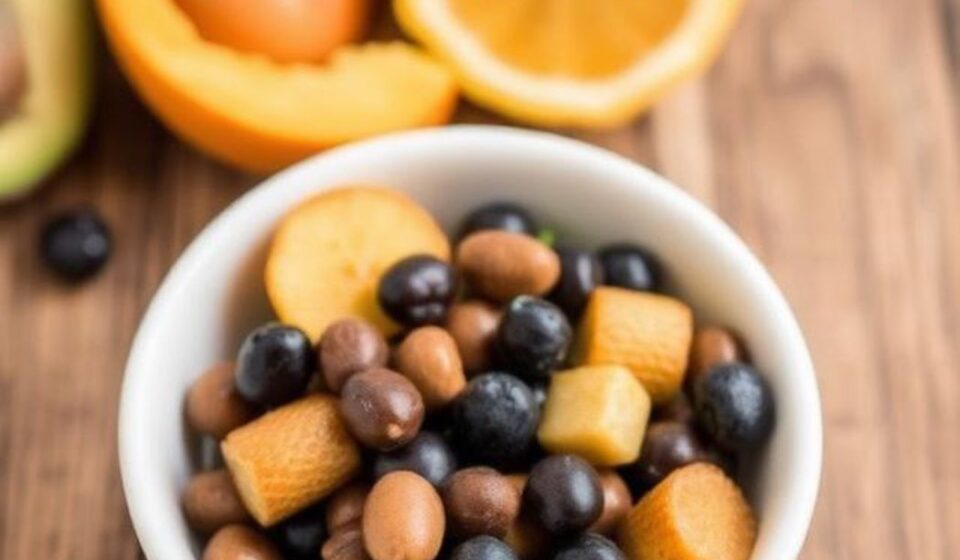
Nuts and Seeds: A quarter cup of roasted peanuts offers 16% DV, while sunflower seeds provide about 9%. Almonds are another great option, offering roughly 5% DV.
-
Sweet Potatoes: A half-cup serving of cooked sweet potato offers about 2.4 micrograms or 8% DV.
-
Soybeans and Legumes: These are significant sources of biotin, often overlooked in favor of animal products.
-
Mushrooms: Canned mushrooms provide a steady dose, with about 9% DV per 4-ounce serving.
The Biotin of the Future: Fermented Foods
Interestingly, some of the most variable biotin content is found in fermented foods like natto (fermented soybeans), beer, and sake. The bacteria involved in fermentation can produce biotin, leading to wide distributions in content.
A Deeper Dive: The Hidden Variation in Your Food
One of the most fascinating (and often ignored) aspects of biotin nutrition is that the “nutritional label” is just an average. A study using high-performance affinity chromatography found that biotin content is highly variable and depends on factors many of us don’t consider :
-
Animal/Plant Strain: Just as different breeds of cattle produce different milk, different strains of wheat or types of liver have varying biotin levels.
-
Seasonality: The time of year the food was harvested or produced changes its nutrient profile.
-
Preparation and Storage: How you cook and store food can degrade the biotin content. Food processing techniques can literally destroy this vitamin.
Special Note on Infant Nutrition: The same study highlighted that special milk powders for children with allergies contained low levels of free biotin. This led to skin diseases and alopecia in infants with a specific enzyme issue. This underscores the importance of understanding the bioavailability (free vs. bound) of biotin, not just the total amount.
How to Avoid Biotin Deficiency
As mentioned, severe deficiency is rare. However, certain populations are at higher risk.
-
Those consuming large amounts of raw egg whites.
-
Individuals taking antiseizure medications or antibiotics long-term.
-
People with Crohn’s disease or malabsorption issues.
-
Alcoholics and people who smoke (smoking can accelerate biotin depletion).
-
Pregnant and breastfeeding women.
Symptoms of Deficiency include hair loss, dry scaly skin, cracked corners of the mouth, loss of appetite, fatigue, and neurological symptoms like tingling in the hands and feet.
The Supplement Question: Should You Supplement?
Given that getting biotin from food is relatively easy, is there a need for supplements? This is a highly debated area.
While biotin supplements are widely marketed for hair, skin, and nail health, the evidence supporting their efficacy in healthy individuals is surprisingly weak. There are case reports where it helps, but large, well-designed trials are lacking.
A Serious Warning on Biotin Supplements: High doses of biotin (often found in supplements) can seriously interfere with laboratory tests. A biotin level in your blood that is too high can cause inaccurate results for tests like troponin (used to diagnose heart attacks) and thyroid hormone tests. Always inform your doctor if you are taking biotin supplements.
In contrast, there is no known upper limit for biotin from food, and no toxic symptoms have been reported from dietary consumption.
Practical Action Plan: Your Daily Biotin Menu
Hitting the recommended 30 micrograms for adults is easier than you think. Here is a sample day:
-
Breakfast: 1 whole cooked egg (10 mcg). Pair with a slice of toast (1 mcg).
-
Lunch: 3 oz canned salmon salad (5 mcg) with a side of sweet potato (2.4 mcg).
-
Snack: ¼ cup of roasted peanuts (4.9 mcg).
-
Dinner: 3 oz hamburger patty (3.8 mcg).
Total: ~27.1 mcg. Add a handful of almonds or some mushrooms, and you’ve exceeded your goal!
Conclusion: Food First, Always
While biotin isn’t a magical cure-all, its role in energy metabolism and overall cellular health is undeniable. The most effective, safest, and scientifically sound approach to ensuring you have adequate biotin levels is to prioritize whole, unprocessed foods.
The interplay between raw ingredients (like the avidin in eggs) and the nutrient itself shows us that nutritional science is nuanced. Rather than chasing isolated vitamins, we should be celebrating the symphony of compounds found in whole foods.
Key Takeaways
-
Biotin (Vitamin B7) is crucial for metabolizing fats, carbs, and proteins.
-
Cooked eggs, beef liver, and pork are the top animal sources; peanuts, sunflower seeds, and sweet potatoes are excellent plant-based options.
-
Always cook your eggs to avoid the biotin-blocker avidin.
-
Beware of supplements—they can cause dangerous interference with blood tests and are often unnecessary if you eat a balanced diet.
-
Food matters. Processing, seasonality, and storage significantly affect the biotin content of your meals.
Frequently Asked Questions (FAQs)
1. Is biotin deficiency common?
No. Biotin deficiency is rare in healthy individuals because it is found in a wide variety of foods and is also produced by bacteria in the gut. Deficiencies usually occur due to specific genetic disorders, long-term medication use, or diets high in raw egg whites.
2. How much biotin do I need daily?
The adequate daily intake for most adults (19 years and older) is 30 micrograms (mcg). Pregnant women need 30 mcg, while breastfeeding women need 35 mcg.
3. Do I need to take biotin supplements for healthy hair and nails?
Generally, no. If you eat a balanced diet, you likely get enough. While supplements are heavily marketed for this purpose, scientific evidence showing they help healthy individuals is limited. Plus, high doses can interfere with lab tests.
4. Can I get biotin from plant-based foods?
Absolutely. Excellent plant-based sources include peanuts, sunflower seeds, almonds, sweet potatoes, soybeans, and mushrooms.
5. Can eating a lot of biotin cause side effects?
There are no known toxic side effects from consuming biotin in food. High-dose supplements can cause inaccurate lab results, but not physical toxicity.
6. Does cooking destroy biotin?
Food processing techniques and some preparation methods can reduce biotin content. However, cooking is essential, especially for eggs, as it breaks down the avidin that blocks absorption. The benefits of cooking usually outweigh the minor nutrient loss.
7. What is the difference between biotin and Vitamin H?
They are the same thing. Vitamin H is an older, less common name for biotin, originating from the German words for “hair” and “skin” (Haar and Haut).
8. What does avidin do to biotin?
Avidin is a protein found in raw egg whites that binds to biotin extremely tightly, preventing your digestive system from absorbing it. This can lead to a deficiency if you consume large amounts of raw egg whites frequently. Cooking destroys avidin.
Sources
-
Hayakawa, K., et al. (2009). Wide Range of Biotin (Vitamin H) Content in Foodstuffs. Clinical Pediatric Endocrinology.
-
Cleveland Clinic. (2025). A Look at Biotin-Rich Foods.
-
ADAM Medical Encyclopedia. (2013). Vitamin H (Biotin).
-
Healthline. (2017). Biotin Deficiency.
-
CiNii Research. (2009). Wide Range of Biotin Content.
-
Blackmores. What is Biotin?
-
Johns Hopkins Health Library. (2025). Biotin.
-
MedlinePlus. (2025). Pantothenic acid and biotin.
-
MSD Manuals. Vitamins Table.
-
Researchmap. (2009). Ogata, T. et al. Wide Range of Biotin Content.
-
Verywell Health. (2025). Foods High in Biotin That Aren’t Eggs.
-
Memorial Sloan Kettering Cancer Center. (2024). Biotin.
-
Medizinonline. (2024). Are there any indications of a biotin deficiency?
-
Food Struct. (2024). Vitamin B7 (Biotin).

admin
M Umer Abbasi is a luxury lifestyle journalist and editorial curator specializing in haute horology, passion investments, and avant-garde design. With an eye for flawless craftsmanship and heritage storytelling, he deconstructs the world of high-ticket assets—from secondary watch market trends to the evolution of bespoke tailoring. His work focuses on shifting the luxury narrative away from fleeting trends and toward timeless design, raw materials, and true artisanship. When he isn’t dissecting mechanical complications or reviewing five-star sanctuaries, he tracks blue-chip alternative asset indices. Connect with him via cbdfame@gmail.com