
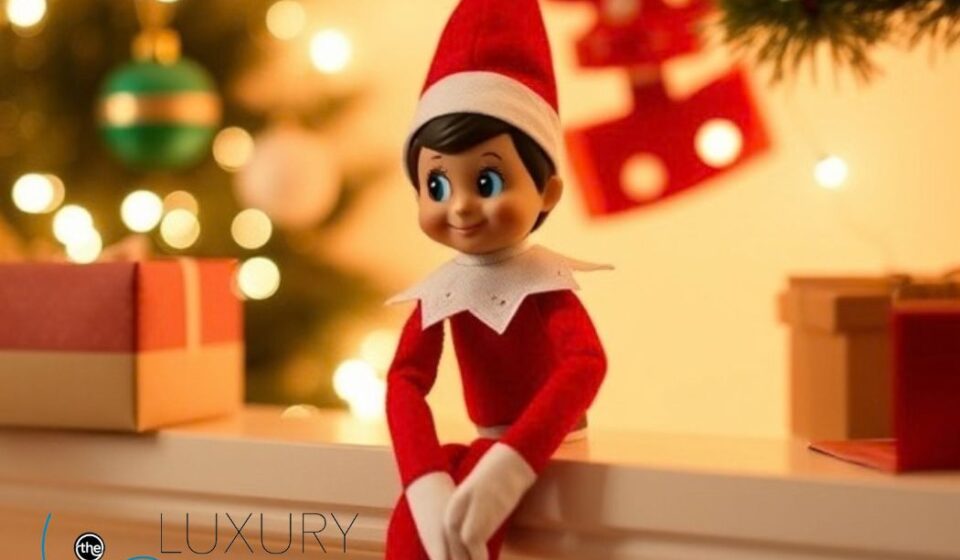
It’s 11:47 PM on December 14th. You’ve just finished wrapping presents, signing permission slips, and answering one final “but WHY can’t I touch the elf?” question. You collapse into bed—and then it hits you. The elf is still in the exact same spot as yesterday.
You lie there, calculating. Do you get up? Do you risk a meltdown at 7 AM? Or do you “forget” for the first time in three weeks and hope nobody notices?
If this scene feels uncomfortably familiar, you’re not alone. The Elf on the Shelf tradition, now entering its third decade, has become both a beloved family ritual and a genuine source of parental stress. The creators themselves have acknowledged the pressure, with reports noting that even The Lumistella Company recognizes the trend “stresses parents out”.
But here’s the thing: the magic doesn’t require the madness. The most memorable elf moments aren’t the elaborate zip-lines or hand-sewn costumes. They’re the simple ones—a tiny note in a lunchbox, an elf “napping” under a tissue blanket, a candy cane “fishing pole” dangling over a cereal bowl.
This guide is built on a simple philosophy I call Minimum Viable Magic: the smallest possible effort that still creates genuine delight. You’ll find over 50 easy Elf on the Shelf ideas organized by effort level, plus strategies for avoiding burnout, sensory-friendly adaptations for neurodivergent kids, and a look at what’s new for the 2026 season.
Let’s reclaim your December evenings.
Background: How a Shelf Elf Became a Cultural Phenomenon
The Origin Story
The Elf on the Shelf began in 2005 when mother-daughter duo Carol Aebersold and Chanda Bell self-published a children’s book about a scout elf who reports to Santa each night. The concept was simple: the elf watches during the day, flies to the North Pole at night, and returns to a new spot each morning. Children can’t touch the elf (or the magic fades), and the elf often leaves evidence of mischievous nighttime adventures.
Two decades later, the numbers are staggering. More than 31 million Scout Elves, Elf Pets, and Elf Mates have been sold worldwide, with the brand’s estimated net worth exceeding $100 million. The company now operates what it calls the “Santaverse”—an expanding universe of books, animated series, games, and merchandise spanning 44,000 stores in 26 countries.
The Participation Paradox
Here’s where things get interesting. Despite the brand’s massive reach, actual household participation appears to be declining. A December 2025 Axios survey found that only 32% of families planned to “break out” the elf that year—the lowest share among the holiday activities measured.
Why the gap between sales and participation? The answer is simple: parental burnout.
The daily commitment is real. Unlike an advent calendar (open a door, eat chocolate, done), the elf requires creative energy every single night for 24 nights. Social media has amplified the pressure, with influencers posting elaborate scenes that make a simple “elf sitting on a bookshelf” feel inadequate.
The creators have responded by offering more “easy setup” content, printable props, and official calendars designed to reduce decision fatigue. But the fundamental tension remains: a tradition built on nightly novelty can become a nightly chore.
What’s New for 2026
Several developments are shaping the 2026 elf season:
The Disney Collaboration. In May 2026, The Lumistella Company announced its first-ever official collaboration with Disney, featuring elf-sized outfits and accessories inspired by Mickey Mouse, Olaf from Frozen, Disney Princesses, and Spider-Man. The collection rolls out ahead of the 2026 holiday season through major retailers. This gives parents a zero-effort way to “theme” their elf—just swap the outfit and you’ve got a new scene.
The Life-Size Elf Returns. Lowe’s nearly 5-foot-tall posable Elf on the Shelf decoration, which sold out in under 24 hours during its 2025 debut, is back for 2026 with three new versions. It’s not for everyone, but it signals that the brand is leaning into spectacle for families who want a statement piece without daily setup.
Increased Focus on Kindness and Inclusivity. The official Elf on the Shelf channels have pivoted heavily toward “acts of kindness” challenges, printable kindness cards, and sensory-friendly adaptations. This reflects a broader cultural shift away from “naughty elf” mischief and toward values-based engagement.
The Minimum Viable Magic Framework: Your Elf Strategy for 2026
Before we dive into specific ideas, let me introduce a framework that will change how you approach the entire season. Most elf stress comes from treating every night as equally important. It’s not.
The Minimum Viable Magic (MVM) framework categorizes elf nights into three tiers:
| Tier | Time Required | Frequency | Examples |
|---|---|---|---|
| Tier 1: Auto-Pilot | Under 60 seconds | 2–3 nights per week | Elf moves to a new shelf; elf “hides” behind a cereal box |
| Tier 2: Quick Magic | 2–5 minutes | 1–2 nights per week | Elf “fishing” with a candy cane; printable prop scene |
| Tier 3: Showstopper | 10–20 minutes | 1–2 times per season | Elf arrives with a North Pole breakfast; elaborate scavenger hunt |
The key insight: Tier 3 moments are memorable precisely because they’re rare. If every night is a showstopper, none of them are. Your kids will remember the one time the elf brought donuts far more vividly than the fifteenth time it sat on a different shelf.
This framework also gives you permission to have “lazy elf” nights without guilt. The elf moving from the bookshelf to the kitchen counter is the magic for a 4-year-old. The novelty is in the discovery, not the production value.
50+ Easy Elf on the Shelf Ideas (Organized by Effort Level)
Tier 1: Auto-Pilot Ideas (Under 60 Seconds)
These are your “I’m exhausted and it’s 11 PM” saviors. Each takes less time than brushing your teeth.
-
The Classic Move — Elf relocates to a different shelf, bookcase, or windowsill. The oldest trick in the book, and still effective.
-
The Cereal Box Peek — Tuck the elf behind or beside the cereal box on the kitchen counter. Kids spot it during breakfast.
-
The Tissue Blanket Nap — Lay the elf down and drape a single tissue over it like a blanket. “Shh, the elf is sleeping”.
-
The Shoe Snuggle — Place the elf inside a family member’s shoe by the front door. Simple, silly, memorable.
-
The Fruit Bowl Hideout — Nestle the elf among the bananas and apples. Bonus points if you position it “peeking” out.
-
The Sock Drawer Surprise — Tuck the elf into a drawer you know your child opens every morning.
-
The Toilet Paper Tower — Stand the elf atop a single roll of toilet paper in the bathroom. Minimal effort, maximum giggles.
-
The Behind-the-Frame Peek — Place the elf behind a family photo frame on a side table, with just its head visible.
-
The Bookend — Sit the elf between two books on a shelf, like it’s holding them up.
-
The Mug Shot — Place the elf inside a coffee mug on the counter. If you have a Christmas mug, even better.
-
The Stocking Stuffing — Tuck the elf halfway into a hanging stocking.
-
The Remote Control Guard — Sit the elf on the TV remote on the coffee table. “The elf is in charge of screen time today.”
-
The Cutlery Drawer — Place the elf among the spoons and forks. Kids discover it when setting the table.
-
The Christmas Tree Branch — Perch the elf on a lower branch of the tree. Just make sure it’s stable.
-
The Behind-the-Toaster Spot — For kitchen mornings, position the elf behind the toaster or coffee maker.
Tier 2: Quick Magic Ideas (2–5 Minutes)
These require a tiny bit of setup but pay off with genuine delight. Most use items you already have.
-
Candy Cane Fishing — Tie a piece of string to a candy cane and drape it over a bowl or sink, with the elf “holding” the string. You can “fish” for goldfish crackers in the bathroom sink.
-
Marshmallow Snowball Fight — Set up the elf with a small toy opponent (a stuffed animal, an action figure) and scatter mini marshmallows between them.
-
Flour Snow Angels — Sprinkle a thin layer of flour or powdered sugar on a dark countertop and drag the elf through it to create “angel wings”.
-
The Elf “Wrapped” in Toilet Paper — Mummy-style. Takes 90 seconds and always gets a laugh.
-
The Tiny Book Reading Nook — Prop the elf against a small stack of books with a doll-sized “book” (a folded piece of paper works) in its lap.
-
The “Don’t Stir Up Trouble” Milkshake — Place the elf beside a glass of milk with a peppermint stick or spoon, and a few drops of food coloring “stirred in”.
-
The Printable Mirror Selfie — Print a tiny elf hat and collar, tape them to a bathroom mirror, and place the elf nearby as if it’s admiring its reflection.
-
The Lego Block Tower — Build a small tower of Legos and balance the elf on top, as if it’s “climbing.”
-
The Dollhouse Invasion — Place the elf inside a dollhouse or toy castle, posed as if it’s exploring.
-
The Board Game Cheat — Set up a board game with the elf “caught” moving the pieces or holding the dice.
-
The Banana Message — Write a tiny message on a banana peel with a Sharpie (it darkens and looks like it was always there). Classic dad joke energy.
-
The “Snow Angel” in a Baking Sheet — For a contained version of the flour idea, use a rimmed baking sheet so cleanup is just lifting the tray.
-
The Elf “Fishing” in the Sink — Fill the bathroom sink with water (or just use an empty sink) and place the elf with a string and a paperclip “hook” over the edge.
-
The Tiny Laundry Line — String a piece of yarn between two cabinet knobs and hang doll clothes or tiny socks with clothespins. Place the elf beside it.
-
The “Pigging Out” on Marshmallows — Place the elf beside an open bag of marshmallows with a few scattered around and a tiny “guilty” expression (pose its head down).
-
The Printable Checkers Game — Download a free printable checkerboard and set up the elf playing against a stuffed animal.
-
The “Going for a Goal” Soccer Scene — Use a foam soccer ball and a printable soccer field. Pose the elf mid-kick.
-
The Cotton Candy Dispenser Prank — Use dryer lint as “cotton candy” and a printable sign. Place the elf beside it looking proud.
-
The “Danger: Angry Crocodiles” Scene — Print a caution sign, use Crocs shoes as “crocodiles,” and hang the elf from a string above them.
-
The Elf “Brushing Its Teeth” — Place the elf on the bathroom counter with a doll-sized toothbrush and a tiny smear of toothpaste.
Tier 3: Showstopper Ideas (10–20 Minutes, 1–2 Times Per Season)
These are your “memory-making” nights. Use them strategically—arrival day, a weekend morning, or Christmas Eve.
-
The North Pole Breakfast — On arrival day, set the table with a “North Pole” breakfast: powdered sugar donuts (snowballs), hot cocoa with mini marshmallows, and a printable “Welcome Back” sign.
-
The Shamrock Scavenger Hunt — Hide printable clues around the house leading to a “pot of gold” (chocolate coins) with the elf waiting at the end. This works for St. Patrick’s Day but can be adapted for Christmas with candy canes.
-
The Elf “Arrival” Letter — Print a letter from Santa introducing the elf, with a “North Pole Official” seal. Place it beside the elf on the first morning.
-
The “Elf on the Shelf” Movie Night — Set up a cozy scene with the elf holding the remote, surrounded by popcorn and a tiny “movie ticket.”
-
The Kindness Challenge Launch — On December 1st, have the elf deliver a “25 Days of Kindness” calendar with daily prompts: “Make a card for a neighbor,” “Donate a toy,” “Help set the table”.
-
The Elf “Snowball” Fight with a Twist — Use cotton balls as snowballs and set up two “forts” made of books, with the elf and a toy on opposite sides.
-
The “Elf Mates” Recipe Card Activity — Have the elf leave a blank recipe card and a note asking the family to create a “North Pole recipe” together.
-
The No-Waste Meal Challenge — The elf leaves a note challenging the family to plan a meal using only what’s already in the fridge. Ties into values-based engagement.
-
The DIY Elf Door — Build a tiny “elf door” at the base of a wall or bookshelf using cardboard and paint. The elf “enters” through it on arrival day.
-
The Elf “Farewell” Sleigh Scene — On Christmas Eve, set up a small “sleigh” (a box wrapped in paper) with the elf inside, ready to return to the North Pole with Santa.
Sensory-Friendly and Inclusive Ideas
For families with neurodivergent children, the traditional “don’t touch” rule and surprise-based setups can be overwhelming. These adaptations keep the magic while reducing sensory stress.
-
The “You Can Touch Me” Letter — Write a letter from Santa explaining that this elf’s magic is different: it needs hugs to stay magical. This removes the anxiety of accidental touching.
-
The Sound Clue Elf — For children with visual impairments, place a small Bluetooth speaker near the elf playing soft holiday music or recorded clues. The child follows the sound to find the elf.
-
The Calm Corner Elf — Pose the elf in a quiet corner with a weighted blanket, a fidget toy, and a note saying “Even elves need calm time.”
-
The Predictable Schedule Elf — For children who thrive on routine, create a visual calendar of where the elf will be each day. The “surprise” becomes the anticipation rather than the unknown.
-
The “Elf’s Favorite Things” Sensory Bin — Fill a small bin with rice, jingle bells, and soft fabric scraps. Place the elf beside it with a note inviting the child to “help the elf relax.”
-
The Picture Schedule — For non-verbal children or those who benefit from visual supports, take a photo of the elf each morning and add it to a “Where’s Elf Today?” chart.
Practical Tips: How to Actually Make This Sustainable
The Sunday Night Prep Ritual
The single biggest game-changer for elf sustainability is batch preparation. Set aside 20 minutes every Sunday evening to plan the week’s elf setups. Write them on a sticky note and keep it in a drawer. When 11 PM rolls around, you don’t have to think—you just do.
The “Elf Kit” You Keep in a Drawer
Create a small box or drawer containing:
-
Mini marshmallows
-
Candy canes
-
String or yarn
-
Googly eyes
-
Double-sided tape
-
A few printed props (check official Elf on the Shelf channels for free printables)
-
Miniature notes (pre-cut squares of paper)
-
A small toy or two for scenes
Having supplies at arm’s reach eliminates the “I have an idea but I can’t find the stuff” barrier.
The “Elf Amnesty” Clause
Here’s a radical idea that will save your sanity: tell your kids that the elf occasionally takes a “rest day.” Santa understands that scout elves need to recharge their magic. On these days, the elf stays in the same spot—and that’s okay.
This does two things: it removes the guilt of missed nights, and it teaches children that even magical beings need rest. Win-win.
Use the Official Resources
The Elf on the Shelf website and its regional variants (UK, Australia, Canada) publish free printable props, setup calendars, and “easy idea” collections throughout the season. These are professionally designed and take the guesswork out of themes.
The “Elf Equity” Conversation
If you have multiple children, you’ve likely encountered the “whose elf is it?” problem. The official line is that each family adopts one elf. If you’ve accidentally (or intentionally) introduced multiple elves, establish clear “jurisdictions”: Elf A handles the living room, Elf B handles the kitchen. This prevents territorial disputes and gives each child a sense of ownership.
Common Mistakes and How to Avoid Them
Mistake 1: Comparing Yourself to Social Media
The problem: You see a TikTok of an elf zip-lining across a living room with a hand-sewn costume and a coordinated soundtrack. You feel inadequate.
The solution: Remember that those creators often prepare content months in advance, have sponsorship deals, and don’t show the 11 PM panic. Your child’s memory of the elf will be shaped by your presence and your joy—not production value.
Mistake 2: Starting Too Big
The problem: You launch with a North Pole breakfast, an elaborate scavenger hunt, and a personalized letter. Now your child expects that every day.
The solution: Start with a Tier 1 or Tier 2 idea. You can always escalate. It’s much harder to de-escalate.
Mistake 3: Forgetting the Elf’s “Rules”
The problem: You accidentally touch the elf in front of your child, or the elf “moves” while your child is watching.
The solution: Have a cover story ready. “The elf’s magic works in mysterious ways—sometimes it can move when it wants to be seen.” Or, for younger children, a simple “maybe the elf was saying hello” works fine.
Mistake 4: The “Naughty Elf” Trap
The problem: You start with mischievous elf antics (toilet papering the tree, writing on mirrors), and now your child expects escalating naughtiness.
The solution: The “naughty elf” trend has been declining in favor of kindness-focused engagement. If you want to pivot, have the elf “reform” with a letter: “Santa asked me to focus on spreading kindness this year.” Then use the kindness challenge ideas above.
Mistake 5: Not Having an Exit Plan
The problem: Christmas Eve arrives, and you haven’t figured out how the elf “leaves.”
The solution: Plan the farewell scene in advance. A simple “elf in a box with a note saying ‘See you next year!'” works perfectly. Some families do a “sleigh departure” scene with a wrapped box and a trail of glitter (biodegradable, please).
Pros, Cons, and Balanced Analysis
The Case for Elf on the Shelf
Pros:
-
Creates daily anticipation and ritual. For young children, the elf provides a predictable structure in an often-chaotic season.
-
Encourages imaginative play. The elf becomes a character in the family’s story, sparking conversations and creativity.
-
Supports values-based conversations. The kindness-focused trend gives parents a tool for discussing generosity and empathy.
-
Builds family memories. The annual return of the elf becomes a touchstone—a marker of childhood that families look forward to.
Cons:
-
Daily labor falls disproportionately on parents. The mental load of “what will the elf do tonight?” is real and cumulative.
-
Social media amplifies pressure. The comparison trap is particularly acute for this tradition.
-
The “don’t touch” rule can cause anxiety. For some children, the fear of “ruining the magic” outweighs the joy.
-
Declining participation suggests fatigue. The drop to 32% participation in 2025 signals that the tradition may be at an inflection point.
The Balanced Verdict
The elf is neither inherently good nor bad. It’s a tool. Used with the Minimum Viable Magic framework, it can be a source of genuine connection. Used as a performance for social media or as a guilt-driven obligation, it becomes another item on the parental to-do list.
The families who thrive with the elf are the ones who set expectations low and keep them there. A simple move from shelf to counter is enough. The magic is in the discovery, not the production.
Future Trends: What’s Next for the Elf
The “Santaverse” Expansion
The Lumistella Company is clearly building beyond the shelf. The Disney collaboration is a signal that the brand sees itself as an entertainment property, not just a toy company. Expect more licensing deals, animated content, and possibly a theatrical release in the coming years.
The Kindness Pivot
The cultural conversation around the elf has shifted from “mischief” to “meaning.” The official channels now heavily promote kindness challenges, printable gratitude cards, and “acts of service” prompts. This aligns with broader Gen Z and millennial parenting values and may attract families who previously found the elf too “naughty.”
The Accessibility Movement
The push for sensory-friendly and inclusive adaptations is gaining momentum. Expect to see more official resources for neurodivergent children, visually impaired children, and children with physical disabilities. The “You Can Touch the Elf” letter is becoming a recognized accommodation, not a niche hack.
The Subscription Model
It’s reasonable to predict an official Elf on the Shelf subscription box: monthly (or annual) deliveries of props, printables, and setup guides. This would solve the “decision fatigue” problem for parents while creating recurring revenue for the brand.
The “Elf-Free” Movement
At the same time, a counter-trend is growing. Some families are choosing alternatives like The Kindness Elves, The Shepherd on the Search, or simply opting out entirely. The 2025 participation drop suggests that the elf isn’t immune to the broader cultural shift toward “less is more” parenting.
Conclusion: The Only Elf Rule That Matters
Here’s the truth that no one tells you: your child will not remember the specifics of the elf setups. They won’t remember whether the elf was on the bookshelf or the kitchen counter. They won’t remember the printable props or the perfectly posed scenes.
What they will remember is the feeling of running into your room in the morning, eyes wide, asking “Where’s the elf?!” And you, still half-asleep, smiling and saying, “I don’t know—let’s find him together.”
That’s the magic. Not the setup. The search.
So this December, give yourself permission to do less. Use the Tier 1 ideas on the nights you’re exhausted. Save the Tier 3 showstoppers for when you have energy and time. And on the nights when you genuinely forget—let the elf “rest.”
The tradition is yours to shape. Not the other way around.
Key Takeaways:
-
The Elf on the Shelf has sold 31+ million figures, but participation dropped to 32% in 2025 due to parental burnout
-
The Minimum Viable Magic framework: Tier 1 (under 60 seconds, 2–3x/week), Tier 2 (2–5 minutes, 1–2x/week), Tier 3 (10–20 minutes, 1–2x/season)
-
Batch-prep on Sunday nights and keep an “Elf Kit” drawer stocked with supplies
-
Sensory-friendly adaptations—especially the “You Can Touch Me” letter—remove anxiety for neurodivergent children
-
The 2026 season brings a Disney collaboration and a kindness-focused pivot from the official brand
-
The magic is in the discovery, not the production value
Frequently Asked Questions
How long does the Elf on the Shelf stay?
The elf typically arrives on December 1st and “returns to the North Pole” on Christmas Eve, when Santa picks up all elves after delivering presents. Some families start earlier (Thanksgiving) or later, depending on preference.
Can you touch the Elf on the Shelf?
In the traditional rules, touching the elf causes it to lose its magic, and it won’t be able to fly back to the North Pole that night. However, many families are adapting this rule for children with sensory needs or anxiety. The “You Can Touch Me” letter from Santa is a popular accommodation.
What do you do if you forget to move the elf?
First, don’t panic. Tell your child that the elf had a “rest night” or was “on a special mission” and stayed put. Alternatively, if you have multiple elves, you can “blame” the other one. The key is to have a ready-made explanation that doesn’t break the illusion.
Is Elf on the Shelf appropriate for toddlers?
Yes, but keep it simple. Toddlers (ages 2–3) enjoy the “finding” aspect more than the storyline. Tier 1 hiding spots—cereal box, shoe, fruit bowl—are perfect. Avoid small props that could be choking hazards. The official brand also offers a plush “Hello, Scout Elf!” puppet book designed for babies and toddlers.
What are some alternatives to Elf on the Shelf?
Popular alternatives include: The Kindness Elves (focuses on acts of kindness), The Shepherd on the Search (a Christian alternative that leads to the nativity), The Giving Manger (a family service project), Reindeer in Here (a plush reindeer that celebrates individuality), and The North Pole Gnome (a gnome who “hides” instead of moving nightly). Some families also do a “reverse advent calendar” where they add items to a donation box each day.
How do I handle the elf with multiple children?
The official line is one elf per family. If you have multiple elves, establish clear “territories” or roles. For siblings who argue over whose elf is “better,” consider having the elves “team up” for joint scenes. This turns rivalry into collaboration.
What do I do with the elf after Christmas?
Store it with your holiday decorations. Many families keep the elf in the original box or a special bag. Some parents write a short note to themselves about the elf’s “personality” that year, so they can remember the voice they used when the elf returns.
Sources
-
Good Housekeeping — “105 Easy Elf on the Shelf Ideas” (2025). Comprehensive idea list with traditional setups.
-
Elf on the Shelf UK — “St. Patrick’s Day Elf Ideas” (2026). Example of seasonal expansion and scavenger hunt templates.
-
The Lumistella Company / WJCL — “Elf on the Shelf celebrates 20 years” (December 2025). Official sales figures (31+ million) and brand history.
-
Axios — “Most kids are still expecting Santa to bring Christmas magic this year” (December 2025). Survey data showing 32% participation rate.
-
New York Post — “Even The Elf on the Shelf’s own creators know the trend stresses parents out” (December 2024). Parental burnout acknowledgment.
-
Disney / WDW News Today — “Disney and The Elf on the Shelf Launch First-Ever Holiday Collaboration” (May 2026). Details on the 2026 Disney collection.
-
News & Observer / Parade — “The Christmas Decoration That Sold Out in 24 Hours Has Returned” (July 2026). Life-size elf decoration details.
-
Elf on the Shelf Australia — “Elf Mates Activities” (2026). Kindness-focused activities and recipe card ideas.
-
Elf on the Shelf UK — “25 Acts of Kindness Challenge” (2025). Kindness prompts for daily engagement.
-
Sensory Help Now — “Elf on the Shelf and Sensory Differences.” Sensory-friendly adaptations.
-
APH Connect Center — “You Can Touch the Elf on the Shelf: A Letter from Santa” (2025). Accessibility accommodations for visually impaired children.
-
ChurchLeaders — “10 Christian Alternatives to Elf on the Shelf” (2025). Alternative tradition options.
-
Elf on the Shelf Official Printables — Various free printable props and signs available through official regional websites.
FOR FURTHER INFORMATION, VISIT: THELUXURYLIFEMAGAZINE.COM