
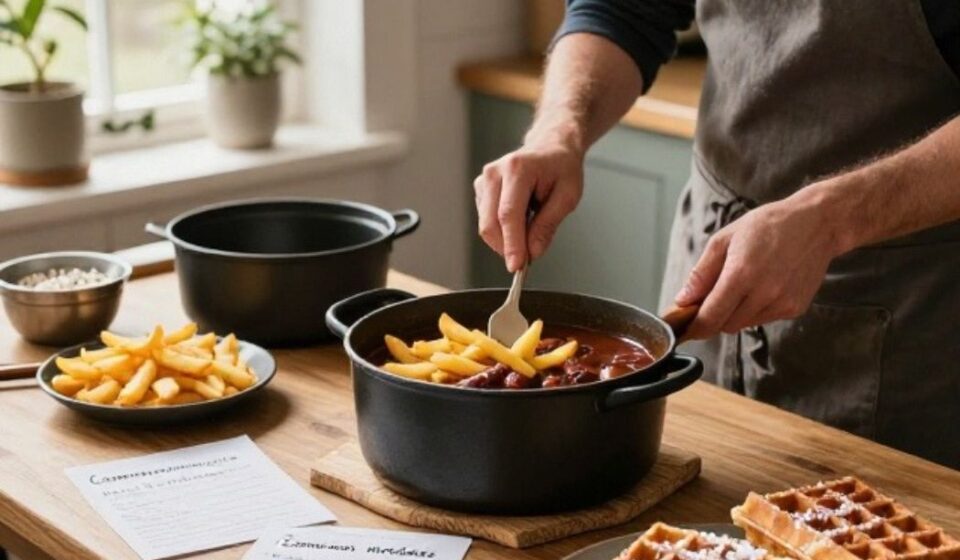
Easy Belgian Recipes at Home: What if I told you that the most intimidating thing about Belgian cooking isn’t the technique—it’s the reputation? Most people hear “Belgian cuisine” and immediately picture three-star Michelin temples, copper pans, and chefs with more Michelin stars per capita than almost anywhere on Earth. That reputation is earned. But it’s also a distraction.
Here’s the surprising truth: the dishes Belgians actually eat at home on a Tuesday night are some of the most forgiving, low-fuss recipes in Western Europe. A pot of carbonnade flamande practically cooks itself while you ignore it. Liège waffles are a dough you mix, rest, and press—no whipping egg whites into stiff peaks required. And Belgian frites? The “secret” is just frying potatoes twice, which is less a culinary skill than a scheduling decision.
Belgium sits at the crossroads of Germanic and Latin Europe, and its home cooking reflects that split personality: sturdy Flemish stews built on beer and onions, delicate Walloon sauces finished with egg yolk, and street food that puts most national cuisines to shame. The recipes below are the ones that translate best to a home kitchen—no specialty equipment beyond a waffle iron or a heavy pot, no ingredients you’ll need to order from a Belgian import shop, and no techniques that require a culinary degree.
Whether you’re a curious beginner or a home cook looking to expand your repertoire, these seven dishes are your entry point. Let’s start with the one everyone thinks they know—and almost everyone gets slightly wrong.
The Foundations: What Makes Belgian Home Cooking Accessible
Before diving into recipes, it’s worth understanding why Belgian food is easier to replicate than its reputation suggests. Three structural features make it beginner-friendly.
First, Belgian cooking is a “low-and-slow” cuisine. Carbonnade, waterzooi, and stoemp all rely on time rather than precision. You brown meat or vegetables, add liquid, and let heat do the work. There’s no delicate emulsification to break, no pastry to laminate, no internal temperature to babysit. The margin for error is enormous.
Second, the ingredient list is short and local. Belgians cook with what’s around: potatoes, leeks, carrots, onions, beer, butter, and eggs. The most “exotic” item in this entire guide is Belgian pearl sugar, and you can crush sugar cubes if you can’t find it. Everything else is supermarket-standard.
Third, the “hard” dishes aren’t actually hard—they’re just patient. Waterzooi sounds fancy (it’s Flemish for “water that boils”), but it’s essentially chicken simmered with vegetables and finished with a cream-and-yolk liaison. The only real risk is curdling the sauce, and that’s solved by one simple rule: don’t let it boil after the yolks go in.
With that framework in mind, here’s where to start.
7 Easy Belgian Recipes You Can Actually Master at Home
1. Belgian Frites: The Double-Fry That Changes Everything
Why it’s easy: The technique is simple; it just requires two stages of frying separated by a rest. If you can set a timer, you can make these.
The French call them pommes frites. Belgians call them friet or frites, and they will politely but firmly correct you if you attribute the invention to France. The defining feature isn’t the potato variety (though Bintje is traditional) or the fat (horse or ox fat was classic, vegetable oil is now standard). It’s the double-fry method.
Here’s the logic: the first fry at a lower temperature (around 160°C/320°F) cooks the potato through without browning it. The second fry at 190°C/375°F creates the crust. Between the two, the fries rest—at least 20 minutes, ideally longer—so surface moisture evaporates and the interior sets.
The practical shortcut for home cooks: You don’t need a dedicated deep fryer. A heavy Dutch oven, a thermometer, and a slotted spoon work fine. Cut your potatoes into 1 cm-thick batons (thicker than shoestring, thinner than steak fries), soak them in cold water for at least 30 minutes to remove surface starch, and dry them thoroughly before the first fry. Wet potatoes are the enemy of crispness.
The serving rule Belgians never break: Mayonnaise, not ketchup. And yes, a paper cone is traditional, but a bowl works.
2. Carbonnade Flamande: The Beer Stew That Cooks Itself
Why it’s easy: Brown meat, soften onions, add liquid, walk away for three hours.
If you make only one dish from this list, make this one. Carbonnade flamande (also spelled carbonade) is Flanders’ answer to beef bourguignon, except it uses dark Belgian beer instead of wine, and the result is richer, slightly sweeter, and arguably more comforting.
The name comes from the Latin carbo, meaning charcoal—originally the meat was cooked over embers. The modern home version is simpler: sear cubed chuck or blade steak, brown sliced onions, deglaze with a dark abbey-style beer, add stock and thyme, and simmer for two to three hours. The secret weapon is a slice of gingerbread spread with mustard, laid on top of the stew and left to dissolve into the sauce. It thickens the liquid and adds a subtle sweet-sour depth that most recipes never explain.
A note on beer choice: Avoid heavily hopped IPAs. Their bitterness intensifies with long cooking and turns harsh. A dark abbey ale or a Belgian dubbel brings caramel notes that balance the beef. If you can’t find Belgian beer, any dark, malty ale will do.
The “easy” version: A slow cooker works beautifully here. Sear the meat and onions on the stovetop first, then transfer everything to the slow cooker and cook on low for 8 hours. The flavor won’t be quite as concentrated, but the convenience is hard to argue with.
3. Waterzooi: The Gentle Stew with a Creamy Finish
Why it’s easy: It’s a one-pot simmer with a sauce thickened at the very end. The only skill is restraint.
Waterzooi originated in Ghent as a fish stew, but the chicken version is now more common—and it’s the one Julia Child famously learned from her Paris chef instructor Max Bugnard. The name means “water that boils,” which tells you almost everything: chicken and julienned vegetables (carrots, leeks, celery, onion) simmer gently in broth and white wine until tender.
The part that intimidates people is the finish. You strain the cooking liquid, whisk it slowly into a mixture of cream, cornstarch, and egg yolks, then warm it gently until it thickens. If you let it boil, the yolks curdle and you get scrambled-egg soup. The fix is simple: take the pot off the heat before adding the yolk mixture, and stir constantly while warming it back up over low heat.
Why it’s worth the effort: The sauce is silky, light, and tastes far more complex than the ingredient list suggests. Serve with boiled potatoes or good bread. It’s the kind of dish that makes people think you know what you’re doing.
4. Liège Waffles: The Dough-Based Waffle That Beats the Batter Version
Why it’s easy: It’s a yeasted dough you mix, rest, and press. No folding, no whipping, no fuss.
Here’s where most American home cooks go wrong: they think “Belgian waffle” means the deep-pocketed, batter-based Brussels style. Liège waffles are different, and for home cooks, they’re actually easier. You make a brioche-like dough (flour, butter, eggs, yeast, a little sugar), let it rest, knead in Belgian pearl sugar, and press balls of dough directly onto a hot waffle iron.
The pearl sugar is non-negotiable in spirit, though you can substitute crushed sugar cubes in a pinch. It doesn’t fully dissolve during baking; instead, the chunks that hit the hot iron caramelize into a crackly, glassy crust while the interior stays soft and chewy. The result is a waffle you eat with your hands, no syrup required, which is exactly how they’re sold on the streets of Liège.
The one rule: Don’t skip the rest. The dough needs at least 30 minutes (or overnight in the fridge for better flavor) so the gluten relaxes and the yeast develops. Rushed dough produces tough waffles.
5. Stoemp: The Humble Mash That Deserves More Attention
Why it’s easy: It’s mashed potatoes with vegetables mixed in. That’s it.
Stoemp is Brussels pub food at its most honest: potatoes boiled with whatever vegetables are around—carrots, leeks, spinach, cabbage—then roughly mashed together with butter and cream, and served alongside sausage or bacon. It’s not glamorous. It’s not photogenic. It’s exactly the kind of dish you want after a long day.
Why it belongs on this list: Because it teaches a valuable lesson about Belgian cooking. Not everything needs to be a project. Sometimes the “recipe” is just: boil things, mash them, season them well, and eat them with something savory. If you can make mashed potatoes, you can make stoemp. The only upgrade is using good butter and not over-mashing (lumps are acceptable, gluey is not).
6. Chicons au Gratin: The Endive Dish That Converts Skeptics
Why it’s easy: It’s ham, endives, béchamel, and cheese. If you can make a white sauce, you’re done.
Belgians call endives chicons, and they wrap them in ham, cover them in béchamel, top with grated cheese, and bake until bubbly. The bitterness of the endive softens in the oven, and the creamy sauce rounds everything out. It’s the kind of dish that sounds fussy but is actually assembly, not cooking.
The one technique to get right: Braise the endives briefly before wrapping. A few minutes in butter with a splash of water softens them and removes some of the raw bitterness. Skip this step and the final dish can be watery and harsh.
7. Moules-Frites: The National Dish That Takes 15 Minutes
Why it’s easy: Mussels cook in minutes. The frites are the only project—and you’ve already mastered those.
Moules-frites is Belgium’s national dish for good reason: a pot of mussels steamed with white wine, shallots, and parsley, served with a cone of fries. The mussels themselves take five to seven minutes from the moment they hit the hot pot. They’re done when the shells open. That’s the entire test.
The home-cook caveat: Buy mussels from a reputable fishmonger, discard any that are cracked or won’t close when tapped, and scrub them well. The rest is chopping shallots and opening a bottle of dry white wine. If you’ve made the frites ahead (or are using the double-fry method from earlier), the whole meal comes together in under 20 minutes of active work.
Practical Tips for Belgian Cooking at Home
Invest in a thermometer. This applies to frites and stews both. Frying oil temperature is the difference between greasy and crisp. And while carbonnade is forgiving, knowing your oven runs hot or cold helps you adjust timing.
Salt in layers. Belgian home cooking isn’t spicy, but it is well-seasoned. Salt the water for potatoes, season the meat before searing, taste the stew before serving. Under-salted carbonnade tastes flat; properly salted, it tastes like a restaurant dish.
Use the right potato for the job. Waxy potatoes for waterzooi and stoemp (they hold their shape). Floury potatoes for frites (they crisp better). Russets work well for frites; Yukon Golds are a good all-purpose choice.
Don’t fear the beer. If you’re cooking carbonnade and you wouldn’t drink the beer you’re using, don’t cook with it. The flavor concentrates, and a bad beer becomes a bad stew.
Common Mistakes (and How to Fix Them)
Mistake 1: Crowding the fryer. Fries need space. Overcrowding drops the oil temperature and steams the potatoes instead of frying them. Fry in small batches, even if it takes longer.
Mistake 2: Boiling the waterzooi sauce. Once the egg yolks are in, the sauce must stay below a simmer. If it curdles, you can sometimes rescue it by whisking in a tablespoon of cold water, but prevention is easier: low heat, constant stirring.
Mistake 3: Using the wrong sugar for Liège waffles. Granulated sugar dissolves into the dough and disappears. Pearl sugar stays intact and caramelizes. Crushed sugar cubes are the closest substitute, but don’t use confectioners’ sugar or fine caster sugar.
Mistake 4: Cutting fries too thin. Belgian frites are thick—about 1 cm. Shoestring cuts burn before the interior cooks. If your fries come out dark outside and raw inside, your cut is too thin or your oil is too hot.
Mistake 5: Skipping the rest between fries. The rest is not optional. It’s where the magic happens: moisture evaporates, the crust sets, and the second fry creates that shatteringly crisp exterior. Rushing this step gives you soggy fries.
The Verdict: Pros, Cons, and Who This Is For
Pros: These dishes are inexpensive (mostly potatoes, onions, cheap cuts of beef, and chicken), forgiving (long cooking times hide mistakes), and deeply satisfying. They also introduce techniques that transfer to other cuisines: double-frying, beer braising, egg-yolk liaisons.
Cons: Belgian home cooking is not fast. Carbonnade takes three hours. Waterzooi needs gentle attention at the end. Liège waffle dough benefits from an overnight rest. If you’re looking for 20-minute weeknight meals, this isn’t that cuisine—except for moules-frites.
Who it’s for: Home cooks who want to build confidence with braises and frying, people who enjoy cooking as a weekend project, and anyone who has eaten their way through Belgium and wants to recreate the experience. It’s also excellent for cooks who are tired of “quick and easy” recipes that sacrifice flavor for speed.
What’s Next: Belgian Food in 2026 and Beyond
Belgian cuisine at home is having a quiet moment. The global rise of interest in “peasant food” and slow cooking—driven partly by inflation and partly by a backlash against convenience culture—has pushed dishes like carbonnade and stoemp into more home kitchens outside Belgium. Food writers are increasingly highlighting the country’s regional diversity, moving beyond the Brussels-Liège axis to explore dishes from Ghent, Antwerp, and the Walloon countryside.
The most interesting development? A new generation of Belgian cooks is revisiting the country’s traditional recipes with an eye toward accessibility. The message is clear: you don’t need a Michelin pedigree to cook Belgian food. You need a heavy pot, a thermometer, and a little patience.
Key Takeaways
-
Belgian home cooking is built on time, not technique. Braises, double-fries, and gentle simmers do the work for you.
-
Start with carbonnade or frites. Both are forgiving, inexpensive, and teach foundational skills.
-
Liège waffles are easier than Brussels waffles for home cooks because they use a dough, not a batter.
-
Pearl sugar is the one ingredient worth seeking out for waffles; crushed sugar cubes work in a pinch.
-
The double-fry method is non-negotiable for crisp frites: 160°C first, rest, then 190°C.
-
Don’t boil waterzooi after the yolks go in. Low heat and constant stirring are your safety net.
Frequently Asked Questions
What is the easiest Belgian dish for a beginner?
Stoemp. It’s mashed potatoes with vegetables and butter, served with sausage. If you can boil and mash, you can make it. Carbonnade is a close second if you have a slow cooker.
Do I need special equipment for Belgian recipes?
A waffle iron for Liège waffles and a heavy Dutch oven or deep pot for frites and stews. A thermometer is strongly recommended for frying. Everything else is standard kitchen gear.
Can I make Belgian frites without a deep fryer?
Yes. Use a heavy-bottomed pot, at least 2–3 inches of oil, and a clip-on or instant-read thermometer. Maintain the temperature carefully and fry in small batches.
What’s the difference between Brussels and Liège waffles?
Brussels waffles are made from a batter, are rectangular and light, with deep pockets for toppings. Liège waffles are made from a yeasted dough with pearl sugar, are oval and dense, and are eaten as a handheld snack.
Can I make carbonnade without Belgian beer?
Yes. Any dark, malty ale works. Avoid IPAs and heavily hopped beers, which turn bitter during long cooking. A stout or a dark English ale is a reasonable substitute.
How do I prevent my waterzooi sauce from curdling?
Whisk the egg yolks into the cream first, then slowly whisk in the hot (but not boiling) cooking liquid. Return the mixture to the pot over low heat and stir constantly until thickened. Never let it boil.
Is Belgian food spicy?
No. Belgian home cooking is savory and rich, not spicy. Heat comes from mustard and pepper, not chiles. The flavor profile is built on butter, cream, beer, and slow-cooked vegetables.
Sources: Easy Belgian Recipes at Home
This article draws on traditional recipes and cooking guidance from TasteAtlas (Belgian frites), NYT Cooking (Julia Child’s chicken waterzooi), Bake from Scratch and Taste of Home (Liège waffles), Le Roy d’Espagne (carbonnade flamande history and technique), CuisineAZ (Belgian specialties overview), HelloFresh (Belgian food guide), and Frifri Belgium (double-cooking technique).
FOR FURTHER INFORMATION, VISIT: THELUXURYLIFEMAGAZINE.COM