
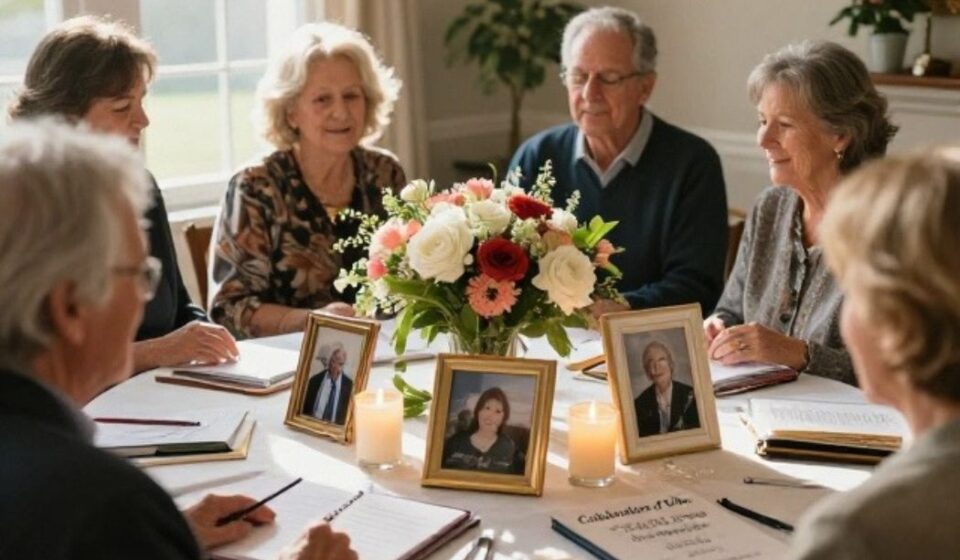
Have you ever sat through a funeral that felt like it belonged to a stranger?
The organ music was somber. The eulogy was generic. Nobody laughed. And you walked out feeling worse than when you walked in—not because you missed your loved one any less, but because the service didn’t capture a single thing about who they actually were.
That disconnect is exactly why a quiet but powerful shift has been happening in how we say goodbye. The celebration of life—a personalized, often joyful gathering that focuses on the deceased’s personality, passions, and impact—has moved from the margins of the funeral industry to its center. It’s no longer an alternative for the non-religious or the eccentric. It’s becoming the default choice for families who want their final act of love to feel true to the person they lost.
But here’s what most articles won’t tell you: this shift isn’t just about aesthetics or avoiding sadness. It’s about a fundamental change in how we understand grief, community, and the stories we leave behind. And if you’re planning one—or wondering whether you should—there’s more nuance to navigate than the glossy brochures suggest.
The Context: How We Got Here
From Vigil to Victory Lap
For most of the 20th century, the American funeral followed a predictable script. The body was embalmed and present. The service was held in a funeral home or church, often within three to five days. The tone was solemn, the structure liturgical or at least formal, and the goal was to provide closure through ritual.
That model still works for many families, particularly within religious traditions that emphasize the resurrection of the body and the power of communal prayer. But starting in the late 20th century—and accelerating dramatically after the COVID-19 pandemic—a different impulse took root. Families began asking a simple question: What if the service felt less like a obligation and more like a tribute?
The pandemic was a catalyst. With gathering restrictions in place, many families postponed services or held them virtually. When they finally gathered months later, the urgency of a quick burial had passed. What emerged was a desire to create something meaningful on their own terms—not just a ritual to get through, but an event that felt like a genuine reflection of a life.
By 2026, the celebration of life has become a mainstream expectation. The National Funeral Directors Association reported that roughly 53% of survey respondents had attended a service at a non-traditional location like a park, beach, bar, or museum. Funeral homes have rebranded entire spaces as “celebration of life centers.” The vocabulary has shifted, too: “We’re here to celebrate the life of…” has become standard phrasing, even in services that otherwise follow a traditional structure.
What a Celebration of Life Actually Is (and Isn’t)
The Core Distinction
A celebration of life is not simply a funeral with a playlist. The difference runs deeper.
A traditional funeral tends to center on the fact of death—the loss, the mourning, the transition of the soul or the committal of the body. A celebration of life centers on the reality of the life—the personality, the quirks, the relationships, the contributions. Tears and laughter coexist, but the dominant tone leans toward gratitude rather than sorrow.
That said, the term is slippery. Some celebrations of life are essentially memorial services with a new name. Others are full-blown parties with live bands and open bars. There is no governing body, no liturgical standard, no checklist that must be completed. That freedom is both the appeal and the challenge.
The Body Question
One practical distinction that matters more than most people realize: in a celebration of life, the body is often—though not always—absent. The deceased may have been cremated or buried in a private ceremony beforehand. This removes the visual reminder of death from the gathering, which some families find liberating and others find disorienting.
For Catholic families, this distinction carries theological weight. The Church’s funeral liturgies assume the presence of the body, emphasizing the resurrection of the body and the communal prayer for the deceased’s soul. A celebration of life that replaces the Funeral Mass entirely—rather than supplementing it—departs from Catholic practice. This doesn’t mean Catholics can’t personalize or hold additional gatherings, but it’s a tension worth navigating with a pastor rather than a party planner.
The 2026 Landscape: Trends Reshaping the Industry
Personalization Is No Longer Optional
The days of the generic eulogy are numbered. Families in 2026 expect—and often demand—services that feel handmade. That might mean a display of the deceased’s fishing rods and fly-tying materials, a playlist of their favorite jazz records, a table of their handwritten recipes, or a dress code of Hawaiian shirts because that’s what they wore every Friday.
This personalization extends to the venue. While funeral homes have upgraded their spaces to feel more like event halls than waiting rooms, many families are opting for places that held meaning: a favorite brewery, a community garden, a beach, a bowling alley. The logic is simple: if the gathering is supposed to feel like them, why not hold it somewhere they loved?
The New Disposition Options
The celebration of life trend is intertwined with another shift: the growing acceptance of alternative body disposition methods. Water cremation (alkaline hydrolysis) and human composting (natural organic reduction) are slowly expanding across the United States. As of mid-2024, roughly half of U.S. states permitted water cremation, while human composting was legal in a smaller number.
These methods align philosophically with the celebration-of-life ethos: they’re often perceived as gentler, more environmentally conscious, and less “industrial” than traditional burial or flame cremation. They also produce remains—ashes or soil—that families can incorporate into a celebration in meaningful ways, from planting a memorial tree to scattering ashes at a meaningful location.
The Cost Reality
Here’s where the narrative gets more complicated. Celebrations of life are often marketed as a more affordable alternative to traditional funerals, and they can be. A backyard gathering with potluck food and a Bluetooth speaker might cost under $500. A simple home gathering could fall below $200.
But the ceiling is high. A fully catered event at a rented venue with live music, custom slideshows, and professional coordination can easily reach $10,000 to $20,000 for around 100 guests. The median range for a mid-tier celebration—venue rental, catering for a moderate crowd, some decorations and printed programs—typically falls between $2,000 and $5,000.
The key financial insight: with a celebration of life, you control every line item. There’s no bundled “funeral package” obscuring costs. That flexibility is a gift for budget-conscious families, but it also means the burden of decision-making falls squarely on you.
How to Plan a Celebration of Life That Actually Feels Right
Start With the Person, Not the Checklist
The most common mistake in planning a celebration of life is starting with logistics. Venue first, then catering, then maybe a slideshow. That approach produces events that are well-executed but hollow.
Instead, begin with a question: What were the three or four things that made this person unmistakably themselves? Was it their laugh? Their obsession with the Boston Red Sox? The way they made everyone feel like a welcome guest in their home? Their thirty-year commitment to volunteering at the local animal shelter?
Once you have those anchors, every other decision becomes easier. The venue should echo one of those anchors. The music should too. The food, if possible. The stories people tell should circle back to them.
Appoint an Emcee (Not Just an Officiant)
Traditional funerals have officiants—clergy, celebrants, or funeral directors who guide the service. A celebration of life needs something slightly different: an emcee. Someone who can keep the energy moving, invite people to share stories without letting the sharing drag, and transition between moments of laughter and reflection.
This person doesn’t need to be professional. A close friend with warmth and a sense of timing often works better than a stranger in a suit. But they do need a loose script and the authority to gently redirect when a toast goes on too long.
Build in Structure, But Leave Room for Spontaneity
The best celebrations of life have a rhythm: a welcome, a few planned remembrances, an open invitation for guests to share, a closing moment, and then food and conversation. The worst have no structure at all—just a room full of grieving people unsure when to speak or what to do.
A simple program can help: a printed card with the order of events, a note about when open sharing will happen, and a clear signal for when the informal portion begins. But don’t over-produce. The magic often happens in the unscripted moments—the cousin who tells a story no one expected, the friend who leads an impromptu singalong, the burst of laughter that releases tension everyone was holding.
Don’t Forget the Grief
This is the part that gets lost in the celebration-of-life hype. Joy is not the absence of grief. A celebration of life that refuses to acknowledge loss can feel dissonant, even dishonest. The families who do this best make room for both: they laugh at the stories and they cry when the reality hits. They don’t pretend the death didn’t happen; they insist that the life mattered more.
As one Catholic commentator put it, “Denying grief doesn’t cure it” . The celebration is not a rejection of mourning—it’s a different container for it.
Common Mistakes and How to Avoid Them
Mistake 1: Waiting too long to plan.
Celebrations of life can happen weeks or months after a death, which is one of their advantages. But indefinite delay can leave families in limbo. Set a date within a reasonable window—often four to eight weeks—so people can arrange travel and the event has a sense of purpose.
Mistake 2: Forgetting the practical needs of guests.
Parking, accessibility, seating for elderly attendees, food that accommodates dietary restrictions, and clear communication about the venue’s location—these details matter. A beautiful tribute marred by a parking nightmare leaves a sour memory.
Mistake 3: Letting one person control the narrative.
Families are complicated. If one sibling plans the entire event without input, resentments can fester. Involve key people early, assign clear roles, and accept that the event will be a compromise rather than a perfect vision.
Mistake 4: Assuming everyone wants to celebrate.
Not everyone processes grief through joy. Some people need the structure of a traditional funeral, the ritual of a religious service, the space to be somber. A celebration of life can coexist with those needs—perhaps a private graveside service followed by a public gathering, or a religious memorial followed by a reception that feels more like a party. Give people options.
Pros, Cons, and a Balanced View
The Case For:
-
Authenticity: A celebration of life can reflect the actual person rather than a template.
-
Flexibility: Timing, venue, tone, and content are all yours to shape.
-
Community: The informal atmosphere often encourages more genuine connection than a formal service.
-
Cost control: You can spend $500 or $15,000—the choice is yours.
-
Healing potential: Focusing on gratitude and story-sharing can be profoundly therapeutic for families.
The Case Against (or At Least the Warnings):
-
Decision fatigue: Without a template, grieving families must make dozens of choices.
-
Risk of avoidance: A celebration that refuses to acknowledge loss can feel hollow or deny people the closure they need.
-
Exclusion: Non-traditional venues and formats may alienate older relatives or those who find comfort in ritual.
-
Theological tension: For religious families, replacing traditional rites with a celebration can create conflict with faith teachings.
The balanced view: a celebration of life is a tool, not a doctrine. It works beautifully when it serves the needs of the grieving family and honors the person who died. It fails when it becomes a performance, a competition, or a way to bypass the hard work of mourning.
What’s Next: The Future of Farewell
The trajectory is clear: celebrations of life will continue to grow, but they will also diversify. The “one-size-fits-all party” model is already giving way to more nuanced approaches.
Hybrid services are becoming more common—a traditional religious funeral followed by a casual celebration, or a private burial followed by a public gathering. This allows families to honor both ritual and personality, faith and individuality.
Digital integration is deepening. Live-streamed services, online memory boards, and AI-assisted slideshows are no longer novelties. The next wave may include interactive memorial websites where guests can upload stories and photos in real time, creating a lasting archive that outlives the event itself.
Legislative shifts around body disposition will continue to shape the landscape. As water cremation and human composting become available in more states, families will have more options for the physical remains—and more opportunities to incorporate those remains into meaningful celebrations, from memorial forests to home gardens.
And finally, expect the conversation around grief literacy to expand. With more than 6.6 million U.S. children projected to experience the death of a parent or sibling by age 18, the need for grief-informed communities—schools, workplaces, faith groups—is urgent. Celebrations of life are one part of that picture, but they’re not a substitute for ongoing support.
Key Takeaways
-
A celebration of life is defined by focus, not format. It centers on the person’s story rather than the fact of death.
-
Costs range wildly—from under $500 to $20,000+—because you control every element. Budget early and prioritize what matters.
-
Personalization is the point. Start with the person’s defining qualities, then build the event around them.
-
Structure prevents chaos. An emcee, a loose program, and clear expectations for open sharing make a huge difference.
-
Joy and grief are not opposites. The best celebrations make room for both.
-
Religious and traditional families need not choose. A celebration can supplement a funeral rather than replace it.
-
The future is hybrid, digital, and more personalized than ever. The industry is moving toward options that honor both ritual and individuality.
Frequently Asked Questions
What is the difference between a funeral and a celebration of life?
A funeral typically follows a structured, somber format and often includes the body. A celebration of life is more flexible, often body-absent, and focuses on personality, stories, and gratitude rather than mourning alone.
How much does a celebration of life cost?
It ranges from under $500 for a home gathering to $10,000–$20,000 for a fully catered event at a rented venue. A typical mid-range event falls between $2,000 and $5,000.
Can I have a celebration of life instead of a funeral?
Yes, for many families. However, if you belong to a faith tradition with specific funeral requirements (like Catholicism), speak with a religious leader before replacing traditional rites entirel .
When should I hold a celebration of life?
It can be held weeks or even months after the death. Choose a date that gives out-of-town guests time to arrange travel and that feels meaningful—perhaps a birthday or anniversary.
Do I need a professional celebrant or officiant?
Not necessarily. A trusted friend or family member can serve as emcee. A professional celebrant can help with structure and pacing if you want guidance, but many families prefer a personal touch.
What should I wear to a celebration of life?
Whatever the family specifies. Many celebrations encourage bright colors, casual attire, or themed dress (like the deceased’s favorite sports team). Check the invitation or ask a family member if you’re unsure.
Can I plan a celebration of life in advance?
Yes. Pre-planning is becoming more common and can relieve your family of difficult decisions later. Some funeral homes and celebrants offer pre-planning consultations.
Sources and Further Reading
-
Dignity Memorial, “2026 Top Trends in Funerals, Cremations & Celebrations of Life” — industry trends, personalization, modern venues, water cremation, human composting.
-
Forest Lawn, “Planning a Meaningful Celebration of Life” — practical planning guidance, personalization ideas.
-
Funeral Home Directories, “Memorial Service vs Celebration of Life: Differences Explained (2026)” — cost comparisons and structural differences.
-
Dignity Memorial, “Celebration of Life Planning Checklist” — step-by-step planning framework.
-
Eternally Loved, “Celebration of Life and a Funeral Service? What Is the Difference?” (2026) — tone, cost, and personalization distinctions.
-
Judi’s House / JAG Institute, “2026 Childhood Bereavement Estimation Model Results” — grief statistics and community implications.
FOR FURTHER INFORMATION, VISIT: THELUXURYLIFEMAGAZINE.COM