
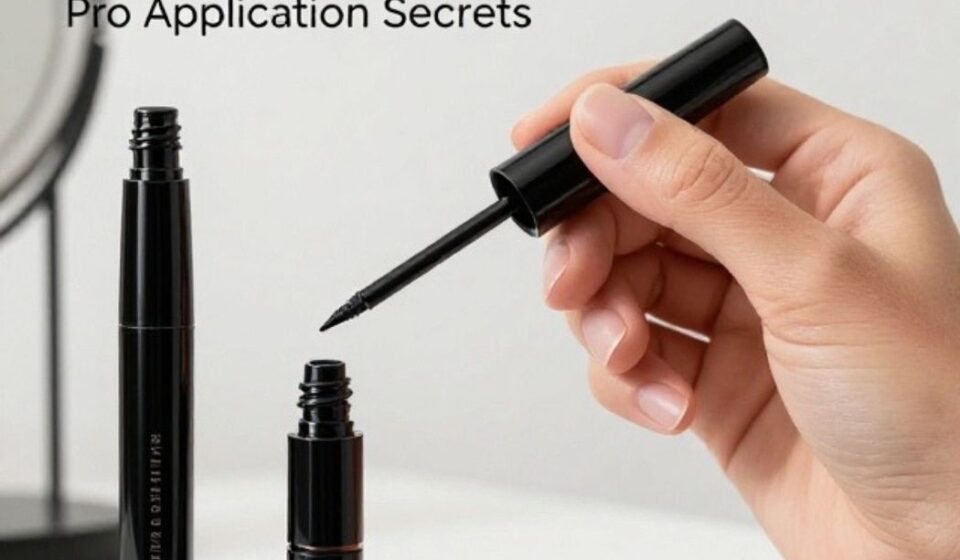
Eyeliner Liquid: Why does a single stroke of liquid eyeliner have the power to make or break your entire morning? For decades, the liquid liner has been the most intimidating tool in the makeup bag—a necessary evil for the perfect cat-eye, yet a source of trembling hands, uneven flicks, and midday smudges. But something has shifted. If you walked into a beauty hall in 2026, you would find a category completely transformed from the felt-tip pens of the 2010s.
The liquid eyeliner market is no longer just about pigment and a fine tip. It is a battleground of polymer chemistry, precision engineering, and skin-care hybrids. With the liquid segment holding a dominant 43.59% market share of the eyeliner category in 2025, brands are pouring resources into solving the exact pain points that used to send beginners running back to pencils. Whether you are a seasoned pro chasing a razor-sharp graphic wing or a beginner terrified of the dreaded “stamped” look, the 2026 liquid liner landscape offers a formula engineered for your specific struggle.
This guide isn’t just a list of products. It is a deep dive into the mechanics, the chemistry, and the technique of liquid eyeliner. We will explore why your liner smudges, how tubing technology is rewriting the rules of longevity, and the specific brush shapes that can compensate for a shaky hand.
The Evolution of the Ink: From Ancient Kohl to Modern Polymers
To understand why today’s liquid liners perform the way they do, we must briefly look at where they came from. Eyeliner is one of humanity’s oldest cosmetics, originating in Ancient Egypt and Mesopotamia as a dark line used for both adornment and sun protection. For millennia, the formula was essentially soot and fat. The 1960s brought the mod revolution, with liquid liner used to create bold, graphic lines, but the formulas were often watery, prone to flaking, and difficult to control.
The modern era of liquid eyeliner is defined by a single goal: film formation. Unlike a pencil that sits on top of the skin, a high-performance liquid liner creates a flexible, pigmented film that adheres to the eyelid. The latest generation of products, exemplified by innovations like Schwan Cosmetics’ Meta-Ink platform, focuses on creating a single optimized base formula that can deliver intense color while incorporating skin-conscious ingredients like hyaluronic acid and L-arginine to support the delicate lash-line barrier. This is the era where your eyeliner doesn’t just decorate; it is formulated to respect the thin, sensitive skin it sits on.
The Anatomy of the Perfect Applicator: Brush vs. Felt vs. Hybrid
The biggest differentiator between a frustrating liquid liner and a “holy grail” is the tip. Most articles gloss over this, but the applicator dictates the physics of your application. Here is the breakdown that actually matters.
The Brush Tip (The Artist’s Choice)
A true brush tip, made of bundled fibers, offers the most versatility. It responds to pressure: press lightly for a hairline stroke, press harder for a bold wing. Who it’s for: Intermediate to advanced users who want a classic feline flick or graphic shapes. The 2026 upgrade: Brands are now using shorter, denser bristle bundles to reduce splaying and increase control for shaky hands.
The Felt Tip (The Beginner’s Safety Net)
Felt tips are essentially porous markers. They are firm, stable, and deliver a consistent line width. Who it’s for: Beginners and those who struggle with hand tremors. The trade-off: You sacrifice the ability to taper the line to a microscopic point. However, 2026 felt tips are far more flexible than the rigid markers of the past, bridging the gap between control and precision.
The Micro-Liner Revolution (0.1mm and Beyond)
The most significant hardware trend in 2026 is the extreme micro-tip. Platforms like the PrimeLiner system now feature 0.1 mm tips designed for smooth, continuous ink flow that glides across both eyes without skipping. This precision allows for the “tightline” effect—filling the gaps between lashes—without the liner bleeding onto the eyelid. For those who want the “no-makeup makeup” look, a 0.1mm tip is non-negotiable.
The Tubing Breakthrough: The End of the Smudge Wars?
If there is one innovation that deserves the “game-changer” label for 2026, it is the mainstreaming of tubing technology in liquid eyeliner. Originally popularized by tubing mascaras, this technology uses water-resistant polymers that wrap around the lash or form a flexible film on the skin.
Why Tubing Beats Traditional Waterproof
Traditional waterproof liners rely on heavy waxes and silicones that resist water but often succumb to the natural oils on your eyelids (especially if you have hooded or oily lids). Tubing liners create a film that resists smudging, transferring, humidity, and oils.
The Real-World Test: In a 2026 review of Tarte’s Tubing Liquid Eyeliner, a tester wore the liner through a hot pilates class with “zero budging”. More importantly, removal is radically different. Instead of scrubbing with harsh oils, tubing liners release with warm water and gentle pressure. The film simply slides off in a coherent piece (or “tube”). This is particularly valuable for contact lens wearers and those with sensitive eyes who dread the nightly removal ritual.
The Caveat
Tubing liners tend to have a matte finish. If you love the glossy, wet-look ink of a classic liquid liner, tubing might feel too flat. Additionally, because the formula forms a film, you cannot smudge it for a smoky effect; it sets almost instantly.
The Color Revolution: Beyond Black
While black remains the undisputed king of the liner world, 2026 is seeing a quiet explosion in shade flexibility. The manufacturing barriers to colored liner have fallen. Previously, creating a new shade meant reformulating from scratch, risking stability issues. New platform-based manufacturing allows brands to swap pigments into a single optimized base formula, delivering near-limitless vibrant shades with consistent performance.
The Trend to Watch: Look beyond the obvious blues and greens. The 2026 editorial trend leans toward metallic and pearlescent finishes in liquid formats—think liquid silver or champagne gold along the lower lash line or as a floating graphic line. These finishes were previously difficult to stabilize in liquid form, but new encapsulation technology keeps the shimmer suspended without clogging the fine 0.1mm tips.
Practical Application: The Triangle Method and the “Map” Technique
Technique is where most tutorials fail. They show a smooth, continuous swoop that is physically impossible for a normal human hand. Here is the professional approach that actually works, adapted for 2026’s precision tools.
Step 1: Prime and Powder (The Unsung Hero)
Liquid liner needs a dry, matte surface to grip. If you have oily lids, apply a thin layer of eye primer, then lightly dust with a translucent powder. This prevents the liner from sliding into the crease.
Step 2: The “Map” Method (Pencil First)
Makeup artists rarely freehand a perfect wing with liquid on the first try. Use a soft pencil to sketch the shape of your wing. You can smudge it, adjust the angle, and ensure both eyes are symmetrical before committing to the permanent ink of a liquid liner. Once the map is drawn, simply trace over it with your liquid liner.
Step 3: The Triangle Build
Do not draw the wing in one stroke. Draw the lower line following your lash line. Then, from the outer corner, draw the top line toward the tail of your brow. Connect the two lines at the tip to form a triangle, and fill it in. This builds the structure logically, preventing the “droopy” wing.
Step 4: The Elbow Trick
Rest your elbow on a solid surface (your vanity table). This stabilizes your entire arm. Look slightly downward into a mirror placed at a low tilt. This allows you to see your entire lid without stretching the skin or getting ink in your eye.
Common Mistakes and How to Fix Them
Even with the best formula, liquid liner is unforgiving. Here is how to troubleshoot the most common disasters.
| Mistake | The Cause | The 2026 Fix |
|---|---|---|
| The “Stamp” | Pressing too hard with a felt tip, causing the tip to splay. | Use a lighter touch. Let the weight of the pen do the work. If using a brush tip, hold it closer to the base of the bristles for more control. |
| Midday Fading | Not allowing the first layer to dry, or skipping primer. | Wait. Blink a few times after applying and let the film set completely. If layering, wait 10 seconds between coats. |
| The “Skipped” Line | Applying over moisturizer or creamy eyeshadow. | Powder the lid. Liquid liner cannot adhere to a slippery, waxy surface. |
| Smudging Under the Eye | The liner is breaking down due to oils. | Switch to a tubing formula. It resists oils far better than traditional waterproof waxes. |
Pros, Cons, and a Balanced Verdict
The Pros of Liquid Eyeliner (2026 Edition):
-
Unmatched Precision: No other format delivers the sharp, graphic lines possible with a 0.1mm liquid tip.
-
Intense Pigmentation: Liquid formulas carry the highest pigment load without the drag of a pencil.
-
Longevity Innovations: Tubing and advanced polymer films offer all-day wear without the “crusty” feel of old waterproof formulas.
-
Skin-Care Hybrids: New formulas include hydrating ingredients like hyaluronic acid, making them less drying on mature eyelids .
The Cons (Still Present):
-
Zero Forgiveness: Once it sets, it sets. Correcting a mistake requires micellar water and a steady hand, not a smudge.
-
Learning Curve: The physical act of drawing a straight line on a curved, moving surface is inherently difficult.
-
Not for Smoky Eyes: If you want a diffused, blended look, liquid is the wrong tool. Stick to pencils or gels.
The Future Outlook: What Comes Next?
The liquid eyeliner category is projected to reach USD 4.1 billion by 2033, and the drivers of that growth are clear.
1. Biodegradable and Refillable Packaging
The single-use plastic pen is under fire. Expect to see more brands offering refillable cartridges for their liquid liner pens, where you keep the precise applicator and replace the ink reservoir.
2. “Smart” Formulas
We are on the cusp of liners that adapt to the pH of your skin for better adhesion, or formulas that change finish based on the applicator angle. While still in early stages, the patent activity in this space is high.
3. The End of the “One-Size” Tip
Just as foundation shades exploded in the 2010s, applicator shapes will diversify. We will see tips designed specifically for hooded eyes (angled and shorter), mature eyes (softer, more flexible), and monolid eyes (stiffer, for drawing on the lid space).
Key Takeaways
-
The Tip Dictates the Experience: Beginners should start with a firm felt tip; pros should seek a responsive brush tip. The 0.1mm micro-tip is the standard for precision.
-
Tubing Technology is a Legitimate Leap Forward: If you struggle with smudging due to oily lids or watery eyes, a tubing liner is a smarter investment than a traditional waterproof wax formula.
-
Preparation is Non-Negotiable: Primer and powder are the difference between a sharp wing and a smeared mess.
-
Map Before You Ink: Use a pencil to sketch your wing shape before committing with liquid. It saves time and frustration.
-
Removal Matters as Much as Wear: The best liner is one that stays all day but comes off without tearing your lashes out at night.
Detailed FAQs About Eyeliner Liquid
Q: Can I use liquid eyeliner on my lower lash line?
A: You can, but it is tricky. Liquid liner sets very fast and can look harsh on the lower waterline. If you want a defined lower line, use a small amount on the outer third only, and keep the eye looking down until it dries completely to avoid transfer to the under-eye area. For a softer look, stick to a pencil on the lower lash line.
Q: How do I stop my liquid eyeliner from drying out?
A: The number one cause of dried-out pens is not clicking the cap shut properly. You should hear an audible click. Store your liners tip-down in a cup. This uses gravity to keep the ink flowing toward the tip, preventing the felt or brush from drying out and clogging.
Q: My eyes water whenever I apply eyeliner. What can I do?
A: Watery eyes are usually a reaction to the formula or the physical tickle of the brush. Look for ophthalmologist-tested formulas. Try applying the liner slightly away from the very inner corner (where tears originate) and keep your eye relaxed. If the watering is due to the application itself, try resting your pinky finger on your cheekbone to steady the pen and reduce the “tickle” sensation.
Q: Is liquid eyeliner bad for mature skin?
A: Not inherently, but the formula matters. Traditional liquid liners can feel tight and drying as they set. In 2026, look for liquid liners that are infused with hydrating ingredients (like the hyaluronic acid in the Meta-Ink platform) or tubing formulas that form a flexible film rather than shrinking and tightening on the skin. For very textured lids, a gel liner might be more comfortable.
Q: What is the difference between a “wing” and a “flick”?
A: A wing is a structured triangular shape that connects to the lower lash line or extends outward from the corner. A flick is a simpler, shorter upward stroke at the very end of the lash line. A flick is generally easier for beginners to master.
Source Note: The information in this article is synthesized from a review of 2026 beauty industry publications, including Who What Wear, Premium Beauty News, Glamour, Marie Claire UK, and market analysis from GII Research. Product performance claims reflect the opinions of the cited editors and testers.
FOR FURTHER INFORMATION, VISIT: THELUXURYLIFEMAGAZINE.COM