
When was the last time someone you loved was hurting, and you had absolutely no idea what to do?
Maybe a friend lost a parent. Maybe your sister just had a baby and hasn’t slept in forty hours. Maybe a colleague is recovering from surgery three states away, and a text message feels criminally inadequate. You open a browser. You type “sympathy gift.” You are immediately assaulted by fruit arrangements, chocolate towers, and enough cellophane to suffocate a small forest. None of it feels right.
That gap—between wanting to show up and not knowing how—is exactly where Spoonful of Comfort lives. Founded in 2008 by Marti Wymer, the company built an entire gifting category around a single, stubbornly simple idea: send soup. Not a basket of crackers and jam. Not a decorative plate. Soup. Bread. Cookies. A meal someone can actually eat on a day when cooking feels impossible.
This is not a review. It’s an exploration of why this particular form of comfort has resonated so deeply, how it actually works, where it falls short, and what its rise tells us about modern grief, caregiving, and the quiet economics of human warmth.
Background: How a Pot of Soup Became a Business
Marti Wymer didn’t set out to disrupt gifting. The origin story, repeated across the company’s site and reviews, is almost disarmingly personal: she wanted to send something to her own mother that felt as caring as a homemade meal, delivered with the same intention a family member would bring to a doorstep. The company’s promise—printed on product pages and repeated in founder statements—is that every package is made and delivered “with as much care as if I were sending it to my own mother”.
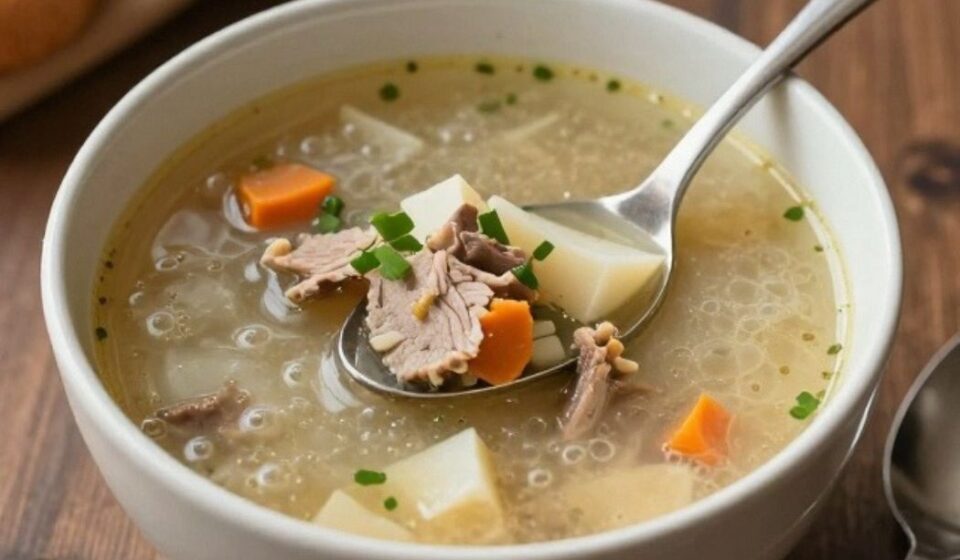
That sincerity matters because the product itself is remarkably unglamorous. Spoonful of Comfort sells soup. Specifically: chicken noodle, loaded potato, tomato basil, mac and cheese, and a rotating seasonal menu. Each package includes fluffy rolls and cookies. The soups are prepared in small batches under USDA supervision, blast-frozen to lock in freshness, wrapped in insulated liners with gel ice packs, and shipped via UPS from Salt Lake City or Lancaster, Pennsylvania. No signatures required. Three-day freshness guarantee.
What makes the company interesting isn’t the soup recipe. It’s the positioning. Spoonful of Comfort didn’t enter the “food gift” market—it entered the emotional logistics market. The boxes are designed for occasions where people are too overwhelmed to cook: sympathy, illness, new parenthood, surgery recovery, military homecomings. The company even partners with the Semper Fi & America’s Fund to deliver meals to wounded service members and their caregivers, a partnership that has shipped hundreds of packages to hospitals, barracks, and homes.
In a gifting landscape obsessed with spectacle, Spoonful of Comfort bet on utility as intimacy. And the bet appears to be working. One Serious Eats editor, who buys the boxes for family members and tested them firsthand, described the packaging as “thoughtful” and the cookies as disappearing so fast her husband was the prime suspect. Customer reviews across the site consistently mention the same word: thoughtful.
The Psychology of Soup: Why This Works
Comfort Food Is Not a Cliché—It’s Neuroscience (Sort Of)
There is a reason every culture has a version of chicken soup for the sick. Comfort food is deeply tied to memory, safety, and care. As one analysis of the comfort-food gifting trend notes, “grown adults still want their mother’s chicken soup” not necessarily because of medicinal properties, but because the warmth and familiarity signal being cared for. The steam, the salt, the soft bread—these are sensory cues that say you are allowed to rest.
Spoonful of Comfort’s genius is in removing every barrier between the recipient and that feeling. The soup arrives frozen. The recipient thaws it, heats it, and eats. No chopping. No grocery run. No decision-making. For someone in grief or recovery, decision fatigue is real. A gift that asks nothing of you except to eat is a gift that respects your depleted state.
The Anti-Bouquet
Flowers die. Fruit baskets rot. Chocolate towers are lovely until you realize you’re eating your feelings at 2 a.m. and the tower is now a monument to your grief. Soup, by contrast, is consumable care. It disappears into the body and does something useful. It nourishes. It warms. It requires no display, no maintenance, no gratitude performance.
There’s also something to be said for the absence of spectacle. A sympathy bouquet arrives and everyone in the room sees it. A box of soup arrives and the recipient can open it privately, cry if they need to, and eat a bowl in their pajamas without anyone watching. For many people, that privacy is the real gift.
The “I’ve Got You” Economy
Recent gifting data supports the shift. A 2026 analysis of delivery gifting patterns found that comfort food—especially burgers, pizza, and practical care packages—has become a way of saying “I know what you love” or “I’ve got you,” particularly when people cannot be physically present. The gesture isn’t about luxury. It’s about presence through provision. Spoonful of Comfort packages that instinct in a box with a ribbon.
How It Actually Works: The Logistics of Warmth
Spoonful of Comfort is not a restaurant. It’s a shipping operation designed around perishable empathy. Understanding the mechanics helps set realistic expectations.
The freezing process. Soups are blast-frozen immediately after packaging, which the company says locks in freshness and prepares the product for transit. Each container is wrapped in a proprietary insulated liner with gel ice packs. The package is designed to withstand three days in transit and is intended to thaw along the way. That last detail is important: your soup may arrive partially or fully thawed. That’s normal. The company’s freshness guarantee covers three days; if transit exceeds that window, customer support will refund or replace.
The heating instructions. Once received, the soup can be refrigerated for up to five days or frozen for up to two months. Thawing can happen in the fridge (1–2 days), in cool water (30–40 minutes), or in the microwave on defrost. Heating is straightforward: stovetop or microwave, with the USDA-recommended target of 165°F. The rolls and cookies are ready to eat, though a few minutes in a 350° oven improves the bread.
The customization. Packages are themed—Sympathy, Get Well, New Parents, Thinking of You, Peace and Pampering—but the core food box is customizable: choose two soups and a cookie type. Accessory packages add blankets, socks, or toiletries for a more expansive gift.
The shipping footprint. Ships to all fifty U.S. states. No PO boxes. No international delivery. Ships from Utah or Pennsylvania, which means West Coast and East Coast recipients get slightly different transit times.
Practical Tips: How to Send (and Receive) a Spoonful of Comfort Well
If You’re the Sender
1. Match the package to the moment, not the price tag.
A Sympathy package for a grieving friend is appropriate. A Peace and Pampering package—with a plush blanket and toiletries—might be better for someone recovering from surgery or dealing with a chronic illness. A “Just Because” box works for the friend who just got promoted or the cousin who just survived finals week. The themed labeling matters less than the acknowledgment that you paid attention.
2. Add a note that says something real.
The soup is the medium; the message is the point. Avoid “Let me know if you need anything” (they won’t). Try “I’m bringing dinner Thursday” or “I remember your mom’s chicken soup and I hope this is a decent stand-in” or simply “I’m so sorry. I’m here.” The box includes space for a message. Use it.
3. Time it right.
For sympathy gifts, the first two weeks after a loss are often flooded with casseroles and flowers. The third week is when the phone stops ringing and the freezer is empty. A soup delivery that arrives on day eighteen can feel like a lifeline. For new parents, aim for weeks two through six, after the initial helpers have gone home and the sleep deprivation has calcified.
4. Check dietary realities.
The soups are not universally allergen-friendly. If your recipient is gluten-free, dairy-free, or vegetarian, look at the ingredients carefully before ordering. Spoonful of Comfort’s menu is comfort-food classic, which means dairy and gluten are common.
If You’re the Recipient
1. Don’t save it for a special occasion.
The soup is meant to be eaten on a Tuesday when you’re too tired to function. That’s the special occasion.
2. Reuse the packaging.
The company explicitly designs the boxes to be refolded and reused—the compartments can be inverted to show a patterned exterior. It’s a small thing, but it turns a gift into a keepsake.
3. Tell the sender.
One review on the site captures why this matters: a recipient who had lost her father said the box felt “like a warm hug from a friend”. Senders rarely know the impact of their gesture unless you tell them. A two-line text—“The potato soup was exactly what I needed”—completes the circle of care.
Common Mistakes and Honest Challenges
Mistake 1: Expecting a gourmet restaurant experience.
This is soup made for shipping, not soup made for a Michelin tasting menu. It’s good. It’s comforting. It is not transcendent. The Serious Eats reviewer praised the rolls and cookies specifically, and noted the packaging as a standout. But if you’re looking for a culinary revelation, you’ll be disappointed. The value proposition is care logistics, not cuisine.
Mistake 2: Ignoring shipping realities.
If the recipient lives in a rural area or a building with a package room that sits in the sun, the three-day freshness guarantee can be tested. Spoonful of Comfort ships with tracking and monitors weather delays, but you should still give your recipient a heads-up that a perishable package is coming and that it should be opened promptly.
Mistake 3: Treating it as a one-and-done gesture.
The soup arrives. The recipient eats it. The gesture ends. That’s fine—but the most meaningful caregiving is sustained. A soup delivery is a beginning, not a conclusion. Pair it with a calendar reminder to check in three weeks later. The box does the initial work; you do the ongoing work.
The cost challenge. Spoonful of Comfort is not inexpensive. A basic soup package sits at a premium price point compared to grocery-store soup or a homemade casserole. You are paying for the freezing, the insulation, the shipping, the packaging, and the convenience of not having to leave your house. Whether that’s worth it depends on your budget and the distance between you and the person you’re trying to reach. For a friend across the country, the math often works. For a neighbor down the street, a homemade pot of soup and a knock on the door may carry more warmth per dollar.
Pros, Cons, and a Balanced Verdict
| Pros | Cons |
|---|---|
| Sincere, specific positioning around care and grief | Premium price point; shipping and packaging add cost |
| Thoughtful packaging designed for gifting | Limited international and PO box shipping |
| Easy for recipients: thaw, heat, eat | Soups may arrive thawed (normal, but can alarm first-timers) |
| Customizable food boxes with themed add-ons | Not a solution for dietary restrictions without careful checking |
| Strong customer service reputation and freshness guarantee | The soup itself is good, not extraordinary |
| Accessible via corporate and nonprofit partnerships (e.g., Semper Fi) | One-time gift, not a subscription for ongoing support unless you reorder |
The verdict: Spoonful of Comfort solves a real problem—how to feed someone you love from a distance—with dignity and warmth. It is not the cheapest option, and it is not trying to be. It is a thoughtfulness delivery system disguised as a food box. For the right moment and the right person, that distinction is everything.
What’s Next: The Future of Comfort Gifting
As of 2026, the broader food gifting and mail-order market is shifting toward what one industry analysis calls “e-gifts that meet personal demands”—smaller, more frequent, more personalized gestures rather than grand holiday spectacles. Spoonful of Comfort is well-positioned for this. Its packages are inherently personal: they’re selected for a specific person in a specific moment.
The company could lean further into that. Imagine a grief-aware subscription: one box at the one-week mark, another at the one-month mark, when the support has faded. Imagine caregiver packages that explicitly feed the person doing the caring, not just the patient—a need the Semper Fi partnership has already identified. Imagine corporate bereavement programs that send a box on behalf of an entire team, taking the awkwardness out of office sympathy.
The broader trend is clear: comfort food is no longer just a category of cuisine. It’s a gifting language. And Spoonful of Comfort, with its founder’s promise and its blast freezers, is one of the few companies fluent in it.
Conclusion: What We’re Really Sending
A few years ago, a woman named Donna received a Spoonful of Comfort box after her father died. She wrote: “I’m missing my dad and this was like a warm hug from a friend”.
That’s the whole thing, isn’t it? We send soup because we cannot send hugs. We send bread because we cannot sit at the table. We send cookies because grief and exhaustion and new parenthood and recovery all deserve something sweet, even—especially—when life is not.
Spoonful of Comfort is not magic. It’s a company that freezes soup and ships it in insulated boxes. But it has figured out something most gifting companies miss: the most meaningful gifts are the ones that do something. They feed. They warm. They ask nothing in return except that you eat.
If you’re staring at a screen right now, wondering what to send to someone who is hurting, the answer might be simpler than you think. Send soup. Send bread. Send the message that you know they need to eat and you wanted to make it easy.
That’s not a small thing. That’s a spoonful.
Key Takeaways
-
Spoonful of Comfort turned soup into a gifting category by focusing on emotional logistics—feeding people who cannot or should not have to cook.
-
The product is blast-frozen soup, rolls, and cookies, shipped with a three-day freshness guarantee to all fifty U.S. states.
-
The real value is in the positioning: thoughtful, private, consumable care that respects the recipient’s depleted state.
-
Best for: sympathy, illness, new parenthood, surgery recovery, and long-distance caregiving.
-
Not for: bargain hunters, international recipients, or anyone expecting gourmet cuisine.
-
Pro tip: Time sympathy deliveries for the two-to-four week mark, when the initial flood of support has faded.
-
The future of this category is personalization, caregiver-focused packages, and corporate bereavement gifting.
Detailed FAQs
What exactly comes in a Spoonful of Comfort package?
A standard food package includes two containers of soup (your choice from the menu), a set of rolls, and a box of cookies. Themed packages may include accessories like a blanket, socks, or toiletries. The soups arrive frozen and are intended to thaw during transit.
Does the recipient need to be home for delivery?
No. Spoonful of Comfort ships without signature requirements. The package is insulated and designed to remain food-safe for up to three days in transit.
What if the soup arrives thawed?
That’s expected. The soups are blast-frozen and intended to thaw during shipping. Upon arrival, you can refrigerate and eat within five days, or refreeze for up to two months. If the package arrives damaged or clearly beyond the freshness window, contact customer support for a replacement or refund.
Can I customize the soups and cookies?
Yes. Most food packages allow you to choose two soups and a cookie type. The menu rotates seasonally, but staples include chicken noodle, loaded potato, tomato basil, and mac and cheese.
Does Spoonful of Comfort accommodate dietary restrictions?
The menu is comfort-food focused and includes gluten and dairy in many products. There is no dedicated gluten-free or allergen-free line. If your recipient has serious allergies or restrictions, review the ingredient information carefully or consider a different gift.
Where does Spoonful of Comfort ship?
All fifty U.S. states. No PO boxes. No international shipping. Packages ship from Salt Lake City, Utah, and Lancaster, Pennsylvania.
How much does it cost?
Prices vary by package and customization. Expect a premium relative to grocery-store soup because you are paying for blast-freezing, insulated packaging, and expedited shipping. The company’s site lists current pricing; corporate and nonprofit partners may receive discounts.
Is Spoonful of Comfort a good corporate gift?
Yes, particularly for bereavement, illness, or employee care situations. The packaging is presentable, the food is universally approachable, and the gesture reads as genuinely thoughtful rather than transactional. The company has experience with nonprofit and military partnerships, suggesting capacity for bulk or recurring orders.
What makes it different from a regular food gift basket?
Most gift baskets are shelf-stable snacks and sweets. Spoonful of Comfort sends perishable meals—actual food that can serve as dinner. The recipient doesn’t just receive a treat; they receive a night off from cooking.
Sources and Further Reading
-
Spoonful of Comfort official site: product details, shipping FAQ, founder promise, and product care instructions
-
Serious Eats review by Grace Kelly (February 2026): firsthand testing and family feedback on the “Just Because” box
-
LA Weekly analysis (September 2026): “Why Comfort Food Is Finding a New Place in Thoughtful Gifting”—cultural context on food as care
-
Spoonful of Comfort blog: Semper Fi & America’s Fund partnership and military care packages
-
Tracxn and CB Insights company profiles: founding date (2008), headquarters, and competitive landscape
-
BusinessNow.mt / Wolt gifting data (February 2026): broader trends in comfort-food gifting and “I’ve got you” gestures
FOR FURTHER INFORMATION, VISIT: THELUXURYLIFEMAGAZINE.COM