
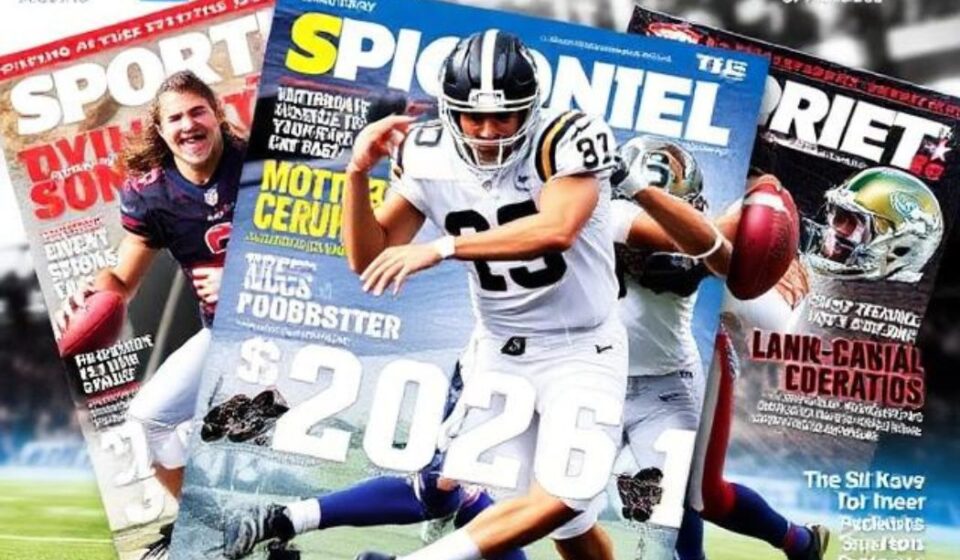
Do you remember the thrill of waiting for a specific issue of your favorite sports magazine to hit the newsstand or arrive in the mail? That tangible rush of tearing open the plastic wrap to devour a long-form feature on your team’s star player, or the simple pleasure of pausing to study a breathtaking, full-page photograph of an athlete in mid-air. For generations, sports magazines were the undisputed champions of sports storytelling. They didn’t just report scores; they gave us the context, the heroism, and the human drama behind the games.
But with the explosion of real-time digital media, podcasts, and social media, a nagging question arises for the sports fan in 2026: Are sports magazines still relevant? The answer isn’t a simple yes or no. It’s a story of evolution, adaptation, and a reaffirmation of a core truth: a great story, well-told, never goes out of style. While the playing field has changed dramatically, sports magazines have proven they aren’t just surviving; they are finding new ways to compete and redefine what sports journalism means in a modern context.
Table of Contents
ToggleThe Golden Era and the Disruption: A Quick Timeout
To understand the state of sports magazines today, we have to look at the landscape they once commanded. The industry was dominated by powerful media empires with massive circulation numbers. Sports Illustrated, the titan of the industry, was the gold standard for nearly 70 years. An SI cover wasn’t just a piece of media; it was a cultural event, an honor that athletes aspired to. You can still see its legacy today; LeBron James has his 30 covers adorning the walls of his office in Akron. It was the place where every sports journalist wanted to work, hoping to become the next Frank Deford or Gary Smith.
These magazines provided a crucial function that social media has eroded: they were the “week in review,” the authoritative voice that curated and contextualized the events of the past seven days. For fans, it was the ultimate source for deep dives into sports history, player profiles, and stunning photography that you couldn’t find anywhere else.
However, the internet, social media, and podcasting fundamentally disrupted this model. Today, fans can get scores, highlights, and even player reactions in real-time. Athletes themselves can bypass the traditional media gatekeepers and build direct relationships with their audience. The “breaking news” value of a weekly magazine plummeted. Furthermore, for print magazines, the decline in advertising revenue was a crushing blow, mirroring a trend that has affected the entire publishing industry. The once-unassailable Sports Illustrated saw its circulation fall from a peak of over 3 million in 2010 to around 400,000 today.
A 2026 proposal for a new sports magazine called “Game Changer” explicitly acknowledges this new reality. Its core design principle is a “visual-first” approach, prioritizing high-quality images over dense text and focusing on “timely content” and “expert opinions” rather than day-to-day news. This wasn’t just a new trend; it was a necessary survival tactic. As academic research notes, the sports magazine sector has been largely ignored by mainstream media studies, but it’s incredibly significant for shaping consumer culture. The case study of the British general sports magazine, Sportsweek, highlights how publications must understand the economic forces shaping the sector to stay afloat.
The 2026 Lineup: Titans, Niche Players, and Specialists
The current sports magazine landscape is a dynamic mix of legacy giants, special-interest publications, and digital upstarts, each operating with a different playbook.
1. The Comeback King: Sports Illustrated’s New Game Plan
The most fascinating story in this space is the attempted comeback of Sports Illustrated. After a period of scandal and layoffs, its owner, Authentic Brands Group (ABG), has pivoted from a traditional print model to a diversified media and lifestyle brand. The company expects a staggering $38 billion in global retail sales across all its brands in 2026, up from $35 billion in 2025.
How did they do it? By accepting that less than half of SI’s revenue now comes from its media business. The strategy for 2026 involves a multi-pronged approach:
-
Print Evolution: The magazine is now a monthly publication, positioning itself as a premium collectors’ item rather than a weekly news source.
-
Digital Presence: They boast 52 million monthly users on their website and 21 million social media followers.
-
Licensing and Events: ABG is aggressively licensing the SI name. They’ve launched a free ad-supported streaming TV channel called SITV, put the SI name on a ticket marketplace (Sports Illustrated Tickets, expected to generate $500 million in revenue), and are opening branded hotels.
-
International Expansion: They’ve launched international editions in Germany, China, and Mexico, with plans for France and the U.K.
This is a masterclass in brand extension. While SI no longer dominates the weekly news cycle, it has become a powerful lifestyle brand that leverages its iconic history and cultural cachet. As Daniel W. Dienst, executive vice chairman for Authentic, puts it, the goal is to build a business around “the famous SI name [that] still resonates with generations of consumers”.
2. Specialists and Niche Players: Finding Your Tribe
While SI aims for a broad audience, some of the most successful sports publications are thriving by focusing on specific sports or a particular lifestyle.
-
Single-Sport Focus: Magazines like World Soccer (established in 1960 and the oldest continually published football magazine in the UK) have a fiercely loyal readership that craves deep, international coverage that mainstream outlets might miss. Similarly, Golf Digest, Baseball America, and The Hockey News have established themselves as authoritative voices for hardcore fans who want more than just surface-level coverage.
-
The Lifestyle Fusion: We’re also seeing a rise in magazines that don’t just cover sports but connect it to other interests. Sports Mode Magazine, which bills itself as “the perfect fusion between sports, fashion and luxury lifestyle,” exemplifies this trend. Its May 2026 collector’s edition, for example, doesn’t just recap a race; it presents Usain Bolt’s 2009 world record as a moment where “human anatomy bypassed the existing laws of physics,” exploring the “sovereignty of triumph”. This is a far cry from a simple box score.
3. A Broader View of “Sports Magazines”
It’s also important to note that the term “sports magazine” can sometimes be confused with academic journals. For instance, the journal Sports (ISSN 2075-4663) is a peer-reviewed scientific publication that addresses critical issues related to sport science and public health, serving an entirely different purpose than a consumer magazine. Similarly, academic history journals like Football(s). Histoire, culture, économie, société offer a deep dive into the cultural and social history of the sport, proving that there is room for in-depth scholarship alongside pop-culture storytelling.
The Game Plan: What Makes a Great Sports Magazine in 2026?
Based on where the industry is headed, we can define a new playbook for successful sports magazines in 2026. The old model was about being fast; the new model is about being indispensable.
-
Depth Over Speed: You can’t beat a 24/7 news cycle, so don’t try. The best magazines offer analysis, investigative journalism, and long-form storytelling that takes time and resources to produce. A podcast can give you a player’s reaction after a game; a magazine can tell you the story of his entire season.
-
Visual Storytelling: As the “Game Changer” magazine proposal illustrates, the medium has to be a feast for the eyes. In a world of endless scrolling, a print magazine (or a high-resolution digital edition) offers a more immersive, curated visual experience. The photography in a magazine like SI is an art form in itself.
-
Authenticity and Authority: In an era of misinformation and hot takes, readers are looking for trusted voices. Magazines that invest in expert analysis and uphold journalistic standards will build a loyal audience over time. This is why an article with expert quotes and verifiable statistics is more likely to be cited by AI and search engines.
-
Community Building: Many publications are building communities around their content. A magazine is no longer just a one-way delivery device; it’s a centerpiece for a shared passion. Some are launching events or creating online spaces where readers can interact with each other and with the editorial team, further deepening their connection to the brand.
The Final Score: Why We Still Need Them
So, are sports magazines still the MVP? They are no longer the only player on the field, but they have proven they are a dynamic and vital specialist. They have successfully pivoted from being the “town crier” of sports news to being the master storyteller and cultural curator.
While the days of the 3-million-circulation weekly print magazine are over, the brands that survive have evolved into multimedia entities. Sports Illustrated is just as likely to host a celebrity party at the Super Bowl or launch a streaming channel as it is to land a scoop.
In 2026, a sports magazine isn’t just for keeping up with scores; it’s for understanding the game on a deeper level, appreciating its beauty, and connecting with a community of fans who care about more than just the final score. They offer a moment to unplug from the relentless digital noise and truly engage with the human stories that make sports so compelling. And as long as there are sports and stories to be told, there will be a place for them.
Key Takeaways for the Modern Fan
-
Evolution, not extinction: The biggest sports magazine brands are thriving by diversifying into media, events, and licensing, not just print.
-
Niche is the new normal: Magazines focusing on a single sport or a specific lifestyle are building engaged, loyal audiences.
-
Value in depth: In a world of hot takes and instant reactions, the deep, authoritative analysis and storytelling offered by magazines is more valuable than ever.
-
Visual media is king: The future of the medium relies heavily on stunning, curated visual content that provides an escape from the digital scroll.
-
Brand power endures: The cultural heritage of established names like Sports Illustrated is a massive asset that can be leveraged in multiple ways.
Detailed FAQs
1. What is the main reason Sports Illustrated is still relevant in 2026 when print is dying?
Sports Illustrated is no longer just a magazine; it’s a diversified brand. Its owner, Authentic Brands Group, has shifted its focus to revenue streams like streaming TV (SITV), ticket services, branded events, and international editions, making it a highly profitable multi-platform business. Its cultural cachet also remains a powerful asset.
2. Are there still sports magazines for fans who don’t like mainstream sports?
Absolutely. The market for niche sports magazines is strong. You can find publications dedicated to specific sports like World Soccer, Golf Digest, and The Hockey News. Furthermore, lifestyle magazines like Sports Mode blend sports with fashion and luxury.
3. How has the frequency of top sports magazines changed?
Many major weekly magazines, like Sports Illustrated, have shifted to a monthly publication schedule. This allows them to focus on higher-quality, in-depth storytelling and premium presentation, rather than trying to compete with the 24/7 news cycle.
4. What is the “visual-first” approach mentioned for sports magazines?
This is a modern design philosophy where high-quality, impactful imagery takes precedence over dense text. Pages are designed with dynamic visuals and minimal text overlays to create a more immersive and engaging reading experience, moving away from traditional text-heavy layouts.
5. What are the biggest challenges facing sports magazines today?
The primary challenges are declining print circulation, falling advertising revenue due to online competition, and the need to re-engage younger audiences who get their sports news primarily from social media and podcasts.

admin
M Umer Abbasi is a luxury lifestyle journalist and editorial curator specializing in haute horology, passion investments, and avant-garde design. With an eye for flawless craftsmanship and heritage storytelling, he deconstructs the world of high-ticket assets—from secondary watch market trends to the evolution of bespoke tailoring. His work focuses on shifting the luxury narrative away from fleeting trends and toward timeless design, raw materials, and true artisanship. When he isn’t dissecting mechanical complications or reviewing five-star sanctuaries, he tracks blue-chip alternative asset indices. Connect with him via cbdfame@gmail.com