
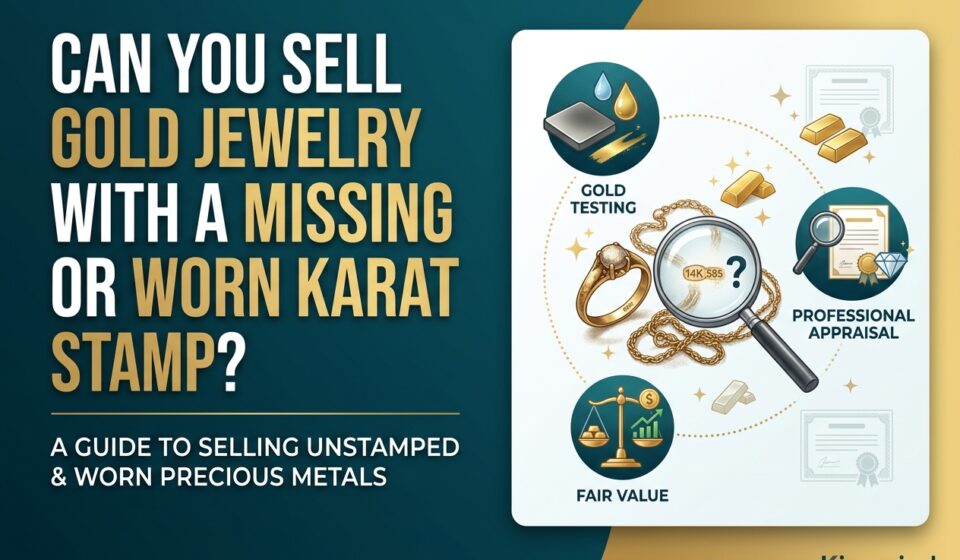
Gold jewelry does not automatically lose all value because its stamp is missing or unreadable. Wear, resizing, polishing, age, and repairs can weaken or remove a mark.
A professional buyer can inspect and test the metal before assigning a purity level. The verified karat and eligible weight matter more than the visibility of the original stamp.
What a Missing Stamp Means During a Sale
The buyer may review:
- Any remaining letters or numbers
- Colour and visible wear patterns
- Clasps, links, and soldered areas
- Signs of plating or filling
- Previous resizing or repair work
- Attached stones and decorative materials
- Results from professional purity testing
- Eligible gold weight after inspection
- Current market value and payout terms
A missing stamp should create a need for verification, not an immediate assumption that the item contains no gold.
How Buyers Evaluate Jewelry Without a Clear Stamp
The exact process depends on the piece, its construction, and the buyer’s equipment. More than one method may be used when the first result is uncertain.
Natural Stamp Wear
A karat stamp can fade after years of rubbing against skin, clothing, or other jewelry. Rings may lose markings during resizing or polishing, while thin chains and older pieces can have tiny stamps that become difficult to read.
Unstamped Jewelry
Custom, antique, handmade, or imported jewelry may not carry a familiar karat mark. A missing stamp does not prove the item is fake, but the buyer cannot rely on appearance alone and must verify the metal before assigning a purity level.
Visual Inspection
The buyer may first inspect colour, construction, wear patterns, clasps, repairs, and any remaining marks. Visual inspection helps identify where to test, but it cannot establish karat or distinguish solid gold from convincing plating.
Professional Purity Testing
Professional methods may include acid, electronic, or XRF testing, depending on the buyer and the piece. A guide to how gold buyers test jewelry explains why several methods can be used when markings are missing or results remain uncertain.
Plated and Gold-Filled Pieces
Plated and gold-filled jewelry can resemble solid gold, particularly when the outer layer remains intact. Testing may need to reach or analyse an exposed area because a surface-only reading can misrepresent the base metal underneath.
Weight Assessment
Once purity is established, the buyer weighs the eligible gold and considers stones, enamel, or other non-gold parts. An unstamped item is not automatically worth less, but its verified karat and recoverable weight drive the calculation.
Offer Calculation
The offer may reflect verified purity, eligible weight, the current market reference, and the buyer’s payout rate. Brand, condition, gemstones, or resale potential can matter, but an unreadable stamp does not determine the value alone.
Preparing Unstamped Jewelry for Evaluation
Careful preparation can protect small parts and help the buyer understand the item’s history. Avoid attempting your own destructive purity test.
Store Items Separately
Place each item in a separate bag or compartment. This prevents small parts from being lost before the evaluation.
Keep matching earrings, pendants, clasps, and chain sections together. Complete grouping makes identification easier.
Avoid Scratching the Metal
Do not scratch, file, or cut the jewelry to reveal fresh metal. Home damage can reduce condition without proving karat.
Leave testing to a buyer with suitable equipment. Ask whether the chosen method can leave a small mark on the piece.
Clean Only Lightly
Wipe away loose dirt with a soft, dry cloth. Heavy polishing is unnecessary and may further weaken an old marking.
Avoid harsh chemicals, abrasive paste, or unverified cleaning methods. They may affect stones, finishes, and solder.
Bring Available Documents
Bring receipts, appraisals, certificates, boxes, or repair records when available. They may help identify the item.
Documents do not replace purity testing, but they can provide useful context about brand, history, or earlier work.
Explain Previous Repairs
Tell the buyer about known repairs, resizing, missing parts, and replaced clasps. These details can guide testing areas.
A repaired section may contain solder or another alloy. The buyer may test more than one part when results differ.
Request the Test Result
Ask the buyer to show the karat result and explain the testing method. Clear answers make the valuation easier to follow.
Request the weight in a unit you understand. Confirm whether stones or non-gold components were excluded or adjusted.
Consider Another Evaluation
A second evaluation may be useful when results differ sharply or the testing process is unclear. Keep the first notes.
When seeking an additional evaluation from a buyer such as State Street Apparel & jewelry Rockford, compare purity, weight, market reference, and payout terms rather than focusing solely on the final cash offer.
Details to Confirm Before Accepting an Offer
A transparent evaluation should make the purity, weight, and calculation understandable. Ask for the following information:
- Assigned purity or karat level
- Testing method used during the evaluation
- Confirmation through an additional test when needed
- Eligible gold weight shown on the scale
- Handling of stones and non-gold components
- Market reference used for pricing
- Buyer’s payout rate
- Influence of condition, brand, or resale potential
- Freedom to review the offer without pressure
Do not assume that cleaning, repairing, or adding a new stamp will increase the sale value. These steps may cost money without changing the verified gold content.
Conclusion
Gold jewelry can be evaluated and sold when its karat stamp is missing, worn, or unreadable. A buyer can test the metal, determine its purity, weigh eligible gold, and account for stones or other materials. Sellers should avoid home damage, observe the process, and ask how the verified result shaped the offer.