
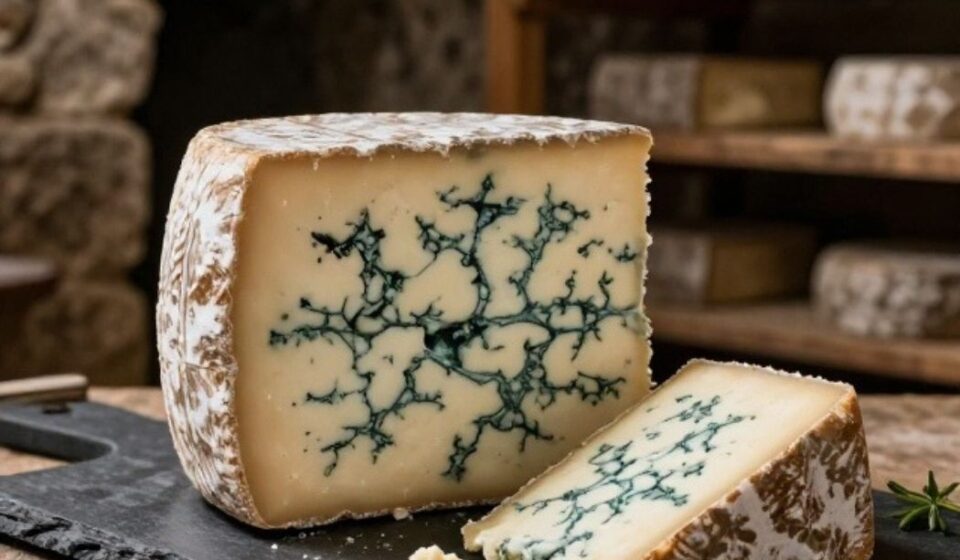
Roquefort Cheese: What if a single wedge of cheese could dictate international trade policy? For Roquefort, that isn’t a hypothetical. In 2003, the European Union’s highest court ruled in favor of geographical indicators for protected foods, explicitly naming Roquefort as a prime example of intellectual property that deserves legal shielding. Fast forward to 2026, and this blue-veined legend from southern France isn’t just a culinary delicacy—it’s a case study in terroir, microbiology, and the fierce politics of food authenticity.
Most people know Roquefort as “that blue cheese.” But that’s like calling a Ferrari “that red car.” Roquefort was the first cheese in France to receive a designation of origin in 1925, and it remains one of the most tightly regulated agricultural products on the planet. Every wheel must be made from raw Lacaune sheep’s milk, pierced to invite a specific fungus inward, and aged in the natural caves of Combalou Mountain for a minimum of 90 days.
In this deep dive, we’ll move past the salad dressing and explore what makes Roquefort tick: the science of its veins, the economics of its scarcity, practical ways to enjoy it without intimidation, and where this ancient cheese is headed in a world of climate change and lab-grown alternatives. Whether you’re a curious beginner or a seasoned turophile, by the end of this article, you’ll never look at a blue cheese crumble the same way again.
Background: A Cave, a Shepherd, and a Happy Accident
The Legend and the Law
The origin story of Roquefort is the stuff of romantic folklore. Legend tells of a young shepherd who, distracted by a beautiful maiden, left his lunch of bread and ewe’s milk curds in a nearby cave. Days later, he returned to find his food transformed by mold—and, driven by hunger, discovered it was delicious. That cave was in the Combalou Mountain near the village of Roquefort-sur-Soulzon.
While the myth is charming, the reality is grounded in remarkable geology. The Combalou plateau is riddled with natural faults called fleurines. These fissures create a constant, natural ventilation system that maintains a cool, humid, and remarkably stable microclimate inside the caves year-round. This isn’t just a nice environment—it is the only legal environment for aging Roquefort. By French decree, the affinage (aging) must take place in these specific caves, and even the final packaging and cutting must occur within the commune of Roquefort-sur-Soulzon.
From Local Secret to Global Icon
For centuries, Roquefort was a local treasure. Its rise to global fame began with the official recognition of its origin. The year 2025 marked the 100th anniversary of its first designation of origin, a century of legal protection that has preserved its traditional methods against industrialization. Today, the industry produces roughly 15,000 tonnes annually, a figure that has remained relatively stable due to the strict AOP (Appellation d’Origine Protégée) rules that limit supply. In 2026, the global Roquefort market is estimated at **$665.9 million**, with a projected growth to $872.2 million by 2032, driven by premiumization in North America and Asia.
The Science of the Veins: More Than Just Mold
Penicillium Roqueforti: The Domesticated Fungus
The blue-green marbling that defines Roquefort is the work of Penicillium roqueforti. But here’s a nuance most articles miss: this fungus has been domesticated by humans, much like wheat or dogs. Research has shown that P. roqueforti consists of four genetically distinct populations. Two thrive in other environments (like rotting wood), while two have been domesticated specifically for cheese-making.
The strains used for Roquefort are particularly special. Studies comparing different P. roqueforti populations found that the Roquefort strains produced higher amounts of aromatic compounds (like methyl ketones) and had more efficient proteolysis and lipolysis—meaning they break down proteins and fats more effectively to create that signature pungent, creamy flavor. They also lowered the water activity of the cheese more effectively, which is a crucial safety feature that prevents spoilage. So, when you taste Roquefort, you are tasting a fungus that has been selectively bred over centuries to be the best possible partner for sheep’s milk.
The Making of a Wheel: From Udder to Cave
The production process is deceptively simple but fiercely regulated:
-
The Milk: Only raw, whole milk from Lacaune sheep is permitted. The sheep must graze on the local flora, which influences the fatty acid composition of the milk and, consequently, the final aroma.
-
The Curd: The milk is curdled, and the curds are placed into molds. Unlike many cheeses, no pressing occurs. This allows the curd to drain naturally, creating the tiny, regular openings necessary for the mold to grow.
-
The Piercing: After the cheese is unmolded and salted (traditionally with dry sea salt for five days ), it is pierced with long needles. This allows air to enter the interior, inviting the Penicillium spores to germinate and create the blue veins.
-
The Cave: The wheels are moved into the Combalou caves. Here, they are exposed to the fleurine breezes for at least two weeks, allowing the mold to develop.
-
The Wait: After the initial aging, the cheese is wrapped to slow the mold’s growth and undergoes a slow maturation. The total aging period is a minimum of 90 days from the day of manufacture.
Practical Tips: How to Buy, Serve, and Love Roquefort
Buying the King
-
Look for the AOP Seal: In 2026, authenticity is everything. Look for the red and black oval AOP stamp. If it doesn’t say “Roquefort,” it’s just a blue cheese.
-
Check the Wrapper: Traditional Roquefort is wrapped in foil to slow oxidation. If you buy it pre-crumbled, you are paying for air and losing the precious moisture that makes it creamy. Buy a wedge or a whole wheel from a reputable cheese monger.
-
Color Check: The veins should be evenly distributed and range from deep blue to green. A cheese with brownish edges or excessive ammonia smell has likely been poorly stored.
Pairing Beyond the Salad
Roquefort’s salty, tangy punch can overwhelm delicate wines, but it shines with specific partners:
-
Sweet Wines: Sauternes, Port, or a late-harvest Riesling. The sweetness balances the salt and pungency perfectly.
-
Spirits: A peaty Scotch or an aged Armagnac. The complexity of the liquor stands up to the cheese’s intensity.
-
Food: Try it with a slice of pear and a walnut on a piece of crusty sourdough. The fat and sweetness of the pear mellow the bite. Avoid pairing it with highly acidic foods like citrus or vinegar-based dressings, which clash with the cheese’s alkalinity.
A Note on Nutrition
According to USDA data, a 1-ounce (28g) serving of Roquefort contains approximately 105 calories, 6 grams of protein, and 188 mg of calcium. It is also notably high in sodium (around 513 mg per ounce) . For those monitoring salt intake, Roquefort should be a flavor accent, not a main course. However, its rich calcium and protein content make it a satisfying addition to a balanced diet.
Common Mistakes and Challenges (and How to Fix Them)
Mistake #1: Serving It Ice Cold
The Problem: You pull it straight from the fridge and it tastes like salty chalk.
The Solution: Take Roquefort out of the refrigerator 30 to 45 minutes before serving. The fats need to soften to release the aromatic compounds. Room-temperature Roquefort is exponentially creamier and more complex.
Mistake #2: Confusing It with “Blue Cheese”
The Problem: You buy a generic blue cheese crumble expecting Roquefort’s depth and get a bland, rubbery topping.
The Solution: Understand the price difference. Roquefort is made from sheep’s milk (costlier than cow’s milk) and aged in specific caves. It is an artisan product. Use it sparingly as a luxury ingredient, not as a bulk salad topping. A little goes a long way.
Mistake #3: Improper Storage
The Problem: You wrap it tightly in plastic wrap, and it turns into an ammonia-soaked sponge.
The Solution: Cheese needs to breathe. Wrap Roquefort loosely in parchment paper or its original foil, then place it in a loosely closed container in the vegetable drawer. It will keep for several weeks. If it develops a slight ammonia smell, scrape the surface; if it penetrates deep, it’s past its prime.
Balanced Analysis: Pros, Cons, and the Future of Roquefort
The Pros
-
Unmatched Complexity: The combination of raw sheep’s milk, wild cave aging, and domesticated mold creates a flavor profile that cannot be replicated in a factory.
-
Cultural Heritage: Buying Roquefort supports a 100-year-old legal framework that protects traditional farming and prevents the homogenization of food.
-
Nutritional Density: It is a rich source of protein, calcium, and vitamin B12 .
The Cons and Challenges
-
Price and Accessibility: The strict AOP rules limit supply, making it expensive compared to industrial blue cheeses.
-
Acquired Taste: The pungency and saltiness are not for everyone. It is an intense experience.
-
Sodium Content: At over 1,800 mg per 100g, it is a high-sodium food. This is a real consideration for health-conscious consumers.
The 2026 Market Reality
The market for Roquefort is facing a paradox. On one hand, food inflation in key markets like Germany and France is moderating but still above pre-pandemic levels, making consumers more selective about premium purchases. On the other hand, the demand for authentic, story-driven luxury foods is growing. The UK market, for instance, remains highly import-dependent, with a strong retail concentration that favors brands with a clear heritage. To succeed in 2026, Roquefort producers are leaning into education and storytelling—convincing consumers that the $30 wedge is not just cheese, but a piece of protected French history.
Future Trends: What’s Next for the King?
The Color Revolution
In a fascinating twist straight out of a science lab, researchers have discovered how to change the color of blue cheese without altering its flavor. By disrupting the genes responsible for the blue pigment (DHN-melanin) in P. roqueforti, scientists have created strains that produce red, green, or white “blue” cheeses. While these are not legally Roquefort (which must be blue), this research could revolutionize the aesthetic appeal of blue cheeses globally, potentially attracting consumers who are put off by the moldy appearance. The flavor profiles remain largely the same, though tasters perceived the colored varieties as slightly milder or fruitier.
Sustainability and Climate Pressure
The Lacaune sheep that produce Roquefort’s milk are dependent on specific grazing patterns. As climate change alters the flora of the Aveyron region, producers may face challenges in maintaining the exact fatty acid profile of the milk. The AOP system, while protective, is also rigid. The industry will need to adapt its agricultural practices without breaking the legal definition of the cheese, a delicate balancing act.
The Premiumization of Blue
As generic blue cheese becomes a commodity, Roquefort is positioning itself in the ultra-premium segment, akin to fine wine. Expect to see more vintage-dated Roqueforts (aged beyond the 90-day minimum) and single-cave expressions marketed to collectors, similar to single-malt Scotch.
Conclusion: Key Takeaways
Roquefort is not just a cheese; it is a living artifact of French agricultural history, a triumph of microbiology, and a masterclass in branding and legal protection.
-
The Terroir is Real: The Combalou caves and the Lacaune sheep are not marketing gimmicks; they are legally mandated components of the product.
-
The Science is Delicious: The Penicillium roqueforti used in Roquefort is a domesticated strain specifically adapted to create the cheese’s signature aroma and texture.
-
Serve it Right: Room temperature, paired with sweet wine or fruit, and stored loosely wrapped in the fridge.
-
Respect the Price: You are paying for a 90-day minimum aging process, raw milk, and a 100-year-old system of origin protection.
Quick Summary Box
| Aspect | Key Insight |
|---|---|
| Milk | Raw, whole Lacaune sheep’s milk only. |
| Aging | Minimum 90 days in the natural Combalou caves. |
| Flavor | Pungent, salty, creamy, with notes of methyl ketones. |
| Pairing | Sauternes, Port, pears, walnuts. |
| 2026 Market | ~$666M global, growing at 4.6% CAGR. |
| Legal Status | First French AOC (1925), protected PDO. |
Detailed FAQs About Roquefort Cheese
1. Is Roquefort made from cow’s milk?
No. By law, Roquefort must be made exclusively from raw, whole sheep’s milk from the Lacaune breed. Cow’s milk blue cheeses (like Gorgonzola or Stilton) are entirely different products.
2. Why is Roquefort so expensive?
The price reflects three factors: the high cost of sheep’s milk compared to cow’s milk, the mandatory 90-day aging in specific natural caves (which limits production volume), and the strict AOP regulations that prevent mass industrialization.
3. Can I eat the rind?
The rind is edible but very salty and tough. Most connoisseurs leave the rind, but it is not harmful. If you find the rind too aggressive, simply scrape the surface with a knife before serving.
4. How long does Roquefort last after opening?
If wrapped loosely in foil or parchment and refrigerated, it will last for 3 to 4 weeks. If it develops a strong ammonia smell that doesn’t dissipate after 15 minutes at room temperature, it has spoiled.
5. What is the difference between Roquefort and Gorgonzola?
While both are blue cheeses, the differences are stark. Roquefort uses sheep’s milk and is aged in caves; it is sharp, salty, and crumbly. Gorgonzola uses cow’s milk and is typically creamier, milder, and aged for a shorter period. Roquefort’s flavor is generally more intense and complex.
6. Is the mold in Roquefort safe?
Yes. Penicillium roqueforti is a safe, edible mold that has been used for centuries. It is entirely different from the molds that cause food spoilage or the dangerous Penicillium species that produce toxins. The AOP regulations ensure strict safety standards.
Sources and Further Reading
-
INAO (Institut National de l’Origine et de la Qualité): Official specification for Roquefort PDO, detailing the 90-day aging and cave requirements.
-
Légifrance: French decree of January 22, 2001, governing the AOC Roquefort.
-
USDA Foreign Agricultural Service: Report on the EU’s 2003 ruling on Geographical Indicators, citing Roquefort as a protected product.
-
Science (AAAS): Coverage of the 2024 study on Penicillium roqueforti genetics and color manipulation.
-
USDA National Nutrient Database: Nutritional profile of Roquefort cheese (Report 01039).
-
Le Télégramme: Report on the 100th anniversary of Roquefort’s designation and production volume (15,000 tonnes).
FOR FURTHER INFORMATION, VISIT: THELUXURYLIFEMAGAZINE.COM