
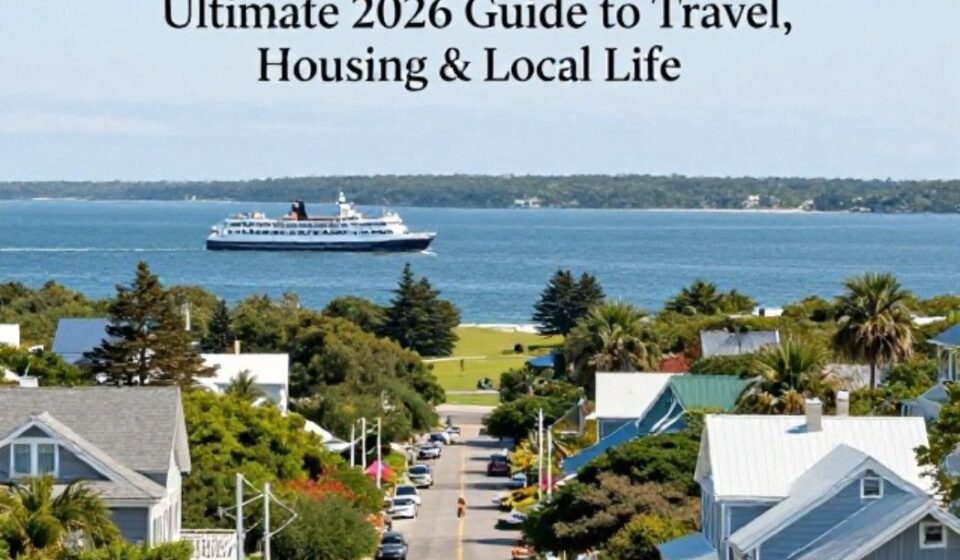
Martha’s Vineyard Island: Every summer, a small island off the coast of Massachusetts swells from roughly 23,000 year-round residents to a population that can exceed 200,000 on peak days. You’ve seen the gingerbread cottages, the presidential vacations, the Jaws references. But here’s what the postcards don’t show: Martha’s Vineyard is running a quiet experiment in what happens when paradise becomes too expensive for the people who keep it running.
The island’s median home price hovers around $1.5 million. Only about 40% of its housing inventory remains available for year-round occupancy. The hospital reports that 20% of its staff positions sit unfilled because workers can’t find a place to live. This isn’t a resort-town curiosity. It’s a case study in the future of seasonal communities everywhere.
Whether you’re planning a visit, dreaming of a move, or simply fascinated by how places work, this guide will give you the Martha’s Vineyard that locals know—not the one filtered for Instagram.
Background: Six Towns, One Island, Two Realities
Martha’s Vineyard isn’t one place. It’s six towns, each with a distinct personality and a different relationship to the seasonal economy.
Down-Island (Vineyard Haven, Oak Bluffs, Edgartown) holds about three-quarters of the year-round population and most of the commercial bustle. Up-Island (West Tisbury, Chilmark, Aquinnah) is quieter, sparser, and home to the dramatic clay cliffs that define the island’s western edge.
The seasonal math is staggering. The Martha’s Vineyard Commission’s 2024 Seasonal Population Estimate put the island’s likely peak summer population at approximately 94,650—about 4.6 times the year-round count. Some tourism sources cite figures up to 200,000, though methodologies vary. What’s not debated is the pressure: short-term rentals, second homes, and seasonal visitors shape an economy that year-round residents both depend on and struggle against.
Here’s the uncomfortable truth that most travel content avoids: the very thing that makes the Vineyard magical—its exclusivity, its quiet beauty, its resistance to overdevelopment—is also what’s strangling its workforce.
The Housing Paradox: When Paradise Evicts Its Workers
The Numbers Behind the Crisis
Walk down Circuit Avenue in Oak Bluffs on a July afternoon and you’ll see a thriving economy. What you won’t see is the machinery behind it—the cooks, the cleaners, the ferry workers, the nurses—many of whom commute from off-island or cram into seasonal housing that vanishes in September.
The data tells the story bluntly:
-
Median home price: ~$1.5 million
-
Affordability gap between median-income households and median home price: $927,500
-
Year-round rentals: in chronic shortfall, driving housing insecurity at all income levels
-
Homelessness: up to 130 individuals on any given day in Dukes County in 2024, with no year-round shelter facility on the island
The Martha’s Vineyard Hospital isn’t alone in its 20% vacancy rate. Fire departments, schools, and town halls all struggle to recruit and retain staff. When a paramedic can’t afford to live within response distance of the community she serves, that’s not a housing problem. That’s a public safety problem.
What’s Being Done—and Why It’s Not Enough
In 2022, voters in all six island towns approved a joint request to create an island-wide Housing Bank, funded by a real estate transfer fee on transactions over $1 million. As of 2026, that legislation is still being pursued. The island has been designated a Seasonal Community under Massachusetts law, giving towns new tools for public-employee housing preferences.
But here’s the nuance most coverage misses: building alone won’t solve this. The island has limited land and limited water capacity. A significant portion of the solution has to come from preserving existing year-round housing—buying down deed restrictions, converting short-term rentals back to long-term leases, and preventing the slow bleed of naturally occurring affordable units into the investment market.
The Vineyard is essentially trying to invent a new economic model for seasonal communities. Whether it succeeds will matter far beyond Cape Cod.
Getting There: The Ferry Is the Gatekeeper
The Steamship Authority Reality Check
If you want to bring a car to Martha’s Vineyard, you have exactly one option: the Steamship Authority from Woods Hole. It’s the only ferry service that carries vehicles, and it runs year-round.
Here’s what the booking sites don’t emphasize enough: summer car reservations sell out months in advance. The insider move is to sign up for Steamship Authority email alerts and set a reminder for when booking opens. If your exact date or time is unavailable, use the Wait List feature—locals report that wait-listed reservations often get fulfilled, though there are no guarantees.
Passengers, however, can walk onto any Steamship ferry without a reservation, year-round. That’s a crucial distinction: the Vineyard is accessible on foot, bike, or bus even when car slots are gone.
The No-Car Strategy (It’s Better Than You Think)
The Vineyard Transit Authority runs bus lines connecting all island towns, with stops at the airport and ferry terminals. The island’s bike paths are genuinely useful, not just scenic. And the down-island towns—Vineyard Haven, Oak Bluffs, Edgartown—are walkable in the way that small New England villages are meant to be.
For families, rental companies like MV Baby Rent deliver strollers, cribs, and high chairs to your lodging, saving you from hauling half your house onto a ferry.
What to Actually Do: Beyond the Bucket List
The Massachusetts Office of Travel and Tourism’s 2026 road trip guide highlights the expected—gingerbread cottages, Aquinnah Cliffs, the Flying Horses Carousel. Those are worth your time. But the island rewards people who go one layer deeper.
For the Curious Traveler
Polly Hill Arboretum in West Tisbury is open year-round and feels like a secret garden that happens to be a world-class botanical collection. Felix Neck Wildlife Sanctuary in Edgartown offers salt marsh trails and birdwatching that rival any nature preserve on the East Coast. The Martha’s Vineyard Museum in Vineyard Haven does the hard work of telling the island’s full story—including the Wampanoag presence that predates every summer cottage.
For the Hungry
The food scene has moved well beyond chowder and lobster rolls. Black Joy Kitchen in Oak Bluffs serves a culinary journey through the African Diaspora. Tigerhawk brings Peruvian flavors to Circuit Ave. Art Cliff Diner is the island-favorite breakfast spot that locals will argue about—in the best way.
One honest warning: restaurant hours shrink dramatically in the off-season. What’s open in July may be shuttered in November. Check ahead.
The Off-Season Advantage
Here’s the contrarian take: September and October are the island’s best months. The water is still warm, the crowds have thinned, and the light takes on that golden, elegiac quality that photographers chase. April and May offer similar rewards for different reasons—everything is blooming, nothing is booked, and you can actually get a dinner reservation.
The island’s museums, trails, and shops increasingly operate on a four-season model, even as some restaurants close for winter.
The Year-Round Reality: What Living Here Actually Means
The Remote Work Shift
The pandemic didn’t just change who visits the Vineyard. It changed who stays. Remote and hybrid work allowed people who once spent six weeks on the island to spend six months—or more. Real estate agents report that “seasonal” has become a much more elastic category.
This has extended the island’s economic season and created more year-round activity. But it hasn’t solved the workforce housing problem—it may have exacerbated it, as remote workers with mainland salaries compete for the same limited year-round rentals as teachers and nurses.
The Business Owner’s Math
A Vineyard Gazette comment from a long-time Oak Bluffs business owner lays out the arithmetic with brutal clarity: payroll has risen from $10–12 per hour to $20–25. Property taxes have soared. Insurance costs have spiked. Rent for employee housing, which he once charged at $150 per week, is now offered free—because no one can afford to pay it. His sales keep breaking records, and his margins keep shrinking.
His conclusion: “The Vineyard has never been and will never be a year-round economy.”
That’s a controversial statement. Others are working hard to build a more sustainable year-round model. But it captures the tension at the heart of the island’s identity: is it a community that happens to host tourists, or a tourism destination that happens to have residents?
Practical Tips: How to Visit Without Being Part of the Problem
Book everything early. Ferry car reservations, popular restaurants, and summer rentals all operate on a scarcity model. If you’re coming in July or August, start planning in January.
Stay longer, do less. The island rewards slow travel. A week in one town beats three days of frantic hopping. The ferry schedule encourages this—day-trippers get a taste, but overnighters get the island.
Shop locally, deliberately. The island’s economy leaks when visitors buy everything off-island. The Bunch of Grapes Bookstore, Alley’s General Store, and the local craft breweries keep money circulating where it matters.
Ask before you photograph. The gingerbread cottages are private homes. The Aquinnah Cliffs are sacred to the Wampanoag. Respect isn’t optional.
Consider the shoulder season. Your money goes further, your experience is richer, and you’re easing the pressure on infrastructure that strains under peak loads.
Common Mistakes and How to Avoid Them
Mistake 1: Assuming you can bring a car without a reservation. You can’t. The Steamship Authority requires advance booking for vehicles, and summer slots disappear early. Solution: Book the moment reservations open, or plan a car-free trip.
Mistake 2: Treating the island as a single destination. Martha’s Vineyard is six towns with different vibes. Edgartown is polished and historic; Oak Bluffs is lively and eclectic; Aquinnah is raw and sacred. Solution: Pick two or three towns that match your energy and explore them properly.
Mistake 3: Expecting big-city convenience. Things close. Buses run on island time. The pace is the point. Solution: Build slack into your itinerary. That’s what you came for.
Mistake 4: Ignoring the housing context. If you rent a short-term unit, you’re participating in a system that locals are actively trying to reform. That doesn’t make you the villain. But being aware matters. Solution: Stay in hotels or licensed B&Bs where possible, and tip generously—your server probably commutes from off-island.
Pros, Cons, and a Balanced Verdict
Pros:
-
Genuinely stunning natural beauty, from the Aquinnah Cliffs to the quiet up-island trails
-
Rich cultural and culinary scene that extends well beyond summer
-
Car-free accessibility via ferry, bus, and bike
-
A strong sense of place that mass tourism hasn’t erased
Cons:
-
Extreme seasonal crowding and infrastructure strain in July–August
-
Housing costs that make workforce stability nearly impossible
-
Limited off-season services, especially dining
-
Ferry logistics add friction for car-dependent travelers
The Verdict: Martha’s Vineyard is worth visiting, but visit with intention. Come in the shoulder season. Spend locally. Understand that the island’s beauty is not separate from its struggles—it’s the same story.
Future Trends: What to Watch Through 2030
The Housing Bank decision. If Massachusetts approves the real estate transfer fee legislation, the Vineyard becomes a national model for seasonal-community housing policy. If it fails, the crisis deepens.
Population decline—with a twist. UMass projections suggest the year-round population may decline from 2025 to 2050. But that’s not necessarily good news: a shrinking workforce serving a stable or growing seasonal population means even greater strain on those who remain.
Climate adaptation. The island’s coastlines are not static. Erosion at Aquinnah and flood vulnerability in low-lying areas will force hard conversations about what can and cannot be protected.
Remote work’s long tail. As more people can work from anywhere, the Vineyard’s “shoulder season” may continue to expand—creating economic opportunity but also intensifying housing competition.
Key Takeaways
-
Martha’s Vineyard is a seasonal community with a year-round identity crisis. The housing market, not the ferry schedule, is the island’s defining constraint.
-
Car reservations are mandatory and scarce in summer. Book early or go car-free—the bus and bike network is genuinely viable.
-
The island’s best experiences are often free or cheap: trails, beaches, arboretums, and the simple act of walking through towns with distinct personalities.
-
Shoulder season is the insider move. September–October and April–May offer better access, better prices, and a more authentic experience.
-
The housing crisis is not a visitor’s problem to solve, but it is a visitor’s context to understand. The people serving your dinner may be commuting from Cape Cod because they can’t afford to live where they work.
-
The Vineyard is experimenting with solutions—Housing Bank, Seasonal Communities designation, deed restrictions—that will be watched by resort towns nationwide.
Frequently Asked Questions
How many people live on Martha’s Vineyard year-round?
Approximately 23,000 year-round residents, according to the island’s official tourism site, though Census figures for 2020 counted about 20,530 permanent residents. The summer population can swell to nearly 100,000 or more on peak days, depending on methodology.
Do I need a car on Martha’s Vineyard?
No. The Vineyard Transit Authority bus system connects all towns, and the island has extensive bike paths. Bringing a car requires an advance Steamship Authority reservation that often sells out months ahead. Many visitors find car-free travel less stressful and more enjoyable.
When is the best time to visit?
September and October offer warm water, smaller crowds, and full-service hospitality. April and May are excellent for quiet walks and lower rates. July and August are peak season—vibrant but crowded and expensive.
Is Martha’s Vineyard expensive?
Yes, significantly. The median home price is around $1.5 million, and lodging costs reflect the island’s exclusivity. Budget travelers can manage by camping, staying in hostels (limited options), or visiting in shoulder season.
What’s the housing crisis about?
The island’s housing stock is dominated by seasonal and investment properties, leaving little available for year-round workers. Essential staff—nurses, teachers, firefighters—often cannot afford to live on-island, leading to staffing shortages and long commutes from Cape Cod.
Can I visit Martha’s Vineyard without a car and still see the island?
Absolutely. The ferry drops you in Vineyard Haven or Oak Bluffs, both walkable towns with bus connections to Edgartown, West Tisbury, and Aquinnah. Biking is also popular and practical on the island’s network of paths.
Sources: Martha’s Vineyard Island
This article draws on data and reporting from the following sources:
-
Martha’s Vineyard Chamber of Commerce / mvy.com — Official tourism information, ferry guidance, population figures, and visitor tips
-
Massachusetts Office of Travel and Tourism (VisitMA) — 2026 road trip guide to island attractions and dining
-
Town of Tisbury Housing Production Plan (2026) — Data on housing insecurity, homelessness, seasonal population, and policy recommendations
-
Martha’s Vineyard Commission — Seasonal Population Estimate (2024), population projections, and housing needs assessment data
-
West Tisbury Town Hall / Letters on Housing Bank legislation (2025) — Median home price, affordability gap, and housing stock data
-
The Vineyard Gazette — Local business owner perspective on seasonal economy
-
Island Health Care Community Health Needs Assessment (2025) — Healthcare access data and workforce housing context
-
Sotheby’s International Realty / The Agency — Real estate market context and buyer trends
FOR FURTHER INFORMATION, VISIT: THELUXURYLIFEMAGAZINE.COM