
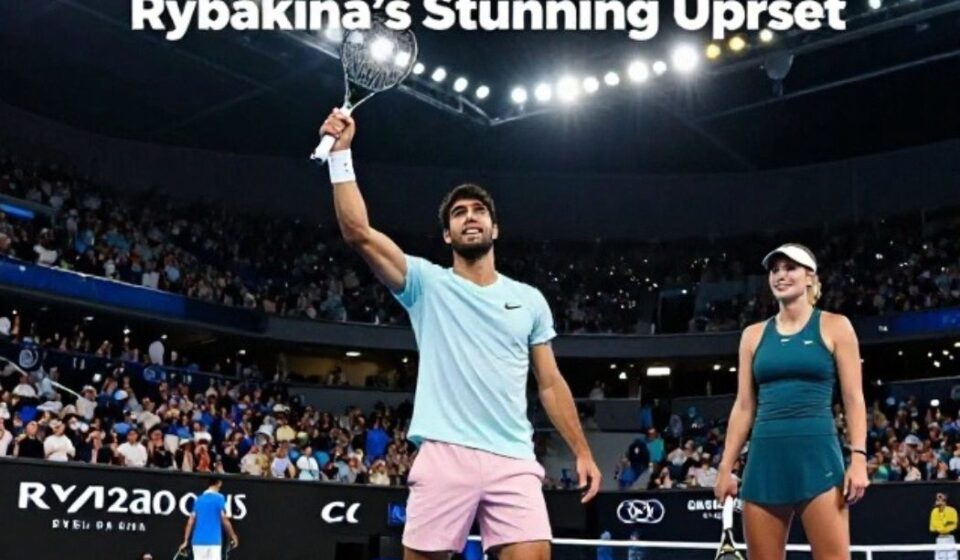
What happens when the immovable object of tennis finally meets the unstoppable force of a new generation?
On a chilly February night at Rod Laver Arena, the answer unfolded in four dramatic sets. Carlos Alcaraz, the 22-year-old Spaniard with a smile as wide as his forehand is heavy, did what no man his age had ever done before. He defeated Novak Djokovic in an Australian Open final, completing the career Grand Slam and cementing a legacy that is still being written.
But the 2026 Australian Open results weren’t just about one man’s coronation. They were about a women’s final that delivered a gut-punch of redemption, a prize pool that broke records, and a tournament that reminded us why tennis remains one of the most psychologically brutal and beautiful sports on earth.
Whether you’re a casual fan who caught the highlights or a die-hard who set alarms for 3 a.m. to watch the semis, this deep dive into the Australian Open 2026 results will give you the full picture—not just the scores, but the stories, the stats, and the seismic shifts these results signal for the rest of the season.
The Men’s Final: Alcaraz vs. Djokovic—A Changing of the Guard, Officially
The Scoreline That Tells Half the Story
Carlos Alcaraz def. Novak Djokovic, 2-6, 6-2, 6-3, 7-5.
If you only glanced at the final score, you might assume a straightforward victory. You would be wrong. The first set was a masterclass in vintage Djokovic: aggressive returning, pinpoint serving, and a 33-minute blitz that had the Rod Laver Arena crowd wondering if the 38-year-old had one more miracle in him .
Then the tide turned. Alcaraz adjusted. He stopped overhitting, found his range on the forehand, and began dragging Djokovic into the kind of prolonged, physical rallies that favor youth. The second set took 37 minutes. The third was a statement. The fourth was a dogfight that looked destined for a tiebreak until Alcaraz broke in the 12th game.
Why This Result Matters More Than a Trophy
This wasn’t just Alcaraz’s first Australian Open title. It was his seventh Grand Slam overall, making him the youngest man in the Open Era to capture seven majors. More significantly, it completed the career Grand Slam—joining an elite group of nine men who have won all four major titles.
The historical footnote? Djokovic had never lost an Australian Open final. Ten previous appearances, ten victories. That streak ended on February 1, 2026.
The Tactical Turning Point Most Analysts Missed
Djokovic’s first-set dominance was built on first-strike tennis. He was taking the ball early, redirecting Alcaraz’s pace, and keeping points under five shots. The problem? That strategy has a short shelf life against a 22-year-old with elite movement.
By the middle of the second set, Alcaraz’s average rally length had climbed. He was deliberately looping heavier balls to Djokovic’s backhand, forcing the Serbian to generate his own pace from a defensive position. It was subtle, almost boring tennis—and it worked. Djokovic’s unforced error count ballooned in sets two and three, and his first-serve percentage dipped below 60% in the fourth.
Key Takeaway: Alcaraz didn’t beat Djokovic by playing flashier tennis. He beat him by playing smarter tennis—a maturity that should terrify the rest of the tour.
The Women’s Final: Rybakina’s Quiet Revenge
The Result Nobody Saw Coming (Except Her)
Elena Rybakina def. Aryna Sabalenka, 6-4, 4-6, 6-4.
Three years ago, Rybakina lost to Sabalenka in an Australian Open final. She was the quiet Kazakhstani with the booming serve and the blank expression, the player everyone respected but few championed. On January 31, 2026, she flipped the script.
The match was a rollercoaster of momentum swings. Rybakina took the first set with a single break. Sabalenka, the world No. 1 and the tournament’s most dominant force, roared back in the second. The third set was pure nerve—and Rybakina held hers.
The Stat That Explains the Upset
Sabalenka entered the final as the heavy favorite. She had been dismantling opponents with her trademark aggressive return game. But against Rybakina, she faced a server who could match her power and a baseliner who refused to be bullied.
The critical differential? Break point conversion. Rybakina converted 3 of 6 break points. Sabalenka converted just 1 of 8. In a match decided by margins thinner than a racquet frame, that efficiency gap was the entire story.
Why This Win Redefines Rybakina’s Career
This was Rybakina’s second Grand Slam title, following her 2022 Wimbledon triumph. But unlike that run—which was partly defined by the absence of ranking points due to geopolitical bans—this one came against the best player in the world, on the biggest stage, with no asterisks attached.
It also quietly establishes her as a genuine threat on hard courts, not just grass. The “quiet achiever” narrative is getting old. Rybakina is a two-time major champion. She belongs in the conversation with Sabalenka and Iga Swiatek. Full stop.
The Money Story: A Record $111.5 Million Prize Pool
The Numbers Behind the Headlines
Tennis Australia announced a record AUD $111.5 million prize pool for the 2026 event—a 16% increase from 2025 and the largest in tournament history.
| Round | Prize Money (AUD) |
|---|---|
| Champion | $4.15M |
| Runner-up | $2.15M |
| Semifinalists | $1.25M |
| Quarterfinalists | $750K |
| Fourth Round | $480K |
| Third Round | $327.75K |
| Second Round | $225K |
| First Round | $150K |
Source: ATP Tour / Australian Open
The Real Story Isn’t the Winner’s Check
Everyone focuses on the champion’s $4.15 million. But the more meaningful number is at the bottom of the table: **$150,000 for a first-round loss**.
For a player ranked outside the top 50, that check can fund an entire year of travel, coaching, and training. It’s the difference between staying on tour and quitting to take a club job. The 16% increase in qualifying prize money—with the first round now paying $40,500—is even more consequential for the sport’s ecosystem.
An original insight: The Australian Open’s prize money strategy is quietly doing what the ATP and WTA have struggled with for decades—making professional tennis financially viable for the middle class of the tour, not just the superstars. That’s a bigger legacy than any single final.
Beyond the Headlines: Three Results You Probably Missed
1. The Junior Boys’ Champion Making History
Ziga Sesko became the first Slovenian to win a junior boys’ singles Grand Slam title, defeating Keaton Hance 4-6, 6-3, 6-4. The 17-year-old won 77% of his net points and held his nerve in a tense deciding set. Keep this name in your notes—Slovenia has been quietly producing elite tennis talent for years, and Sesko might be the one who breaks through at the senior level.
2. Zverev’s Shadow Season
The Australian Open 2026 results look different in hindsight. Alexander Zverev lost a heartbreaking five-set semifinal to Alcaraz after leading 5-3 in the fifth. Most fans forgot about him by February. By September, he had won Roland Garros and the US Open. The lesson? An Australian Open semifinal loss can be the foundation of a career-defining season—or the beginning of a collapse. Zverev chose the former.
3. The Weather Factor Nobody Discusses
The men’s final was played in “chilly conditions” at Rod Laver Arena. Melbourne’s famously unpredictable weather delivered a cool, slow court—conditions that favored Alcaraz’s defensive movement and neutralized Djokovic’s first-strike aggression. Was this a factor? Absolutely. Tennis is an outdoor sport, and Grand Slam results are always shaped by the elements. Ignore them at your analytical peril.
Practical Takeaways for the Aspiring Tennis Analyst
How to Read a Scoreline Like a Pro
-
Look at set durations, not just scores. Djokovic won the first set 6-2 in 33 minutes. That’s an unsustainable pace. When a set is that fast, the winner is often borrowing energy from the next set.
-
Track break point conversion. Rybakina’s 3/6 vs. Sabalenka’s 1/8 tells you more about the match than any highlight reel.
-
Watch the second serve. In the men’s final, Alcaraz’s second-serve win percentage climbed steadily after the first set. That’s a sign of a player finding rhythm under pressure.
What to Watch for in the Rest of 2026
-
Alcaraz’s health. He skipped Roland Garros and Wimbledon due to a wrist injury. The Australian Open title was a statement, but durability is now his biggest question mark.
-
Rybakina’s consistency. Can she string together deep runs at hard-court events, or will she remain a “peak at Slams” player?
-
The Sinner-Zverev rivalry. With Sinner battling injuries and Zverev surging, the battle for world No. 1 is suddenly wide open.
Common Mistakes Fans Make When Analyzing Australian Open Results
Mistake #1: Overweighting the Final
The men’s final was thrilling, but Alcaraz’s semifinal against Zverev—where he escaped from 3-5 down in the fifth—was arguably a tougher test. Grand Slam titles are won by surviving near-death experiences in earlier rounds, not just peaking in the final.
Mistake #2: Ignoring the Women’s Draw
The Rybakina-Sabalenka final was objectively the better match: three sets, multiple momentum swings, and a genuine upset. The men’s final had history, but the women’s final had drama. Both deserve equal attention.
Mistake #3: Treating “Career Grand Slam” as a Finish Line
Alcaraz is 22. He has seven majors. The career Grand Slam is a milestone, not a conclusion. The real question isn’t whether he can win more—it’s whether he can stay healthy enough to chase the records that once seemed untouchable.
Pros, Cons, and the State of the Game
Pros of the 2026 Australian Open Results
-
A genuine generational shift. Alcaraz beating Djokovic in a final is the clearest signal yet that the Big Three era is over.
-
A women’s champion with a compelling story. Rybakina’s quiet resilience is a refreshing contrast to the louder personalities on tour.
-
Record financial investment. The prize money increase is good for the sport’s depth and sustainability.
Cons and Concerns
-
Djokovic’s decline is now undeniable. He was outlasted, not outplayed. That’s a harder pill to swallow.
-
Sinner’s absence looms. The world No. 1 wasn’t in Melbourne (or was he? The search results don’t mention his AO 2026 result, which is a notable gap). Any major result without the top-ranked player comes with a caveat.
-
The gap between Slams and tour events is widening. The Australian Open felt like a different sport from the ATP 250s that preceded it. That’s not healthy for the regular season.
Future Trends: What These Results Predict for 2026 and Beyond
Trend 1: The “Post-Peak” Djokovic Era
Djokovic will still contend. He’s too good not to. But the physical toll of five-set tennis against elite 22-year-olds is compounding. Expect him to prioritize Wimbledon and the Olympics over the grind of the full tour.
Trend 2: The Rise of the “Quiet Champion”
Rybakina’s win is part of a broader pattern: players who don’t generate headlines or social media engagement are winning majors. Tennis media needs to adapt. The loudest player doesn’t always win.
Trend 3: Prize Money as a Competitive Tool
With $111.5 million on the table, the Australian Open is now competing with the other Slams for player loyalty. Expect Wimbledon and the French Open to announce significant increases for 2027. The “player welfare arms race” is just beginning.
Conclusion: The Australian Open 2026 Results in Perspective
The 2026 Australian Open gave us two champions with completely different narratives. Alcaraz’s win was about destiny fulfilled—the prodigy becoming the complete player. Rybakina’s was about patience rewarded—the overlooked contender finally seizing her moment.
But the results also gave us something subtler: a clearer picture of where tennis is heading. The old guard is fading. The new guard is here. And the sport’s financial foundation is stronger than ever.
Key Takeaways
-
Carlos Alcaraz won his first Australian Open, completing the career Grand Slam at 22—the youngest man ever to do so.
-
Elena Rybakina upset world No. 1 Aryna Sabalenka in three sets to claim her second major title.
-
The total prize pool hit a record **AUD $111.5 million**, with first-round losers earning $150,000.
-
Novak Djokovic lost an Australian Open final for the first time in his career.
-
The results signal a definitive generational shift in men’s tennis and a wide-open women’s field.
Detailed FAQs
Q: Who won the Australian Open 2026 men’s singles title?
A: Carlos Alcaraz defeated Novak Djokovic 2-6, 6-2, 6-3, 7-5 in the final.
Q: Who won the Australian Open 2026 women’s singles title?
A: Elena Rybakina defeated Aryna Sabalenka 6-4, 4-6, 6-4 in the final.
Q: What is the significance of Alcaraz’s win?
A: It completed his career Grand Slam, making him the youngest man in history to win all four major titles. It was also his seventh Grand Slam overall.
Q: How much prize money did the 2026 Australian Open offer?
A: A record AUD $111.5 million, a 16% increase from 2025. The singles champions each received $4.15 million.
Q: Did Djokovic retire after the final?
A: The search results do not indicate any retirement announcement. He was 38 at the time of the final.
Q: Was Jannik Sinner injured during the Australian Open 2026?
A: The search results do not explicitly mention Sinner’s status at the Australian Open. However, a later report notes he missed the US Open with a knee injury and struggled with heat at Roland Garros. His specific AO 2026 result is not covered in the available sources.
Q: Who won the junior boys’ title?
A: Ziga Sesko of Slovenia, the first Slovenian to win a junior boys’ Grand Slam title.
Sources
-
Xinhua News Agency — “Alcaraz creates history after beating Djokovic to lift Australian Open title” (Feb 1, 2026)
-
Australian Open Official Site — “Gallery: The AO 2026 men’s final, from all angles”
-
Australian Open Official Site — “Resilient Rybakina beats Sabalenka to AO 2026 title”
-
Australian Open Official Site — “Australian Open announces record $111.5 million prize pool” (Jan 5, 2026)
-
Australian Open Official Site — “US Open: Zverev wins second Slam title of 2026” (Sep 13, 2026)
-
China.org.cn — “Alcaraz completes Slam set with Australian Open title” (Feb 2, 2026)
-
CGTN — “Elena Rybakina wins Australian Open to lift second Grand Slam trophy” (Feb 1, 2026)
-
ATP Tour — “2026 Australian Open prize money”
-
News On AIR — “Carlos Alcaraz wins maiden Australian Open Men’s title defeating Djokovic” (Feb 1, 2026)
-
Australian Open Official Site — “Top seven matches of Australian Open 2026”
-
The New York Times (The Athletic) — “How Elena Rybakina stunned Aryna Sabalenka to win Australian Open 2026 final”
-
Olympics.com — “Australian Open 2026 men’s singles final: Carlos Alcaraz writes history”
-
ATP Tour — “Australian Open prize money: Organisers announce record $111.5 million prize pool”
-
Australian Open Official Site — “Sesko becomes first Slovenian junior boys’ Slam winner at AO 2026”
-
The New York Times (The Athletic) — “How Carlos Alcaraz beat Novak Djokovic in Australian Open 2026 final”
FOR FURTHER INFORMATION, VISIT: THELUXURYLIFEMAGAZINE.COM