
Quick Summary (For the Scanners)
-
The series is level at 1–1 after two tense, one-goal matches in 2026, with both sides winning away from home.
-
Utah Royals FC are the upwardly mobile contender—climbing from 12th in 2025 to playoff debutants in 2026.
-
Boston Legacy FC are the expansion disruptors—built from scratch without a draft, powered by a European coaching brain trust and a Malian forward who scores late.
-
The tactical contrast is stark: Utah’s possession-and-patience against Boston’s aggressive high press and vertical transitions.
-
The real story is what this matchup reveals about NWSL’s new competitive math: no easy games, no automatic wins, and expansion sides that refuse to play the role of pushovers.
Introduction: The Night 8,112 Fans Learned a Hard Lesson About NWSL Parity
It was supposed to be a routine home fixture for a team chasing a top-three finish. Utah Royals FC, sitting third in the 16-team NWSL table, hosting an expansion side languishing in 15th. On paper, the September 4, 2026, match at America First Field looked like a points-guaranteed evening for the Royals.
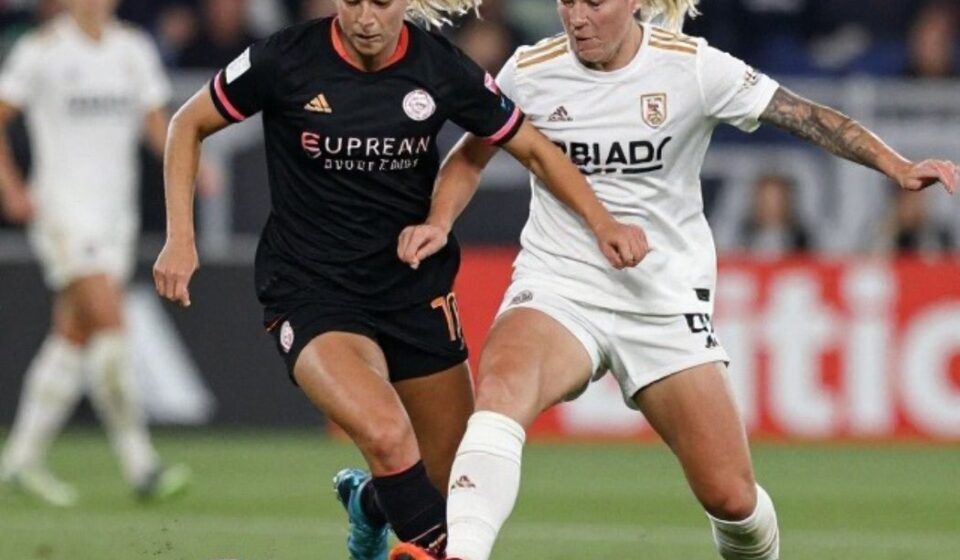
Then Aïssata Traoré scored inside 12 minutes. Kiana Palacios equalized for Utah. The game settled into a tense, physical grind. And in the 86th minute, Nicki Hernandez’s cross found Aleigh Gambone at the back post for a diving header that silenced the home crowd and handed Boston Legacy FC a 2–1 road victory.
“We were out-worked,” Utah center back Kate Del Fava admitted afterward. “They wanted it to be physical, and we allowed them to play physical. They thrive on that, and they have nothing to lose”.
That single night captures everything fascinating about Utah Royals FC vs Boston Legacy—a fixture that didn’t exist before 2026 and yet already carries the weight of a genuine rivalry. It’s a matchup that pits a club rediscovering its identity against a club inventing one from scratch. It’s a laboratory for how NWSL’s new economic and competitive rules are reshaping the league. And it’s a reminder that in modern women’s soccer, the gap between “contender” and “expansion team” is narrower than the table suggests.
This is the deep dive most match previews won’t give you.
Background: Two Clubs, Two Very Different Roads to 2026
Utah Royals FC: The Second Act That Finally Clicked
The Utah Royals name carries history. The original club played in NWSL from 2018 to 2020 before the franchise was sold and relocated, eventually becoming the Kansas City Current. Real Salt Lake ownership brought the Royals back in 2024, but the first two seasons of the revival were difficult: an 11th-place finish in 2024 and a 12th-place finish in 2025, with a 5–13–7 record that left the club searching for answers.
The 2026 turnaround wasn’t a fluke. It was the product of roster continuity, smart retention decisions, and a tactical identity built around midfield control and patient buildup. Utah returned 17 players from the 2025 squad, locking in core pieces like goalkeeper Mandy McGlynn (under contract through 2029), defenders Kate Del Fava and Nuria Rábano, and a forward line featuring Japanese international Mina Tanaka and Slovenian striker Lara Prašnikar.
The results came fast. By late May, Utah had rattled off a 7–2–2 start and briefly sat atop the NWSL standings—the best start in the club’s history. By early September, they were third overall with 39 points from 22 matches. And by late October, they had clinched their first-ever playoff berth.
This is a club that has moved from afterthought to arrival.
Boston Legacy FC: The Expansion Experiment Without a Safety Net
Boston Legacy FC’s entry into NWSL was historic for reasons that had nothing to do with results. Alongside fellow expansion side Denver Summit, Boston joined the league under a new collective bargaining agreement that eliminated both the expansion draft and the collegiate draft—making them the first NWSL clubs to build a roster entirely through free agency, international recruitment, and direct signings.
That meant no safety net. No inherited NWSL veterans from other clubs. No draft-day windfall. General manager Domènec Guasch, who came from FC Barcelona, and head coach Filipa Patão, who arrived from Portuguese powerhouse Benfica, had to construct a competitive squad from the global market.
They built a roster that looked more like a mid-major European national team than a traditional expansion side: players with ties to the U.S., Brazil, Colombia, Mexico, Canada, Japan, Uganda, Venezuela, Spain, and Mali. More than half the roster—14 of 24 players—had never played in NWSL before.
The learning curve was steep. Boston opened with a 1–0 loss to defending champions Gotham FC in front of a record-breaking 30,207 fans at Gillette Stadium, then lost their next two matches by a combined 4–0 scoreline before finally scoring their first goal—against Utah—in a 2–1 defeat on March 28. They didn’t win their first match until May, against Denver. By season’s end, they were eliminated from playoff contention, finishing 13th with a 9–5–14 record and a −9 goal difference.
But the record doesn’t tell the full story. This is a team that drew 30,000 fans to its inaugural match, ended the season with four wins in its last six games, and developed a clear identity under Patão: aggressive, physical, high-pressing soccer with vertical ambition. The results were uneven. The foundation was not.
The 2026 Head-to-Head: Two Matches, Two Mirrored Outcomes
Match 1: Boston 1–2 Utah (March 28, 2026 — Gillette Stadium)
The first-ever meeting between these clubs was Utah’s first win of the season and Boston’s third consecutive defeat to open their inaugural campaign. It followed a script that would become familiar: Utah built a two-goal lead through a Tatumn Milazzo header and a powerful Lara Prašnikar finish, only for Boston to pull one back through Aïssata Traoré—the first goal in club history—before halftime.
The underlying numbers hinted at what was coming. Boston competed. They generated chances. They just couldn’t convert enough of them. At that point in the season, they had scored just once in three matches and were still searching for their tactical footing under Patão.
Match 2: Utah 1–2 Boston (September 4, 2026 — America First Field)
Five months later, the mirror image. Boston, now a more coherent and confident side despite their league position, went toe-to-toe with a Utah team chasing a top-three seed. Traoré scored early. Palacios equalized. Boston out-shot Utah 14–9, held 52% possession, and limited the hosts to just three shots on target. Then Gambone’s late header delivered all three points to the visitors.
The result ended Boston’s five-match losing streak and snapped Utah’s momentum at a critical juncture of the playoff race. More importantly, it completed a perfectly symmetrical head-to-head series: two matches, two 2–1 scorelines, one win apiece, both victories coming on the road.
| Match | Date | Venue | Result | Scorers |
|---|---|---|---|---|
| Boston Legacy vs Utah Royals | March 28, 2026 | Gillette Stadium | Boston 1–2 Utah | Traoré (BOS); Milazzo, Prašnikar (UTA) |
| Utah Royals vs Boston Legacy | September 4, 2026 | America First Field | Utah 1–2 Boston | Palacios (UTA); Traoré, Gambone (BOS) |
Tactical Deep Dive: Why This Matchup Is a Chessboard
Utah’s Blueprint: Control the Middle, Strike Through the Lines
Utah’s 2026 identity is built on midfield control and patient buildup, with a forward line capable of both combination play and individual brilliance. The Royals’ attacking output is distributed across multiple threats: Mina Tanaka led the club with 8 goals, Cloé Lacasse added 7 and contributed a record-tying 10 assists, and Kiana Palacios chipped in 4 crucial strikes.
Lacasse’s assist record deserves its own paragraph. Her 10 assists tied the all-time NWSL single-season mark held by Tobin Heath (2016) and Croix Bethune (2024), and she became the first player in league history to assist goals for eight different teammates in a single regular season. That statistic reveals the core of Utah’s tactical philosophy: shared responsibility, unpredictable distribution, and a refusal to rely on a single creator.
Defensively, Utah are organized but not infallible. The 2–1 loss to Boston exposed a vulnerability to high-pressing, physical opponents who can disrupt their rhythm in midfield and force them into hurried clearances. Kate Del Fava’s post-match comments were telling: Utah felt they were “out-worked” and “played into their hands” against a team that “thrives” on physicality. For a side with playoff ambitions, that’s a blueprint opponents will study.
Boston’s Blueprint: Press High, Win the Ball, Go Vertical
Filipa Patão arrived in Boston with a clear promise: “My teams are very, very competitive, very intense, very aggressive. I like to press”. She delivered on that promise, even as the results fluctuated.
Boston’s tactical setup evolved over the season. Early on, Patão experimented with a two-striker look—Aïssata Traoré and Ella Stevens—with Brazilian signing Amanda Gutierres beginning on the bench. The emphasis was on building from the back and controlling possession through midfield, but the most dangerous outlet was always the ball over the top to Traoré, whose speed and movement in behind defenses dictated much of Boston’s offense.
Traoré finished the season as Boston’s leading scorer with 10 goals, and her late-game production became a defining feature of the team’s character. Five of her seven goals by early September had come in the 76th minute or later. That’s not just a statistical quirk—it’s a reflection of a team that, despite its expansion status, refused to fade in the final stages of matches. The Gambone winner against Utah was the purest expression of that mentality: a late, decisive moment from a player who had been on the fringes of the attack, delivered through sheer persistence.
The weakness? Boston’s press can be bypassed. Utah’s first victory came by playing through the lines and exploiting the space behind Boston’s advanced midfield. The Royals’ second match against Boston showed that when Utah could match Boston’s physical intensity, they could create chances—but when they couldn’t, the game tilted decisively toward the expansion side.
Key Players Who Define the Fixture
Aïssata Traoré (Boston Legacy FC, FW)
The Malian forward is the heartbeat of Boston’s attack. She scored the club’s first-ever goal against Utah in March, opened the scoring in the September rematch, and finished the season with 10 goals. Her ability to time runs in behind defenses and her late-game sharpness make her the single most dangerous player in this matchup.
Cloé Lacasse (Utah Royals FC, FW)
Lacasse is Utah’s creative engine. Her 10 assists tied an NWSL single-season record, and her ability to link midfield and attack through half-spaces is central to Utah’s possession game. When Boston’s press succeeds in isolating Lacasse, Utah’s attacking fluency drops. When she finds pockets of space, Utah become a different team.
Mina Tanaka (Utah Royals FC, FW)
The Japanese international is Utah’s leading scorer with 8 goals and a clinical presence in the box. Her movement off the shoulder of the last defender and her penalty-box composure give Utah a reliable focal point when buildup play breaks down.
Aleigh Gambone (Boston Legacy FC, FW)
Gambone’s late winner in September was the defining moment of the head-to-head series—a diving header from a player who had been on the periphery of the starting XI. Her impact off the bench exemplifies Boston’s depth and Patão’s willingness to trust squad players in high-leverage moments.
Mandy McGlynn (Utah Royals FC, GK)
McGlynn’s punt-assisted goal against Boston—finding Palacios over the midfield for the equalizer—was one of the most unusual and important moments of the fixture. Her distribution and shot-stopping are integral to Utah’s ability to play out from the back under pressure.
Practical Tips for Fans and Analysts Watching This Fixture
1. Watch the first 15 minutes of each half closely. Boston’s press is most intense immediately after kickoff and after halftime. Utah’s ability to survive those windows without conceding determines the game’s shape.
2. Track Traoré’s runs, not just her touches. Boston’s most dangerous moments come from balls played into space behind the defense. Traoré’s off-ball movement is the trigger.
3. Monitor Lacasse’s positioning. If she drifts centrally and finds pockets between Boston’s midfield and defense, Utah will create chances. If Boston pins her wide, Utah’s attack becomes more predictable.
4. Expect late drama. Both matches in 2026 featured decisive goals in the final 15 minutes. Boston, in particular, has a pattern of scoring late—five of Traoré’s seven goals by early September came after the 76th minute.
5. Don’t read too much into the table. Utah finished 6th with 46 points; Boston finished 12th with 32. But the head-to-head was level, both wins were away, and the goal difference across the two matches was 3–3. This is a matchup where form and standings matter less than tactical execution and physical intensity.
Common Mistakes and Challenges (And How to Solve Them)
Mistake 1: Treating Boston as a “Typical Expansion Team”
The biggest analytical error is assuming that expansion status equals weakness. Boston’s roster was built without a draft, but it was built with intention: a European coaching staff, a global scouting network, and a clear tactical identity. The 2–1 win at Utah was not a fluke—it was the product of a team that had learned to compete in the league’s toughest moments.
Solution: Evaluate Boston by their tactical coherence and late-game resilience, not their points total. Their end-of-season form—four wins in their last six—suggests a team that is closer to contention than the table implies.
Mistake 2: Assuming Utah’s Possession Game Is Immune to Pressure
Utah’s strength is their midfield control. But Boston’s high press exposed a vulnerability: when Utah are forced into hurried decisions and physical duels, their rhythm breaks. Del Fava’s admission that Utah were “out-worked” is a warning sign for playoff opponents.
Solution: Utah need a secondary plan against high-pressing teams—a more direct outlet, quicker switches of play, or a willingness to go long to Tanaka earlier in possessions. The McGlynn-to-Palacios goal was an accidental version of this; Utah should make it intentional.
Mistake 3: Overlooking the Role of Set Pieces and Transitions
Both head-to-head matches featured goals from open play, but the underlying pattern is clear: Boston’s best chances come from transitions and late-game set-piece sequences, while Utah’s come from sustained possession and midfield overloads. Teams that ignore these patterns will be surprised by the moments that decide the game.
Solution: For Utah, improving defensive transition discipline is essential. For Boston, converting more of their pressing wins into shots on target is the next step.
Pros, Cons, and a Balanced Analysis of the Matchup
What Makes This Fixture Great
-
Competitive balance: Two matches, two 2–1 scorelines, one win each. The head-to-head is as even as it gets.
-
Tactical contrast: Utah’s possession-and-patience against Boston’s high-press-and-transition creates a genuinely fascinating chess match.
-
Narrative richness: A second-act club finding its identity against an expansion club inventing one. Both stories matter.
-
Late drama: Both matches were decided in the final 15 minutes. This is a fixture that delivers entertainment.
Where the Matchup Falls Short
-
Sample size: Two matches is not a rivalry—yet. The fixture needs more history to develop genuine emotional weight.
-
Roster instability: Boston’s inaugural-season roster will inevitably change. The 2027 versions of both teams may look very different.
-
Playoff stakes: Utah have playoff ambitions; Boston are building for the future. The competitive stakes are asymmetric, even if the on-field product is not.
Future Trends and Predictions for 2027 and Beyond
Boston Will Be Better—Possibly Much Better
The expansion draft’s elimination means Boston’s 2026 struggles were a one-time cost of doing business in a new NWSL. With a full season of experience, a clearer understanding of the league’s demands, and the ability to recruit with specificity rather than urgency, Boston should improve in 2027. Patão’s high-press identity is a proven model in Europe; the question is whether Boston can add the attacking efficiency to match their defensive intensity.
Utah’s Next Step Is Playoff Conversion
Utah’s 2026 breakthrough—a first-ever playoff berth—was built on continuity and tactical clarity. The next challenge is converting regular-season success into postseason results. The loss to Boston in September exposed a vulnerability to physical, high-pressing teams. Utah’s offseason priority should be adding a midfield enforcer or a more direct outlet to complement their possession game.
The Fixture Will Become a Measuring Stick
As NWSL’s expansion wave continues, matchups like Utah vs Boston will serve as case studies for how new clubs can compete without traditional roster-building mechanisms. The lessons from Boston’s inaugural season—global recruitment, tactical identity, late-game resilience—will inform how future expansion sides approach their own launches. And Utah’s trajectory—from 12th place to playoff debutants—will stand as a model of how continuity and patience can pay off in a league that rewards stability.
Conclusion: The Rivalry That’s Just Getting Started
Utah Royals FC vs Boston Legacy is not yet a rivalry in the traditional sense. There’s no decades-long history, no shared geographic tension, no bitter cup final. But in two matches across a single season, these clubs have produced something more valuable: a genuinely competitive, tactically rich, and emotionally resonant fixture that reflects the best of what NWSL is becoming.
Utah are the club that proved a second act can work. Boston are the club that proved expansion doesn’t mean inferiority. The head-to-head is level. The stories are intertwined. And the next chapter—whether in 2027, 2028, or beyond—will be worth watching.
Key Takeaways
-
The 2026 series ended 1–1, with both teams winning away from home and both matches finishing 2–1.
-
Utah Royals FC climbed from 12th in 2025 to a first-ever playoff berth in 2026, powered by continuity and a balanced attack.
-
Boston Legacy FC built a competitive expansion side without a draft, anchored by a high-press identity and a late-scoring forward in Aïssata Traoré.
-
The tactical contrast—Utah’s possession against Boston’s press—makes this one of NWSL’s most intriguing stylistic matchups.
-
The fixture will only grow in significance as both clubs mature and NWSL’s competitive depth continues to expand.
Frequently Asked Questions
Q: Who won the 2026 season series between Utah Royals FC and Boston Legacy?
The series ended level at 1–1. Boston won 2–1 at Utah on September 4, 2026, and Utah won 2–1 at Boston on March 28, 2026.
Q: Where do Utah Royals FC and Boston Legacy FC play their home matches?
Utah plays at America First Field in Sandy, Utah. Boston plays at Gillette Stadium in Foxborough, Massachusetts.
Q: Did Boston Legacy FC make the playoffs in their inaugural season?
No. Boston were eliminated from playoff contention in late September 2026, finishing 13th in the 16-team NWSL table with a 9–5–14 record.
Q: Did Utah Royals FC make the playoffs in 2026?
Yes. Utah clinched their first-ever NWSL playoff berth in October 2026, finishing the regular season with a 14–10–5 record and 47 points.
Q: Who is Boston Legacy FC’s head coach?
Filipa Patão, who previously coached Benfica in Portugal, is Boston’s first-ever head coach.
Q: Who is Utah Royals FC’s head coach?
Jimmy Coenraets is Utah’s head coach, having led the club through its 2025 and 2026 campaigns.
Q: What is the tactical identity of each team?
Utah emphasize midfield control, patient buildup, and distributed attacking responsibility. Boston prioritize aggressive high pressing, physical duels, and vertical transitions.
Q: Will these teams play each other again in 2027?
Yes, assuming both remain in NWSL and the league’s scheduling format includes inter-conference or cross-divisional play. The exact dates and venues will be confirmed when NWSL releases its 2027 schedule.
Sources
-
FBref.com: Utah Royals vs. Boston Legacy Historical Head-to-Head (match dates, venues, scores, attendance)
-
KSL Sports: “Utah Royals concede late in 2-1 loss to Boston Legacy” (match report, quotes, tactical observations)
-
FBref.com: 2026 Boston Legacy Stats (season record, goal difference, player statistics)
-
Yahoo Sports / The Athletic: “Boston Legacy: New faces, a nomadic existence and a solid NWSL debut season” (expansion context, roster construction, season review)
-
Utah Royals Official: “2026 Roster Decisions” (2025 finish, retained players)
-
Utah Royals Official: “Match Preview | Utah Royals Seek Two-Match Win Streak Against Boston Legacy” (September match context, key players, first meeting recap)
-
Utah Royals Official / Salt Lake Tribune: “Utah Royals clinch first NWSL playoff berth” (playoff confirmation, season record)
-
Boston Globe: “Track Boston Legacy FC signings” (NWSL draft elimination, roster-building rules)
-
Goal.com / ESPN: 2026 NWSL standings (final league positions, points)
-
ESPN / Boston.com: Filipa Patão tactical profile (high press, aggressive style, formation notes)
-
Utah Royals Official / Desert News: First meeting match reports (Mina Tanaka, Lara Prašnikar, Tatumn Milazzo)
FOR FURTHER INFORMATION, VISIT: THELUXURYLIFEMAGAZINE.COM